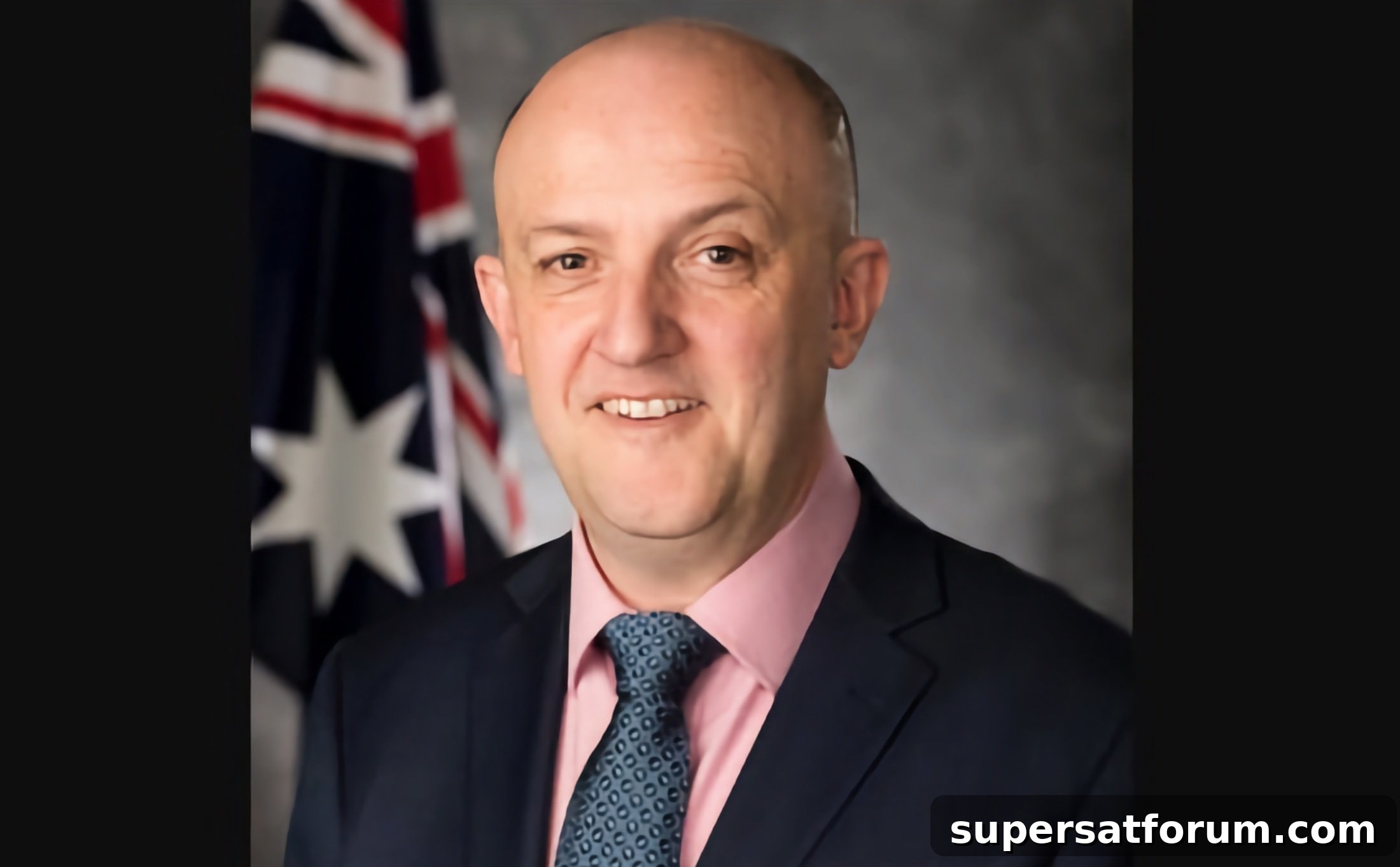
Mike Burgess, Director General of Security at Australia’s Security Intelligence Organisation (ASIO), has warned about the growing risk of sabotage aimed at the nation’s critical infrastructure. Speaking at ASIO’s annual threat assessment, Burgess highlighted the steady efforts by hostile actors to exploit weaknesses in digital and physical systems, and the particular danger posed when essential services are targeted at vulnerable moments.
“The sabotage threat has receded in recent decades, but I worry it could re-emerge—particularly in relation to critical infrastructure,” Burgess said, noting that cyber operations are an attractive option for adversaries because they can be relatively low-cost while producing high impact.
Burgess pointed to the interconnected nature of modern infrastructure—power grids, water supplies, transport systems and telecommunications—which increases the number of access points that could be discovered and abused. That interdependence, he warned, magnifies the potential consequences of a successful attack.
He identified several types of actors showing heightened interest in sabotage, including terrorist groups, foreign intelligence services, and violent extremists driven by nationalist or racist ideologies. While some organizations engage in inflammatory rhetoric without concrete plans, Burgess said Australian and international intelligence services have observed clear indicators of nation-state activity focused on reconnaissance and targeting of critical systems.
“We are aware of one nation-state conducting multiple attempts to scan critical infrastructure, targeting water, transport, and energy networks,” he disclosed, describing the sophisticated tradecraft used to map networks and discover vulnerabilities that could be exploited remotely or through insider assistance.
Referencing recent disruptions such as the 2023 outage suffered by Australian telecommunications provider Optus, Burgess urged stakeholders to consider the wider impacts that infrastructure failures have on public safety, emergency response and economic stability. He asked stakeholders to imagine scenarios in which an adversary deliberately took down communications networks or cut power during extreme weather; the cascading effects, he stressed, would be severe.
Although some of these scenarios may seem hypothetical, Burgess cautioned that foreign governments and advanced cyber teams are actively probing options and conducting extensive testing to determine how systems might be degraded or disabled. He warned that such capabilities are more likely to be used during periods of open conflict or heightened geopolitical tension, rather than as isolated experiments.
As Australia adapts to these evolving threats, Burgess’s message was a reminder that safeguarding critical infrastructure requires coordinated action across government, industry and the community. Strengthening cyber defenses, sharing timely threat intelligence, investing in resilient system design, and preparing robust contingency plans are all part of reducing vulnerability and ensuring essential services remain available when they are most needed.
See also: Toshiba and Orange demo quantum-secure fibre data transmission
Unified Communications is a two-day event held in California, London and Amsterdam that explores the future of workplace collaboration in a digital environment. The event runs alongside several complementary conferences, focusing on digital transformation, the Internet of Things, edge computing, intelligent automation, AI and big data, and cybersecurity and cloud technologies.
Discover other upcoming enterprise technology events and webinars presented by TechForge.