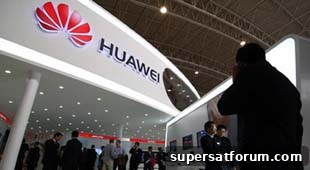
In the week when Huawei and ZTE denied posing a threat to US national security, is it fair to say Huawei is being singled out by overseas regulators?
John Lord, Huawei’s Australia chairman, expressed disappointment and concern after the Australian government banned the Chinese vendor from participating in the country’s more than $40 billion National Broadband Network (NBN) in March. Lord told an Australian parliamentary intelligence committee he feared the decision could set a precedent against companies from certain countries.
Huawei said it was informed late last year that it would not play a role in the NBN. In a submission to the committee the company argued that “the principle of non-discrimination should be clearly set out in any legislative reform.”
Similar arguments have surfaced elsewhere. A paper posted on Huawei’s US-hosted site, written by Dan Steinbock (not by Huawei itself), contends that Huawei’s potential business in the United States is hampered by unproven allegations. The paper opens with a quote from a 1954 CBS broadcast about Senator McCarthy: “We must remember always that accusation is not proof, and that conviction depends upon evidence and due process of law.”
Steinbock describes Huawei founder Ren Zhengfei as “tragically misunderstood” in the United States and argues that, in the absence of substantiated allegations, Ren should be welcomed by Capitol Hill and involved as an advisor in US-China relations. Those “unsubstantiated allegations” refer to Ren’s widely reported past association with the Chinese military, a background critics say has impeded Huawei’s overseas expansion. Ren has consistently denied current military ties, saying he left the People’s Liberation Army more than 30 years ago.
While the paper appears on a site associated with Huawei under “news and resources,” the company has distanced itself from the content. A US spokesperson said the views expressed belong to Steinbock rather than Huawei. Steinbock’s position is clear: “Today, Huawei is one of the most misunderstood companies in America. Huawei’s activities are not a threat, but an opportunity to the United States.”
An opportunity — or a threat to US security?
That claim came during the same week when Huawei and ZTE were questioned by the US House Intelligence Committee over allegations that their equipment could contain backdoors for spying and thereby pose a national security risk. Committee chairman Mike Rogers said the panel needed to establish whether the companies were tied to or influenced by the Chinese government and whether their equipment could enable economic or foreign espionage by a nation known for cyber intrusion.
Charles Ding, Huawei’s corporate senior vice president, provided written testimony emphasizing the company’s independence: “Huawei is an independent, employee-owned company,” he wrote, adding that “no third party — including government institutions — has any ownership interest in Huawei.” On cybersecurity, Ding stressed that as a global company reliant on markets outside China, any improper behavior would damage Huawei’s reputation, harm its global business and ultimately jeopardize the company itself.
ZTE presented similarly firm denials. Zhu Jinyun, ZTE’s senior vice president for North America and Europe, recounted the committee’s core question: would ZTE ever grant the Chinese government access to its telecom infrastructure for a cyber attack? “Mr. Chairman, let me answer emphatically: no!” Zhu said. He added that ZTE does not expect such a request from Beijing, and if one were made, ZTE would be bound by US law.
Both firms are adamant that they do not and would not cooperate in activities that undermine customer security. However, the broader question remains: how should governments weigh commercial opportunity against possible security risks?
Responses across countries vary. In the UK, for example, recent developments suggest a more accepting stance. Huawei announced a £1.2 billion (about $2 billion) expansion project this week that is expected to create roughly 700 jobs in the UK over five years, following a meeting between CEO Ren Zhengfei and Prime Minister David Cameron.
Commercially, Huawei’s recent performance has been strong. In July the company announced it had posted greater sales revenue than Ericsson through the first half of 2012, making Huawei the world’s largest telecom equipment vendor by that measure.
Still, regulatory actions and security concerns persist. Australia’s unexplained exclusion of Huawei from the NBN and the US congressional scrutiny of both Huawei and ZTE highlight deep skepticism among some governments. Whether caution is warranted depends on the evidence governments rely on and the transparency of any process used to assess risk.
For now, Huawei and ZTE maintain that they pose no threat and that they should be judged by demonstrable facts rather than unproven allegations. Governments must balance that assertion against national security imperatives — a debate that looks set to continue as these companies expand their global footprint.