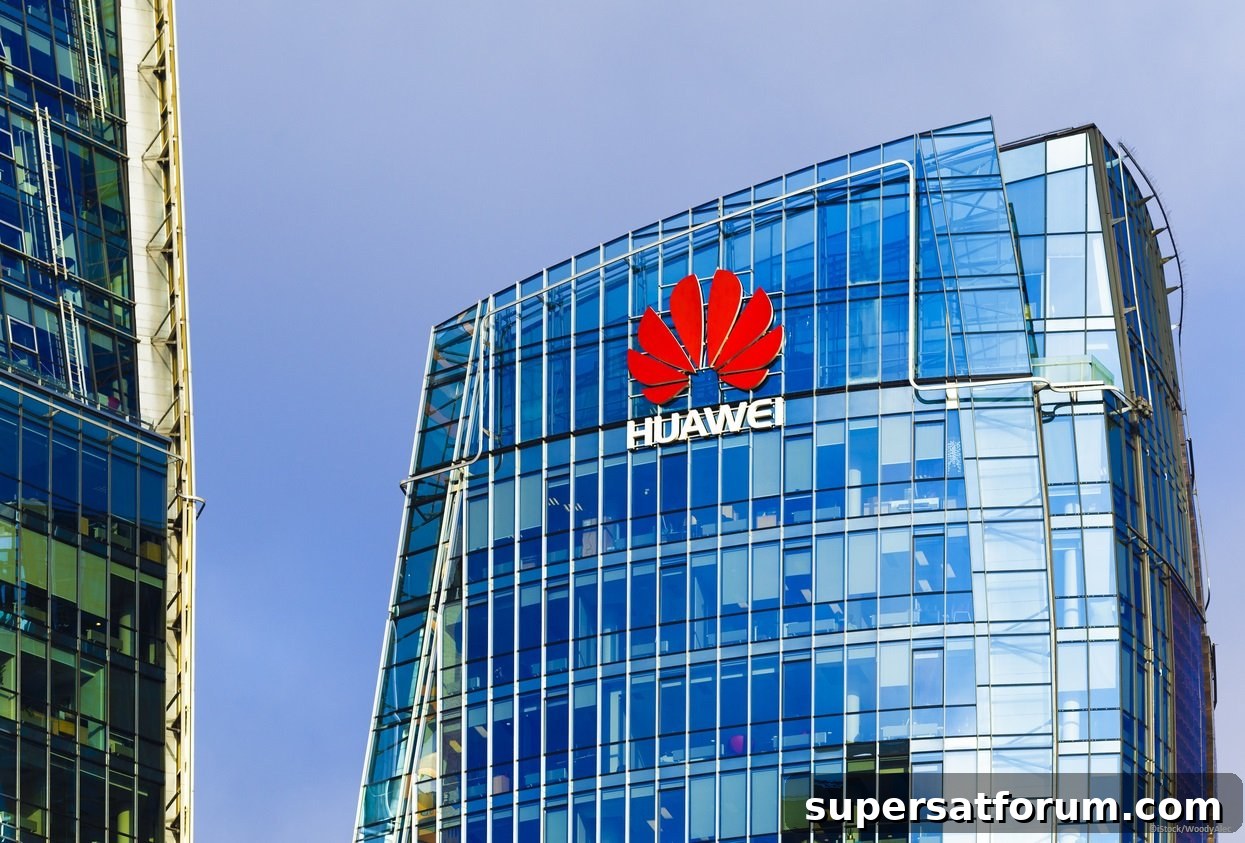
A recent report from Strand Consult that examined the costs of removing Chinese telecoms equipment in Europe has challenged claims that such expenses would be much higher than in the United States.
The US recently pledged $1 billion to help rural mobile networks replace Chinese-made telecoms equipment. European countries continue to debate whether to follow suit, and cost is a central concern in that discussion.
Earlier this year, an analysis funded by Huawei estimated that replacing Chinese telecoms equipment across Europe could reach as high as $62 billion. Strand Consult argues that figure is misleading because it failed to account for the current age and replacement cycles of European networks.
Strand’s research indicates most European mobile networks are only about three to five years old and already entering normal replacement timelines. The consultancy estimates that 70–80 percent of network equipment is due for renewal and that, over the past three years, the industry has invested roughly $2.9 billion per year in replacing equipment. About 40 percent of that replaced equipment came from Chinese vendors such as Huawei and ZTE.
Based on these factors, Strand calculates that the net one-time cost to remove and replace Chinese telecoms equipment in Europe would be in the region of $3.5 billion. Spread across mobile subscribers, this equates to an approximate one-time cost of $7 (€6.50) per subscriber.
Speaking to Forbes, Strand consults suggested a security perspective when evaluating Chinese-made telecoms gear, stating:
“Those sceptical of the claims that Chinese-made telecom equipment poses a threat to security should ask themselves whether they would be okay with NATO buying a fighter plane made in China. Why is there universal agreement that military equipment from China should be restricted but not telecom networks where vital information is transported?”
The United States has long expressed similar concerns. While the US has not explicitly banned Chinese telecoms vendors nationwide, it has restricted carriers that use such equipment from accessing government contracts and subsidies. As a result, major US network operators do not use Chinese telecoms gear, although some smaller and rural operators have used it.
US-China Trade War
Huawei has become a focal point in the broader trade tensions between the US and China. The company is listed on the US Department of Commerce’s Entity List, which bars most American firms from conducting business with it without a license.
That designation has impacted Huawei beyond its telecoms infrastructure business and into its consumer division. For example, the Mate 30 Pro smartphone was launched without access to Google’s services because of restrictions linked to the Entity List.
In response to those trade restrictions, Huawei has been reducing its dependence on US suppliers. Huawei founder and CEO Ren Zhengfei said the company has begun producing 5G base stations without US-made components, completing internal testing in August and September and moving to scaled production from October.
Ren also indicated Huawei’s willingness to license its 5G mobile technology to a US company if doing so could address security concerns about its products.
Many carriers worldwide value Huawei’s equipment for its technical performance and would welcome continued or renewed access. Yet national security agencies and regulators must be confident that any risks associated with using Chinese-built telecoms equipment have been mitigated to acceptable levels before such equipment is allowed back into critical network infrastructure.
Interested in hearing industry leaders discuss topics like these? Attend the co-located IoT Tech Expo, Blockchain Expo, AI & Big Data Expo, and Cyber Security & Cloud Expo World Series, which hold events in locations including Silicon Valley, London, and Amsterdam.