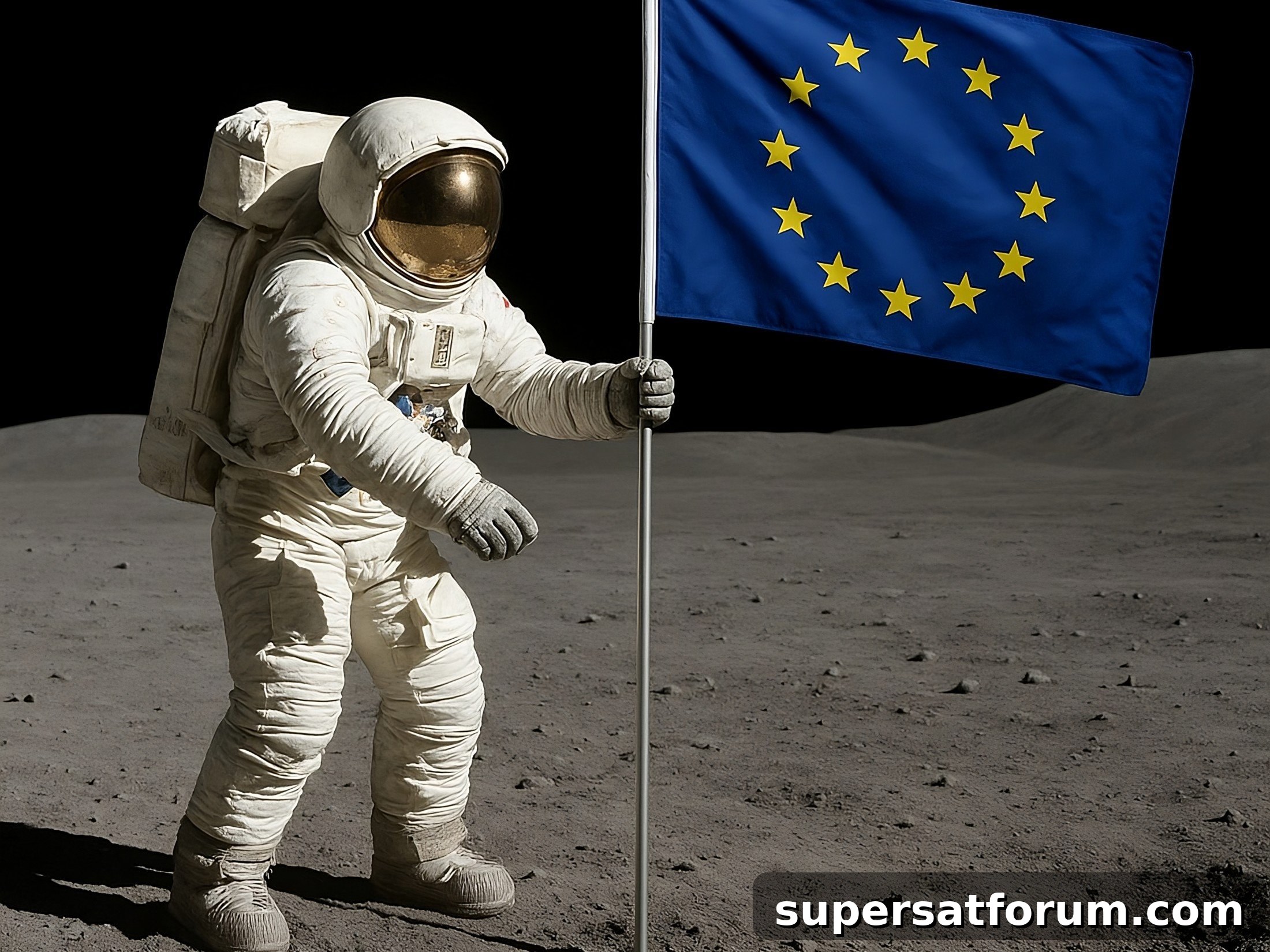
European businesses increasingly rely on a steady stream of space-derived data. For CIOs and COOs, the reliability, control, and cost of that data are critical operational concerns.
Historically, Europe’s space industry has been fragmented, limiting its ability to compete with larger global rivals. To address this, three of Europe’s largest aerospace and defense companies have announced plans to consolidate their primary space activities into a single entity.
Airbus, Leonardo, and Thales plan to merge their core space operations to create an integrated European space champion that combines engineering capabilities, data systems, and service offerings to support both commercial customers and national security needs.
The new business is expected to encompass Airbus’ Space Systems and Space Digital units, Leonardo’s Space Division, and Thales’ major stakes in joint ventures such as Thales Alenia Space and Telespazio. Together, these assets would form a broad portfolio covering spacecraft, satellites, ground systems, data processing, and related services—excluding launch operations.
At launch, the combined company is projected to employ roughly 25,000 people and generate about €6.5 billion in annual revenue. The vision is to create a one-stop provider for space hardware and downstream services, simplifying procurement and integration for European customers.
For business leaders, the merger promises two primary benefits: greater stability and accelerated innovation. A unified player could provide a more resilient supply of space data and services while concentrating research and development to speed product evolution.
Chief Data and Analytics Officers (CDAOs) who rely on satellite imagery, Earth observation, or space-based telemetry to feed AI models on platforms like Google Vertex AI or AWS Bedrock may see improved data quality, more consistent delivery, and potentially better pricing. CIOs managing global logistics and supply chains could benefit from more dependable navigation, timing, and communication services driven by an integrated European supplier.
Although the plan is strategically clear, the merger faces several practical challenges. The agreement remains subject to customary conditions and regulatory approvals, and the new company is not expected to begin operations until 2027. Key hurdles must be addressed during the transition period.
One major challenge is aligning differing engineering, manufacturing, and project management cultures across three national leaders. Harmonizing technical standards, development processes, and quality systems will require careful planning and execution.
Another significant issue is governance. Ownership will be split with Airbus holding 35 percent and Leonardo and Thales each owning 32.5 percent. Maintaining agility while balancing corporate and national interests within this ownership structure will be crucial for the new company to respond quickly to market and security needs.
Regulatory scrutiny is also likely, since creating a single large European space company will attract attention from competition authorities even as governments back the goal of strengthening European industrial autonomy.
In a joint statement, Airbus CEO Guillaume Faury, Leonardo CEO Roberto Cingolani, and Thales CEO Patrice Caine described the merger as a defining moment for Europe’s space sector.
“This proposed new company marks a pivotal milestone for Europe’s space industry. It embodies our shared vision to build a stronger and more competitive European presence in an increasingly dynamic global space market,” the CEOs said.
“By pooling our talent, resources, expertise, and R&D capabilities, we aim to generate growth, accelerate innovation, and deliver greater value to our customers and stakeholders. This partnership aligns with the ambitions of European governments to strengthen their industrial and technological assets, ensuring Europe’s autonomy across the strategic space domain and its many applications.”
Business and technology leaders should monitor this planned 2027 merger closely. It signals Europe’s intention to create an autonomous, large-scale space supplier capable of competing worldwide. Tech and operations executives should assess how reliant their systems are on services from Airbus, Leonardo, and Thales and open discussions with those companies about transition plans.
The primary upside is the prospect of faster innovation and consolidated R&D, which could yield more integrated data services and simplified procurement for customers. Engaging early with the merging partners can help organizations mitigate risks and position themselves to take advantage of the broader, more unified service offerings that this combined €6.5 billion company aims to deliver.
See also: How Vodafone is tapping AI to automate 5G network operations
Interested in IoT insights from industry leaders? Attend IoT Tech Expo events in Amsterdam, California, and London to hear from experts and explore co-located technology conferences. These events provide practical sessions and networking opportunities for professionals working with connected devices, AI, and enterprise technology.
Telecoms coverage is provided by TechForge Media. Explore upcoming enterprise technology events and webinars to discover further learning and networking options for technology leaders.