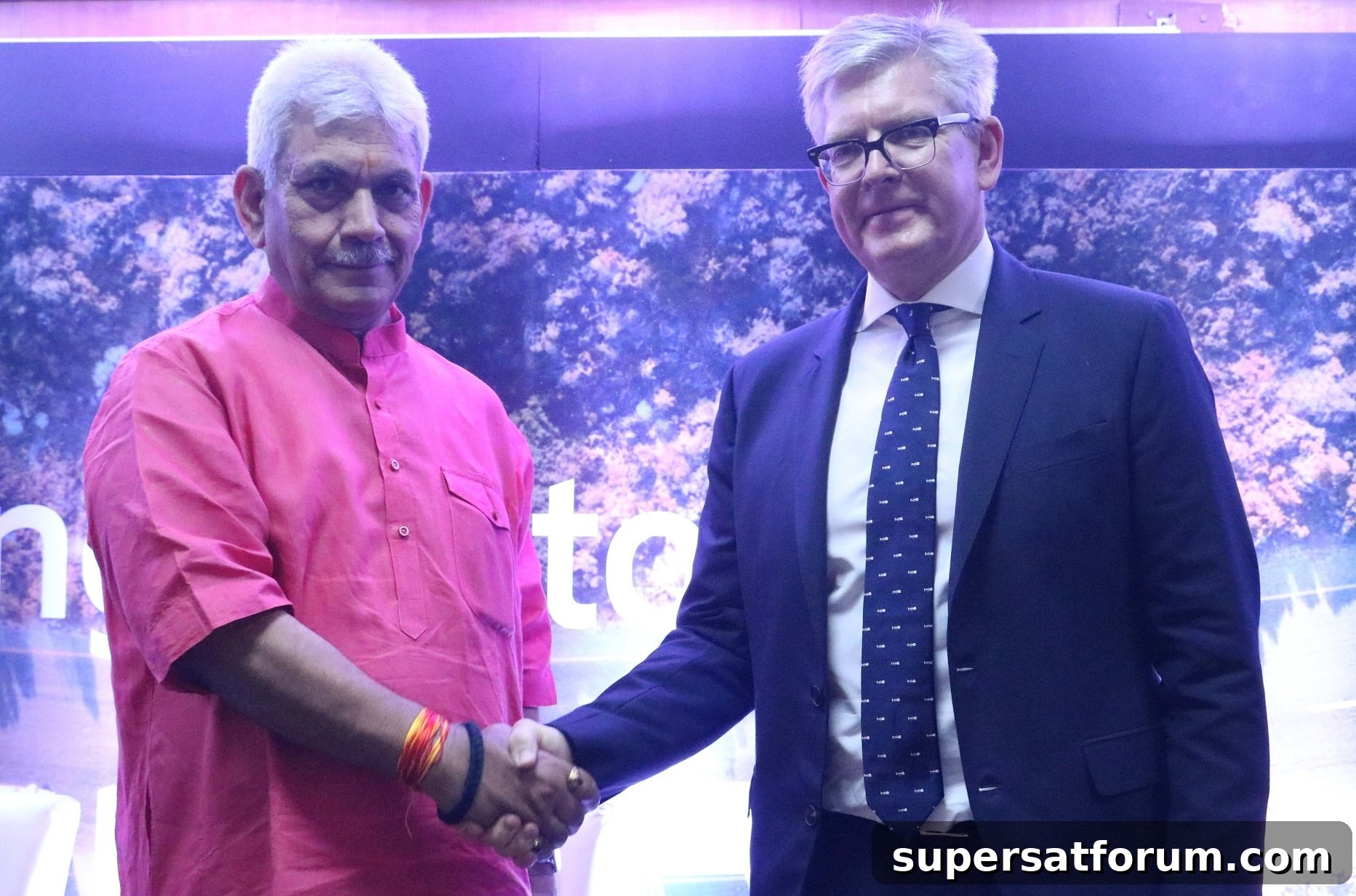
Ericsson has opened India’s first 5G Innovation Lab at the Indian Institute of Technology (IIT) Delhi to accelerate 5G deployments and foster a stronger ecosystem for next-generation mobile technology.
Described as a first-of-its-kind facility, the Innovation Lab will bring together mobile network operators, academic institutions, startups, and industry partners to explore 5G use cases, develop new applications and services, and fast-track commercialization of 5G-enabled solutions across sectors.
Börje Ekholm, President and CEO of Ericsson, said:
“Ericsson is leading 5G standardisation globally. The 5G Center of Excellence and Innovation Lab aims to stimulate the 5G ecosystem in India. We want to unlock the creativity and innovation of Indian industry, academia and entrepreneurs so that 5G becomes a practical reality in India.”
An Ericsson analysis estimates that 5G-enabled digitisation could generate around $27.3 billion in revenue for India by 2026. The report also suggests an additional $13 billion in value could be captured if Indian operators expand beyond traditional connectivity and infrastructure roles to act as service enablers and creators.
On the inauguration, Shri Manoj Sinha commented:
“I congratulate Ericsson for establishing the first 5G Center of Excellence and Innovation Lab in the country. This initiative supports the Government’s objective of building a vibrant 5G ecosystem in India.”
“We want India to play an active role in designing, developing and manufacturing 5G-based technologies, products and applications. I urge industry, academia, students and startups to use the Ericsson Innovation Lab to develop new 5G apps and business models that can improve agricultural yields, advance healthcare, enable smarter cities, boost manufacturing efficiency, and enhance quality of life.”
“The entire ecosystem must collaborate to make 5G a reality in India within the next two to three years.”
India has been pursuing international collaboration and research to remain at the forefront of 5G innovation. Recently, India signed memoranda of understanding with three UK institutions — King’s College, University of Surrey and the University of Bristol — to share research and expertise with the Centre for Development of Telematics (C‑DOT), India’s government-run telecom research organization.
The Ericsson Innovation Lab at IIT Delhi will act as a hub for prototyping, testing and demonstrating 5G applications across domains such as agriculture, healthcare, smart cities, manufacturing and consumer services. By providing a platform where startups, researchers and operators can work together, the lab aims to shorten the path from concept to deployment and encourage locally developed solutions tailored to India’s needs.
With a combined focus on technology standards, application development and business model innovation, the lab is positioned to help Indian stakeholders capture a larger share of the economic value offered by 5G. Collaboration across academia, industry and government will be key to cultivating skills, accelerating trials and scaling viable 5G use cases nationwide.
What are your thoughts on Ericsson’s launch of India’s first 5G Innovation Lab? Share your views in the comments.