Research from Juniper indicates that revenues from in-car applications could increase tenfold by 2017, with connected services reaching around 20% of vehicles in Western Europe and North America. This emerging market looks set to be highly profitable and will be driven by advances in mobile networks.
Mobile network operator Orange has partnered with French automaker Renault to launch a research project exploring the future of connected cars. By deploying LTE technology at Renault’s research center, the two companies are investigating use cases made possible by the higher speeds and greater reliability of 4G. Potential applications under study include a virtual office environment, cloud gaming and in-car video conferencing.
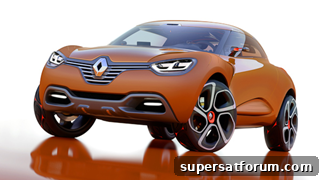
Testing is underway with Renault’s “Next Two” prototype, based on the electric Renault ZOE. Notably, Orange previously acquired a small fleet of Renault Twizy electric vehicles for employee use, demonstrating a broader company interest in electrification and reduced carbon footprint.
Nathalie Leboucher, Head of the Smart Cities Program at Orange, commented: “We are delighted to provide Renault with the unrivalled performance of our 4G network and thereby contribute to the development of new web-mobility uses and services for vehicles of the future. Connected cars with communications services make travelling more efficient, and this is a major development priority in Orange’s strategy.”
Renault already offers connected-car features through its R-Link system, a 7-inch tablet interface that can be operated via voice commands, touchscreen input or steering-wheel controls. Launched at LeWeb in 2011 with about 50 applications, R-Link now supports nearly 100 apps. Orange Business Services supplies the M2M SIM cards used in R-Link-equipped vehicles. The system was initially rolled out in models such as the ZOE, Clio, Captur and Scenic, and has since become available across Renault’s range.
Renault is far from alone in pursuing connected-vehicle technology. Other major manufacturers are also advancing rapidly: Nissan introduced NissanConnect features recently, while Mercedes-Benz demonstrated progress toward autonomous driving with its S500 Intelligent Drive concept, which completed a 100 km test route in southern Germany.
The collaboration between Orange and Renault highlights how telecom providers and automakers are combining expertise to create new in-car experiences. Faster mobile networks enable richer multimedia, improved telematics and new productivity tools for drivers and passengers. At the same time, safety, privacy and regulatory considerations will shape how these services are deployed and used.
Consumers can expect a growing range of in-car services that go beyond navigation and music—seamless cloud services, real-time communications and even remote work capabilities are becoming feasible as vehicles connect to robust cellular networks. Automakers will need to balance innovation with usability and safety, ensuring that in-vehicle systems enhance the driving experience without causing distraction. Telecom partners will play a crucial role by providing reliable connectivity, scalable data plans and secure M2M solutions tailored to automotive needs.
As connected cars become more common, the ecosystem around vehicle apps and services is likely to expand, opening new revenue streams for manufacturers, network operators and software developers. The next few years should reveal which use cases gain traction among drivers and passengers, and how quickly these technologies move from prototypes into mainstream production models.
What are your thoughts on the future of connected cars and the implications of this latest partnership?