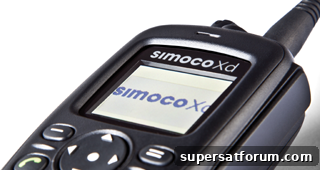
Private mobile radio is fast becoming an essential communications solution for utilities, airports, oil and gas pipelines, and emergency services that require dependable operational communications.
Compared with public cellular networks, private mobile radio delivers superior coverage, reliability, contention resistance, security, group communications and predictable performance.
The digital radio landscape includes several public safety and commercial standards such as TETRA and P25, alongside lower-cost digital solutions like DMR (Digital Mobile Radio), dPMR (digital Private Mobile Radio), NXDN and PDT (Professional Digital Trunking).
Among these options, DMR is gaining traction, particularly thanks to the open-standard nature of DMR Tier III trunking, which supports continued development and broad adoption across global markets.
Do open standards matter? They are less critical for small systems, but for medium-to-large deployments they are essential. In these larger systems, open-standard DMR Tier III is well positioned to dominate because it provides long-term interoperability, vendor choice and cost advantages.
DMR Tier III trunking operates with a control channel at each site and dynamically allocates traffic channels on demand. This approach makes frequency use more efficient and allows a large number of users to share a relatively small pool of channels. Sites can be interconnected—typically using IP networks—so systems can scale from a single site to hundreds of sites across wide geographic areas.
The open standard approach
The DMR standard permits manufacturers to add “manufacturer extensions,” which let vendors implement proprietary features within the DMR air interface framework. These extensions allow manufacturers to offer additional capabilities beyond the baseline call functions defined by the standard, and enable customers to request specific functionalities tailored to their operational needs.
The benefit of this flexibility is clear: vendors can innovate and differentiate their products while customers can obtain features that address unique requirements. The drawback, however, is that interoperability is guaranteed only for features explicitly defined by the standard. Excessive use of manufacturer extensions can lead to vendor lock-in, reducing the vendor choice that standards aim to preserve.
To balance innovation and interoperability, the DMR Association (DMRA) operates a formal interoperability process. This process focuses on testing product conformance to the published over-the-air signalling specification. Typically, a terminal manufacturer and an infrastructure manufacturer conduct tests against a standard test specification, with all messages and test logs recorded. Independent third parties review the logs and test outcomes in detailed sessions, and only when these reviewers are satisfied that the equipment conforms to the open-standard specification is an interoperability certificate issued.
Standards evolution and governance
If manufacturers relied heavily on proprietary extensions without coordination, DMR’s value as an interoperable standard would be undermined. The DMRA addresses this risk through a technical working group made up of competing vendors who collaborate to ensure the standard remains relevant and interoperable.
When vendors create proprietary features that appear to have broad market appeal or fill functional gaps in the existing standard, those ideas are discussed within the working group. Proven features can then be formalized and incorporated into future releases of the ETSI standard, benefiting all manufacturers and customers who implement DMR.
The DMRA continues to identify and develop new features to meet evolving market requirements, ensuring those additions are included in subsequent standards updates so the technology remains current and useful.
The future of DMR Tier III
Open standards are essential for long-term stability and support. When a standard achieves critical mass—backed by many manufacturers and a structured interoperability program—it delivers vendor choice, predictable costs and assurance that systems will remain sustainable over time.
Is DMR Tier III the open standard for private mobile radio’s future? The evidence suggests yes. With the DMRA’s governance, a rigorous interoperability program and the commitment of numerous manufacturers, DMR Tier III is emerging as a successful, cost-effective digital technology for complex projects. For medium and large deployments requiring scalable, interoperable trunked radio, DMR Tier III represents a robust open-standard solution unmatched by other private mobile radio technologies.