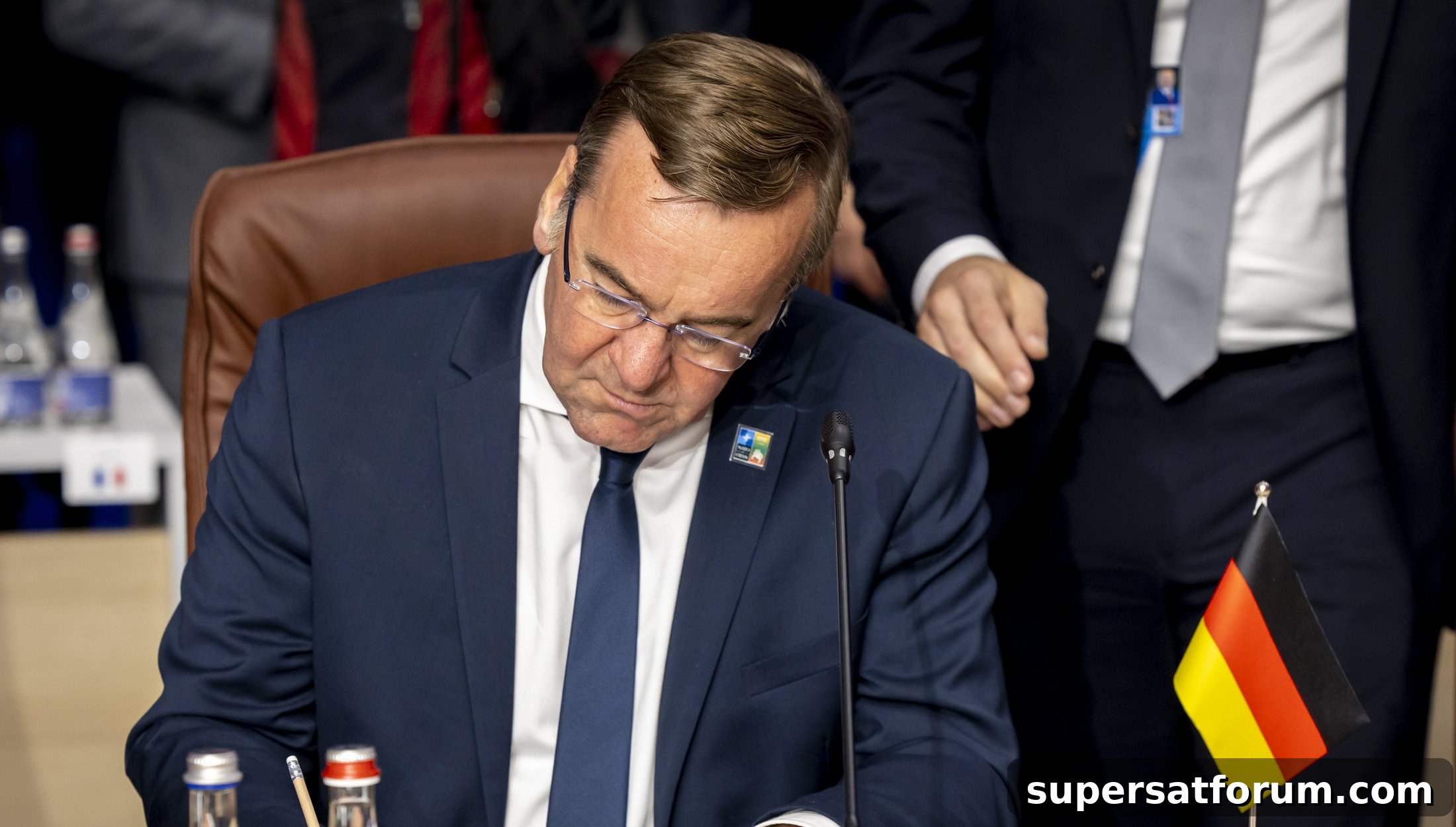
Germany’s Defence Minister Boris Pistorius has warned that Russian reconnaissance satellites are closely monitoring commercial satellites used by NATO militaries, raising concerns about a new and dangerous frontier in space.
The reported manoeuvres could give a hostile actor the ability to interfere with, jam, manipulate, or even physically damage vital satellite infrastructure from orbit. Such actions would threaten military communications, intelligence sharing and civilian services that rely on those systems.
Speaking at a space conference in Berlin, Pistorius pointed to two Russian Luch/Olymp satellites that have been observed operating near Intelsat satellites. Intelsat, a US–Luxembourg operator, manages a fleet of more than 50 satellites that provide communications services to government agencies—including the militaries of Germany and other NATO members—as well as private companies.
The two Russian satellites, launched in 2014 and 2023, have a documented history of activity experts describe as suspicious. They have been accused of “loitering” and “eavesdropping” by maneuvering unusually close to other nations’ assets in geostationary orbit, a region where satellites are typically expected to maintain fixed positions for many years.
“Russia and China have expanded their capabilities for warfare in space rapidly over the past years,” Pistorius said. “They can disrupt satellite operations, blind satellites, manipulate, or kinetically destroy them.”
Pistorius confirmed that Germany’s armed forces have already experienced jamming attacks. He warned delegates of the surveillance reach of foreign powers, noting that “39 Chinese and Russian reconnaissance satellites are flying over us… so be careful what you say.”
This warning about orbital threats comes amid rising tensions between NATO members and Russia closer to Earth. Authorities have speculated about Russian involvement in a series of drone disruptions affecting several Danish airports this week.
The alert follows a recent incident in which NATO jets intercepted Russian aircraft that violated Estonian airspace. In another notable development, US fighter jets were dispatched to intercept two Russian Tu-95 long-range bombers and two Su-35 fighters flying within the Alaskan Air Defense Identification Zone.
A pattern of increasingly risky behaviour by Russia toward NATO countries has intensified concerns about the potential for broader conflict. NATO has reiterated its right to shoot down any Russian aircraft that enters its airspace; Russia’s Ambassador to France, Alexey Meshkov, warned in a television interview that such an action would amount to war.
In response to the growing threat to space-based assets from nations like Russia and China, Pistorius used the Berlin conference to announce significant investment in Germany’s space defenses. He unveiled plans for a €35 billion investment in national space programmes over the next five years to strengthen resilience and protect critical capabilities.
Pistorius also called for serious discussions in Germany about developing offensive space capabilities as a deterrent to hostile actions against satellite systems. He framed such capabilities as necessary to protect national and allied interests in an era when space is increasingly contested.
Satellites have become prominent targets in recent conflicts. During its invasion of Ukraine, Russia has been accused of deploying malware against commercial satellite networks and has claimed that their use by Ukrainian forces amounts to indirect participation in the conflict, even threatening attacks on Western satellites.
That precedent makes the close shadowing of satellites used by NATO members particularly concerning, as it could enable surveillance or interference ahead of more aggressive measures.
(Image credit: NATO North Atlantic Treaty Organization under CC BY-NC-ND 2.0 license)
See also: Secret Service dismantles SIM farm threat near UN summit

Want to learn more about cybersecurity from industry leaders? Attend Cyber Security & Cloud Expo, held in Amsterdam, California and London. The event brings together industry experts to discuss the latest threats and defensive strategies.
Telecoms is powered by TechForge Media. Explore upcoming enterprise technology events and webinars through industry event listings.