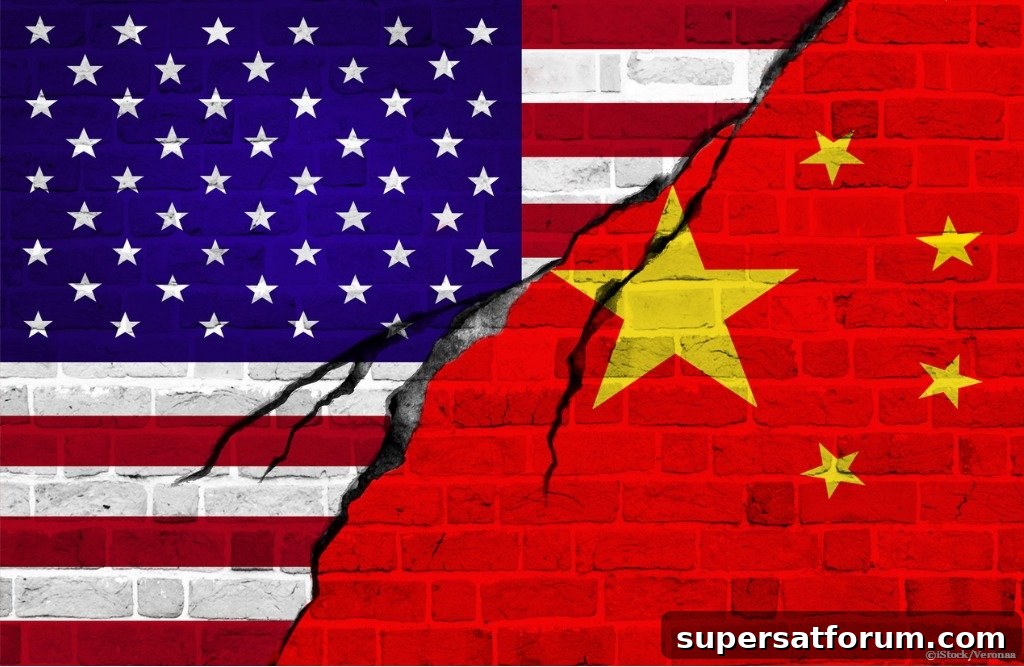
The Trump administration has reiterated its concerns about Chinese telecommunications companies, urging the Federal Communications Commission (FCC) to reject China Mobile’s application to provide services from within the United States.
The U.S. National Telecommunications and Information Administration (NTIA) recommended the FCC deny China Mobile Ltd’s request, citing national security and law enforcement risks associated with a Chinese state-owned carrier operating on U.S. soil.
China Mobile, state-owned and the world’s largest mobile operator by subscribers, reported more than 902 million users as of June 2018. The company first sought permission to offer telecommunications services in the U.S. in 2011 and has pursued that goal intermittently since then.
In a formal statement, Assistant Secretary for Communications and Information David J. Redl explained the NTIA’s position:
“After significant engagement with China Mobile, concerns about increased risks to U.S. law enforcement and national security interests were unable to be resolved.
Therefore, the Executive Branch of the U.S. government, through the National Telecommunications and Information Administration pursuant to its statutory responsibility to coordinate the presentation of views of the Executive Branch to the FCC, recommends that the FCC deny China Mobile’s Section 214 license request.”
Chinese telecommunications firms have faced regulatory and political resistance in several countries. In recent months that resistance has intensified, driven by security concerns, trade tensions and heightened political scrutiny.
One high-profile case involved ZTE, a Chinese state-affiliated technology company that was hit with a U.S. ban after violating trade sanctions related to Iran and North Korea. That ban reportedly caused the company billions in losses. After diplomatic pressure from Beijing, the U.S. administration later lifted the ban once ZTE paid penalties, appointed a U.S.-selected compliance team and replaced portions of its management.
The reversal of the ZTE ban prompted controversy and scrutiny from ethics watchdogs and commentators who questioned the speed and timing of certain trademark approvals and the administration’s handling of the matter.
Political figures have also called for stronger measures. Republican Senator Marco Rubio proposed legislation to prevent Chinese telecommunications companies from operating in the United States altogether, suggesting such a measure would receive broad bipartisan support in Congress.
Similar concerns have surfaced in other countries. In Australia, Labor MP Michael Danby urged a ban on purchasing 5G equipment from Chinese vendors, arguing that those firms could be subject to control by the Chinese government. Australian officials have previously restricted Huawei from participating in national broadband projects, reflecting broader unease about vendor trustworthiness and supply-chain security.
These telecommunications disputes are part of a wider set of frictions between the United States and China that include trade conflicts and tariffs. At the time of the NTIA recommendation, both nations were imposing tariffs on billions of dollars’ worth of goods, heightening economic tensions that overlap with national security debates.
The NTIA’s recommendation asks the FCC to weigh security implications carefully when considering foreign carriers’ access to U.S. telecommunications infrastructure and services. Proponents of the denial argue that allowing a major state-owned foreign carrier to operate domestically could create vulnerabilities that affect law enforcement investigations, national communications resilience and broader intelligence concerns.
Opponents of restrictive measures argue that trade and competition principles should guide decisions, cautioning that overly broad exclusions could harm consumers, increase costs and exacerbate diplomatic tensions. The FCC’s upcoming decision will need to balance these competing priorities—security, commerce and international relations—while adhering to legal standards for licensing and public interest review.
Do you believe the national security concerns are justified? Let us know in the comments.