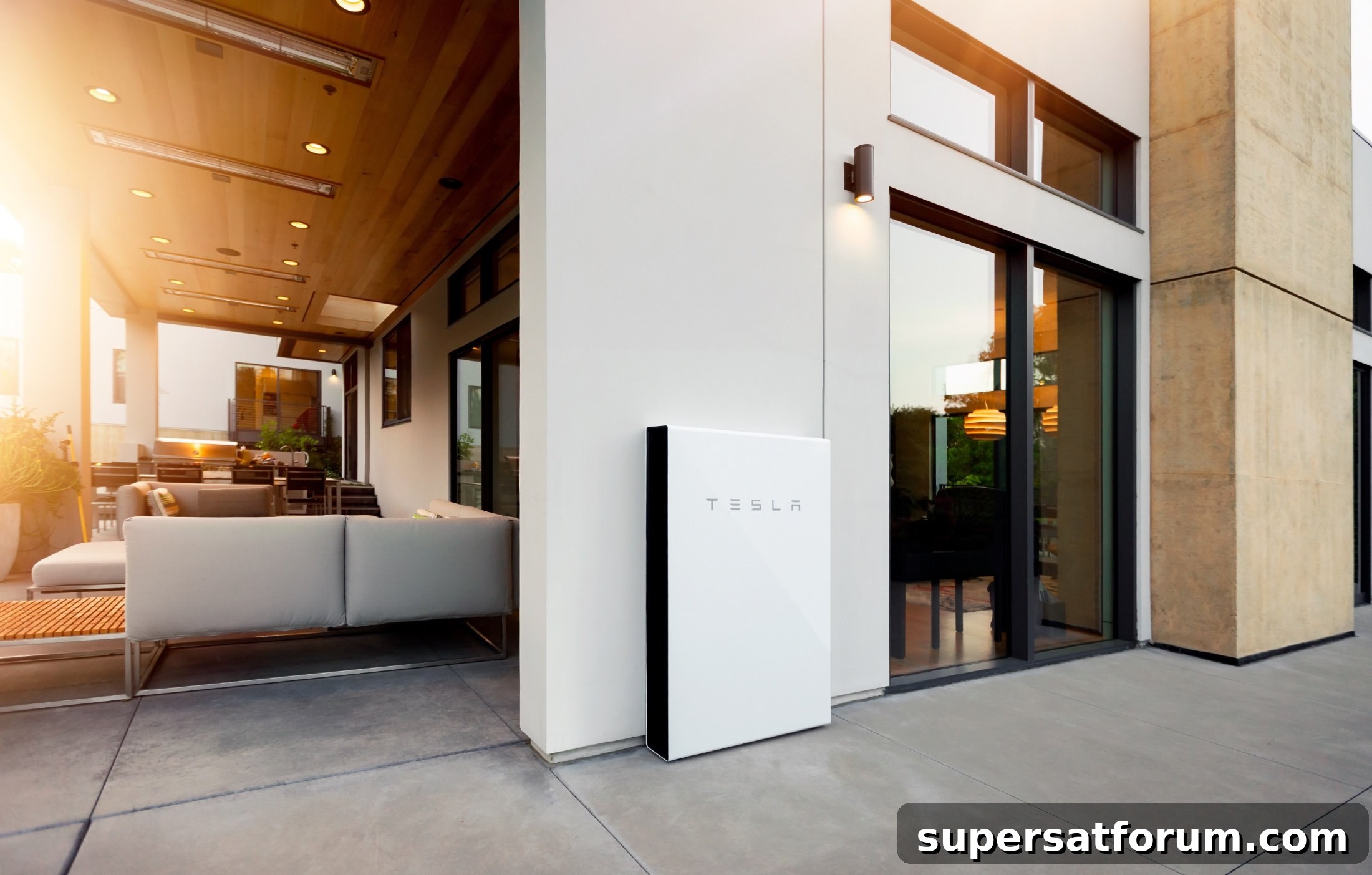
During power outages, Ukraine will deploy public Starlink hotspots powered by Tesla Powerwall units to keep people connected.
Starlink has become a critical lifeline for Ukrainians defending their country. SpaceX’s low Earth orbit satellite internet service provides essential connectivity across Ukraine and helps ensure that events on the ground remain visible to the wider world.
Since Russia’s full-scale invasion on 24 February 2022, Russian forces have repeatedly targeted Ukraine’s critical infrastructure, including communications, energy, food supply chains, and water systems.
On the day the invasion began, Russia launched a cyberattack against the satellite operator Viasat aimed at disrupting communications in Ukraine. That attack produced spillover damage—impacting wind turbines in Germany—and highlighted the risk that such operations could provoke broader international responses.
SpaceX has supplied more than 20,000 Starlink terminals to Ukraine; roughly 15,000 of those units have been funded by Ukraine’s international partners, and SpaceX has offered discounted hardware and service.
Russia has reacted angrily to Ukraine’s ability to maintain connectivity and has recently threatened attacks on Western satellites.
At a UN General Assembly meeting, Russian foreign ministry spokesman Konstantin Vorontsov suggested that the use of satellites “constitutes indirect participation” in the conflict and implied that “quasi-civilian infrastructure may become a legitimate target for retaliation.”
Last week, NASA reported that the International Space Station had to shift to a higher orbit to avoid debris from a Russian satellite destroyed during a missile test in November 2021.
Direct strikes on Western infrastructure would represent a dangerous escalation with severe consequences. Any action that risks drawing NATO into a wider conflict would be a grave miscalculation with no real winners.
By increasingly targeting Ukraine’s energy network—as exemplified by incidents such as shelling near the Zaporizhzhia nuclear power plant—Russian forces appear to be attempting both to disrupt communications and to make conditions harsher for civilians, especially during winter.
In an interview with Forbes, Ukrainian Deputy Prime Minister Mykhailo Fedorov outlined plans to maintain connectivity even during power outages by combining Tesla Powerwall batteries with Starlink terminals.
Tesla Powerwall is a home- and facility-scale battery system that stores energy, detects grid outages, and automatically supplies power when the mains fail. It can also be recharged using solar panels, making it useful where grid reliability is limited.
According to Fedorov, pairing Powerwall units with Starlink terminals will allow communications hotspots that “operate independently of the power grid,” ensuring that access points remain online during outages.
Fedorov said the government is still determining the total number of access points, but several pilot hotspots are being established and the first public hotspots are expected to go live in the coming weeks.
The full Forbes interview provides greater detail on how Ukraine is deploying modern technologies in its defence and on plans to digitize public services as part of reconstruction efforts—an effort aimed at building back more resilient and user-focused systems.
While Russia relies on destructive tactics, Ukraine is investing in resilient, forward-looking solutions to protect citizens and preserve essential services.
(Image Credit: Tesla)
Looking to revamp your digital transformation strategy? Learn more about Digital Transformation Week taking place in Amsterdam, California, and London, and discover practical strategies to strengthen your organization’s digital initiatives.