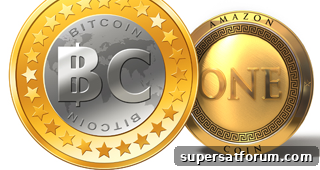
Forget pounds, dollars, euros and the many other national currencies — a new form of money has arrived: virtual currencies that live online and in digital wallets.
The latest entrant is Amazon Coins, a digital currency used for app, game and in-app purchases in Amazon’s Appstore.
The primary advantage for consumers is typically lower cost. For example, Amazon’s pricing equates 100 “coins” to $1, while larger bundles can offer savings — buying 500 coins might cost $4.80, reflecting a discount—and selling prepaid coin bundles or gift cards tied to a single platform can increase company revenue.
More and more people now make online payments through services like PayPal or SolidTrustPay, and many use mobile technologies such as NFC or Google Wallet to pay via smartphones. Those are examples of digital wallets built around existing currencies. But a different shift is underway: the emergence of native virtual currencies.
Virtual currency itself isn’t a new concept. Microsoft has used “Microsoft Points” for Xbox transactions (though it has signalled plans to phase that system out). Amazon Coins follows a similar platform-specific model. What is more transformative, however, are decentralized currencies such as Bitcoin.
Bitcoin is a digital currency that operates on a distributed network and uses a ledger system to record transactions. It enables peer-to-peer transfers without traditional intermediaries. Because transactions can be pseudonymous and recorded on a public ledger, Bitcoin has raised concerns among governments and security agencies about regulation, privacy and illicit use.
Still, a growing number of legitimate businesses accept Bitcoin, reflecting mainstream interest and experimentation. Major platforms and services, including content and commerce sites, have added Bitcoin payment options, and companies in the payments space have evaluated integrating it.
At the same time, Bitcoin’s features have attracted illicit markets. Online black markets such as Silk Road used Bitcoin for transactions involving illegal goods, drawing attention to both the currency’s strengths and its potential for misuse. This dual nature—practical payments on one hand and risky, unregulated activity on the other—has defined much of the early public debate about cryptocurrencies.
How do people acquire Bitcoin? You can purchase coins on various exchanges, where prices fluctuate with market demand, or you can obtain them by “mining,” which uses software and computing power to validate transactions and earn small amounts of newly created currency. Mining’s computational intensity and energy costs make it distinct from many other digital activities, and it’s often compared to distributed computing projects, though without the charitable aims those projects may have.
The origins of Bitcoin are also a topic of intrigue. The currency was first described in a 2008 white paper attributed to Satoshi Nakamoto—a name that is widely believed to be a pseudonym—and the person or group behind it has remained anonymous, which has fueled speculation and debate.
Some political and philosophical movements, particularly those favoring reduced state control over money, have embraced Bitcoin as an alternative to traditional financial systems. Supporters range from technologists and libertarians to everyday users seeking more direct control over their funds.
Regardless of one’s view, digital payments and virtual currencies are reshaping how we transact. Physical wallets stuffed with coins and paper money are increasingly uncommon as people adopt cards, mobile wallets and, in some cases, cryptocurrencies for everyday purchases.
Have you invested in Bitcoin or are you considering it? Do you believe virtual currencies and digital wallets represent the future of payments?