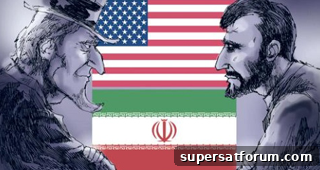
The United States has relaxed its long-standing ban on exporting certain computer equipment to Iran, permitting sales when the technology is destined for private individuals rather than the Iranian government.
The restriction, in place for more than a decade, was eased following a Treasury Department statement that accused Iranian authorities of attempting to “silence its people by cutting off their communication with each other and the rest of the world.” The decision aims to make tools that enable communication more accessible to ordinary Iranians while maintaining prohibitions on transfers to government entities and other designated actors.
An existing list known as the Specially Designated Nationals (SDN) catalogue continues to identify individuals, organizations, and entities that are still prohibited from receiving U.S. goods or services. That list includes extremist groups and other actors subject to sanctions, and it remains in effect to prevent sanctioned parties from benefiting from this policy change.
Though full diplomatic relations between the United States and Iran have been severed for decades, additional sanctions were imposed in recent years in response to Iran’s nuclear program and related activities. Those measures have influenced the availability of consumer technology and online services inside Iran; for example, some companies have limited or blocked access to app stores and related platforms for Iranian users.
One key objective of the Treasury’s update is to allow the export and sale of communications software and related devices that help Iranians bypass government censorship and surveillance. That includes virtual private network (VPN) services and other privacy-enhancing tools that can help users access blocked websites and communicate more freely and securely.
Advocacy groups supporting Iranian civil society welcomed the change. The National Iranian American Council (NIAC) voiced approval, arguing that restrictive sanctions had sometimes hindered human rights efforts and civil society initiatives. Jamal Abdi, NIAC’s policy director, said the previous ban was “an example of sanctions that undermined human rights and civil society efforts of Iranians, and helped the regime,” highlighting the unintended consequences of overly broad export restrictions.
Allowing certain consumer technologies to reach private users signals a shift toward balancing national security concerns with support for individual rights and access to information. By restricting exports only where there is a clear risk that equipment would be diverted to sanctioned institutions or the regime, the Treasury hopes to enable Iranians to access communication tools without undermining broader sanctions policy.
Still, the policy change could carry diplomatic and political implications. Iranian authorities have historically viewed foreign efforts to facilitate uncensored communication as interference in domestic affairs and could respond with countermeasures or increased restrictions. Conversely, ordinary people inside Iran may experience tangible benefits if they can obtain software and devices that improve personal privacy and access to information.
Overall, the adjustment attempts to strike a careful balance: maintaining sanctions against individuals and groups on the SDN list and other targeted targets, while easing restrictions that prevent private citizens from acquiring tools to communicate and access information. The long-term impact will depend on implementation details, enforcement of safeguards against diversion to sanctioned actors, and how both the Iranian government and private companies respond to the new rules.
Is this policy shift a positive step toward supporting freedom of expression in Iran, or might it provoke further tension between the U.S. and Iranian governments? The answer will likely depend on how the change is applied and managed in practice.