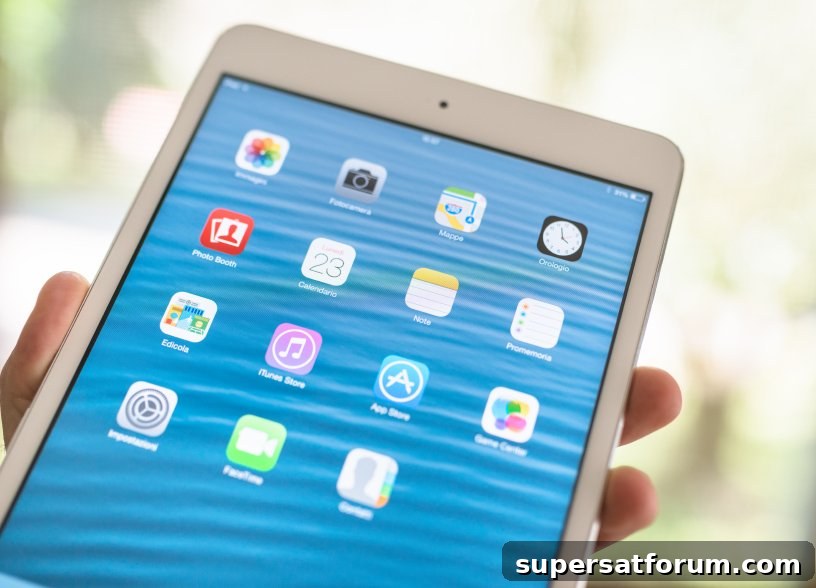
Apple’s new embedded SIM (Apple SIM) offers clear benefits for consumers, but it has provoked mixed reactions from carriers. The eSIM lets users change service providers with a few taps instead of physically swapping a SIM card, making it especially useful for frequent travelers who want quick access to local networks without carrying multiple SIMs. This capability is arguably one of the most disruptive parts of Apple’s recent device updates, yet it received little attention during the company’s event.
Apple initially indicated that several major carriers would support the Apple SIM, including EE in the UK and AT&T, T‑Mobile, and Sprint in the US. However, some of those carriers have since limited or altered how the feature will work for their customers.
Notably, AT&T announced that customers who activate an iPad with AT&T will be restricted from using the eSIM’s on‑device carrier switching. Instead, AT&T customers will be required to remove the Apple SIM and insert a physical SIM from another carrier if they want to switch networks—essentially reverting to the traditional method.
An AT&T spokesperson, Mark Siegel, told reporters: “With us you can change carriers with this iPad any time you want. It is an unlocked device. All you have to do is switch out the SIM in the device so it works on another carrier.” When asked why AT&T would prevent on‑device switching, Siegel said, “It’s just simply the way we’ve chosen to do it.”
The response from rival carriers was swift. T‑Mobile’s outspoken CEO John Legere criticized AT&T’s approach on Twitter, arguing that the Apple SIM is a consumer‑friendly innovation and that AT&T’s restriction undermines users’ freedom to switch carriers easily. In a series of public posts, Legere called the move “typical” and praised Apple’s decision to include a flexible SIM solution in its devices, saying the Apple SIM strengthens Apple’s role in the mobile ecosystem.
5/ You can pick @att but once you do, you can’t switch again! #typical
— John Legere (@JohnLegere) October 25, 2014
12/ Clearly the Apple SIM is a smart move on Apple’s part – it expands and enhances their position in the mobile ecosystem.
— John Legere (@JohnLegere) October 25, 2014
Other carriers have taken different stances. Verizon Wireless announced it will not support the Apple SIM at all. Sprint will support the Apple SIM in a limited way: it will accept devices whose IMEI numbers are registered in Sprint’s database—essentially devices purchased from Sprint—preventing the seamless, cross‑carrier activation Apple envisioned for unlocked devices bought elsewhere.
The varied carrier responses highlight the tension between device makers’ efforts to simplify connectivity and carriers’ business models and policies. For consumers, the Apple SIM represents greater flexibility and convenience, but the ultimate experience will depend on the policy choices of individual carriers.
What do you think about carriers’ reactions to the Apple SIM? Share your thoughts in the comments.