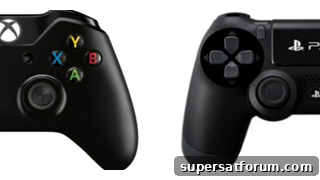
Both of the newest-generation consoles from Microsoft and Sony have enjoyed a strong launch. Recent shipment figures show the Xbox One at 3 million units and the PlayStation 4 at 4.2 million units.
These numbers are noteworthy in an era when some critics claim traditional consoles are losing relevance to gaming on PC platforms, including Windows, macOS, and Linux. While PC game software sales reached 32 million units globally in the same period, console hardware—represented here by the Xbox One and PS4—moved far more units, underlining that dedicated gaming hardware still commands significant consumer interest.
At first glance, the PS4’s lead in unit shipments gives Sony an advantage. However, unit totals alone don’t tell the whole story. To understand the competitive picture more clearly, it helps to consider profitability per console, since profit margins determine how much each company can reinvest in marketing, developer incentives, and exclusive content.
According to teardown analysis from IHS, Microsoft reportedly earns about $28 in profit on each Xbox One sold, while Sony’s per-unit profit on the PS4 is around $18. Applying those figures to the shipment totals produces the following:
- PS4 – $18 x 4,200,000 = $75,600,000
- Xbox One – $28 x 3,000,000 = $84,000,000
Under these assumptions, Microsoft would hold an $8.4 million edge in hardware profit over Sony at this stage. That additional cash can be used to secure exclusive content or subsidize developer support—examples include timed map-pack releases for franchises like Battlefield and Call of Duty on Xbox platforms.
Corporate financial context also matters. In the previous fiscal year, Microsoft reported substantially higher net profits than Sony, giving Microsoft greater financial flexibility and influence when investing in gaming initiatives. Still, higher console profits aren’t the only revenue factor worth tracking.
Long-term platform revenue depends heavily on software licensing and a growing installed base. Platform holders typically collect licensing fees or platform taxes on game sales, which can range from a few dollars per unit to a higher percentage of the retail price. More consoles in consumers’ homes generally translate into more software sales and greater long-term revenue for the platform owner—an area where Sony’s higher unit shipments could translate into stronger lifetime software earnings.
Can Microsoft make up the difference in installed base? Potentially. The Xbox One’s initial availability was limited compared with the PS4: PlayStation 4 launched in 50 countries, while the Xbox One was available in 13 markets at the same point. That leaves numerous regional markets where Microsoft could still expand and close the shipment gap.
Microsoft’s Australasian vice president of sales and marketing, Alan Bowman, told Australia’s GamePlanet that Microsoft plans to roll the Xbox One into additional markets progressively over the following year. Expanding availability into those territories could help Microsoft increase unit shipments and grow its installed base.
It’s still early in the console generation, and declaring a definitive winner would be premature. Several variables will shape the competition: regional availability, first- and third-party exclusive content, ongoing hardware profitability, long-term software revenue, and how each company supports developers and manages online services.
Despite some early challenges for both platforms, the PS4 and Xbox One have each demonstrated strong potential to deliver compelling gaming experiences. For consumers, that competition is positive—greater platform investment generally leads to better games and services. For now, the sensible approach is to appreciate the strengths both systems bring and watch how the market evolves over the coming months and years.
Which console do you think looks most promising right now, and why?