Cybersecurity company Check Point Software today announces new features in the Infinity Platform designed to accelerate zero trust adoption, strengthen preventive protection, reduce complexity and simplify security operations.
Challenges with siloed security solutions
Many organizations still rely on siloed security solutions. IT teams must deploy tools that are each built to protect a particular domain—network, endpoints, email and cloud environments. This siloed approach requires managing dozens of systems, creating operational burdens, fragmented policies and security gaps. At the same time, cyberattacks increased by 44 percent year over year, placing extreme pressure on security teams.
- “We live in a hyperconnected digital world with new cyberthreats emerging every day,” says Nataly Kremer, Chief Product Officer at Check Point. “Security teams struggle to adequately prevent attacks because of complex, siloed security architectures. We are pleased to introduce several new AI-driven innovations that reduce complexity and strengthen the Infinity platform’s unified security management capabilities. Our customers will gain improved preventive protection while making it much easier to collaborate with third-party products.”

Chief Product Officer and Head of R&D.
AI-driven innovations to improve cybersecurity
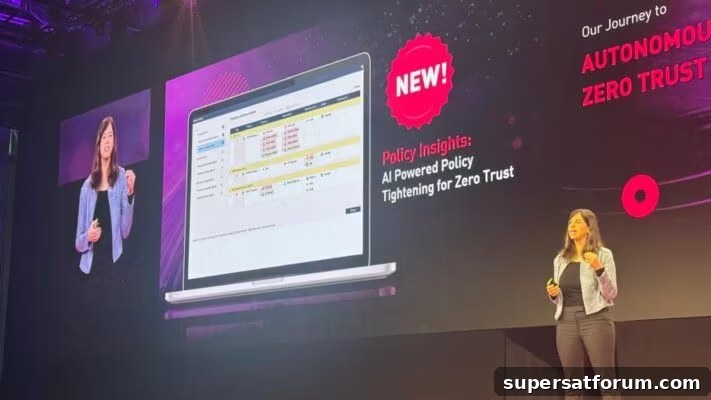
The siloed nature of hybrid environments forces security teams to review and reconcile policies across dozens of systems and tools. Those tasks are often manual, slowing operations and weakening zero trust, threat mitigation and infrastructure management—factors that increase the risk of breaches and outages. Check Point’s six new and enhanced AI-driven innovations speed operations and improve threat prevention in three key ways:
- Unified identity and policy: By leveraging AI and identity-aware controls, administrators can implement more effective and granular security policies that ensure only authorized users access critical resources. Simplified visibility and policy analysis across environments helps security teams maintain good security hygiene and compliance.
- Threat prevention through collaboration: AI helps organizations detect and block threats across multiple locations in real time, reducing human error and shortening the time to remediate incidents.
- Simplified operations: AI-driven insights reduce repetitive work and streamline processes across the security chain. That leads to stronger zero trust posture, better lifecycle management and fewer infrastructure disruptions.
Together, these enhancements aim to give security teams centralized control, faster response times and more consistent enforcement of protections across hybrid environments. By reducing manual tasks and increasing automation, organizations can better defend against growing cyberthreats while lowering operational costs and complexity.