Nokia (NYSE: NOK) has released its year-end financial results for 2013. Observers have been watching closely to gauge the company’s performance since Microsoft’s acquisition of its devices business last September.
The numbers show a challenging year. Sales in Devices & Services fell, with Operations down 21%, NSN (Nokia Solutions and Networks) declining 22%, HERE down 9%, and Advanced Technologies decreasing 20%. While these figures look worrying at first glance, the full picture is more nuanced.
One bright spot for Nokia in 2013 was the steady growth of the Lumia smartphone line. Lumia saw strong year-over-year gains overall, although there was a slight dip in the final quarter—an outcome some critics have interpreted as the beginning of a downturn, particularly over the critical holiday sales period.
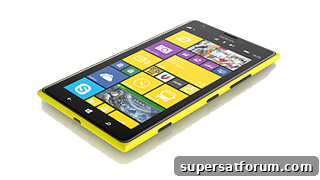
In the fourth quarter Nokia launched two large-screen models: the Lumia 1520 and the Lumia 1320. Both are “phablet” devices with 6-inch displays and helped expand Lumia’s appeal in the large-screen segment.
Looking ahead, industry expectations pointed to new Lumia flagships at the Mobile World Congress in February. Rumors suggested a more traditionally sized flagship, often referred to as the Lumia 1820 with a 5.2-inch display, alongside a new phablet model, the Lumia 1525. Early reports and leaks pointed to high-resolution 2K displays and Qualcomm Snapdragon 805 processors for those devices.
Remarkably, Nokia doubled Lumia sales in 2013 compared with the prior year, reflecting growing consumer interest in Windows Phone devices and Nokia’s hardware. That growth illustrated how the Lumia lineup was gaining traction despite wider business challenges.
In addition to Lumia, longtime rumors about a Nokia Android device—codenamed “Normandy”—gained renewed attention. Presented as an entry- to mid-level handset aimed at emerging markets, Normandy was seen as a potential successor to Symbian-era low-cost devices. By adopting Android, which avoids the licensing fees associated with some other platforms, Nokia could offer competitively priced phones. Early images and leaks suggested a heavily customized Android skin designed to resemble the Windows Phone interface, potentially smoothing the transition for users and exposing more people to Nokia’s tile-based design.
Bringing the widely praised Windows Phone user interface and its flat, tile-focused design to a broader audience could have strategic benefits. The familiar look and feel might encourage users to consider Windows Phone-powered devices for their next purchase, creating a potential upgrade path to higher-end Lumia models.
Overall, Nokia’s 2013 financial results were mixed. The handset division showed encouraging momentum, particularly for Lumia, yet other business areas—such as Nokia Solutions and Networks—reported substantial declines. The results highlight a company in transition: hardware units were gaining ground while legacy and services segments faced headwinds.
From Microsoft’s perspective, the strengthened Lumia performance likely validated its investment in Nokia’s devices business. For Nokia, the task ahead was to convert momentum in smartphones into sustainable, company-wide recovery while managing declines in other units.
What is your view on Nokia’s 2013 financial performance and the company’s prospects going forward?