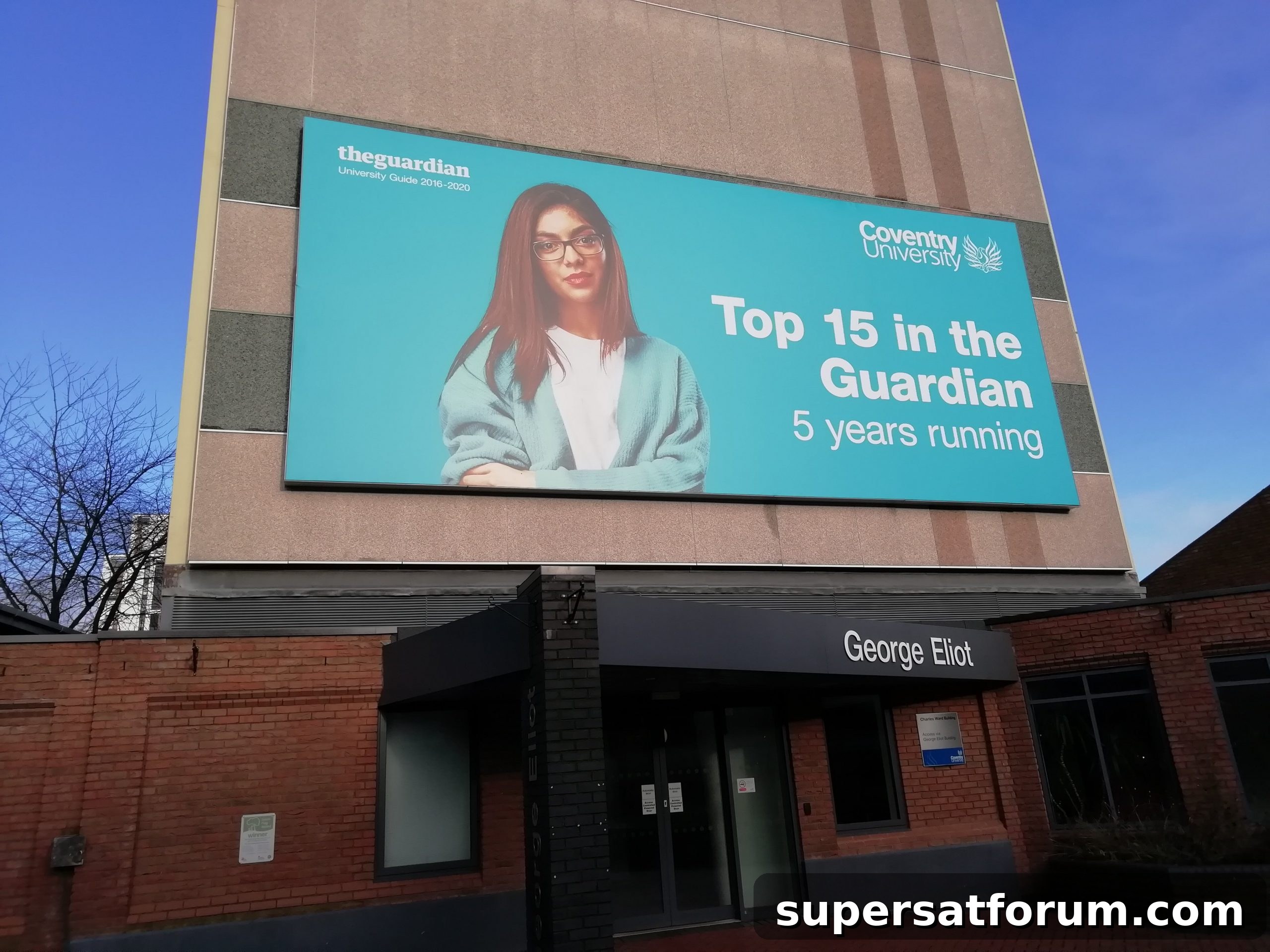
Vodafone has announced what it calls an industry first: the UK’s first standalone 5G network, built specifically for Coventry University.
Coventry University, recognised for its innovation and strong performance in digital teaching, will use the new network to trial virtual reality (VR) learning tools for student nurses and allied health professionals. The university recently retained a top 15 position in the Guardian’s university league tables, a rank Vodafone highlighted when announcing the collaboration.
The timing of the announcement marked the first anniversary of Vodafone’s commercial 5G rollout in the UK. That initial launch included a high-profile demonstration involving a rugby ‘tackle’ performed from more than 100 miles away; players from Coventry-based Wasps Rugby took part in that early showcase, even though Coventry itself was not among the first cities to receive 5G service.
Standalone 5G refers to a 5G network that operates independently of 4G LTE infrastructure. By removing the dependency on LTE signalling, standalone 5G offers ultra-low latency, stronger speed guarantees, and expanded possibilities for Internet of Things (IoT) applications.
“This is a landmark in our 5G journey,” said Scott Petty, Vodafone UK chief technology officer. “5G today is all about capacity and increased speeds. It’s giving people the best mobile experience ever, but it’s only the tip of the iceberg of what 5G can do.”
Petty added that the live standalone network demonstrates the broader future potential of 5G and the significant value it can deliver to the UK economy.
The deployment uses Ericsson’s 5G Radio Dot system and includes contributions from MediaTek, OPPO, and Qualcomm. Ericsson stressed that standalone 5G networks are central to 5G’s promise to reshape society, the economy, and industry by enabling new services and capabilities.
Ericsson has also announced global availability of standalone 5G New Radio (NR) software for mid- and low-band spectrum. That software allows communications service providers to run 5G NR without relying on signalling support from underlying LTE networks, simplifying the transition to fully independent 5G architectures.
Picture credit: James Bourne
Interested in hearing industry leaders discuss topics like this? Attend events in the 5G, IoT, blockchain, AI & big data, and cybersecurity & cloud spaces hosted as part of the industry expo series, with upcoming shows in locations such as Silicon Valley, London, and Amsterdam.