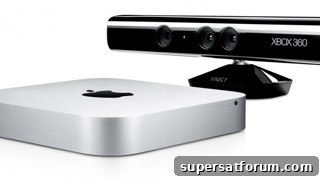
Microsoft’s Xbox stood out from its main competitors largely because of Kinect, an innovative motion-detecting camera. While gamers gradually appreciate its benefits, developers have been adapting the device for many creative applications for years.
Apple has a history of acquiring technologies to enhance its products. A clear example is Touch ID on the iPhone 5S, which became possible after Apple acquired AuthenTec in 2012.
Now Apple appears to be pursuing motion-detection technology as well. Reports indicate the company acquired PrimeSense, the developer behind Kinect, for a rumored $360 million.
Although the exact Kinect implementation is likely covered by a strict license with Microsoft, PrimeSense has continued developing next-generation systems. One notable project, codenamed Capri, is a smaller, lower-power 3D system-on-chip designed to be embedded in tablets, laptops, thin displays, and smartphones.
Apple’s main competitor in the smartphone market is Samsung, with whom it has engaged in long-running legal disputes. Samsung introduced gesture-based controls in its Galaxy S4, marketed under the name “Air Gestures.” This shows clear industry interest in hands-free, motion-driven interfaces.
Companies such as Microsoft hold comprehensive patents in this space, including protections for systems that mimic physical objects or recognize sign language. These intellectual property claims shape how gesture and motion interfaces develop across platforms.
Speculation has followed Apple’s decision to include the M7 motion coprocessor across iPads as well as iPhones. A likely reason is power-efficient processing: offloading motion detection and related camera tasks to a low-power chip—similar to how the gyroscope, accelerometer, and compass are handled—could reduce battery drain when enabling continuous sensing or gesture recognition.
Apple’s official response to acquisitions remains the same: “Apple buys smaller technology companies from time to time, and we generally do not discuss our purpose or plans.”
Looking at past acquisitions like AuthenTec, which led to Touch ID appearing in consumer devices within about a year, it’s plausible that PrimeSense technology could also appear in Apple products relatively quickly. Potential applications include advanced gesture control for future Apple TV hardware, tablets, or other devices where low-power, embedded 3D sensing would be valuable.
Ultimately, PrimeSense’s Capri chip offers Apple a compact, energy-efficient solution to add spatial awareness and gesture capability across product lines, without relying on full-size camera systems. Whether Apple integrates this into smartphones, tablets, set-top boxes, or new hardware categories, the acquisition signals a strategic interest in bringing motion-driven interaction to its ecosystem.
What do you think Apple will do with their PrimeSense acquisition?