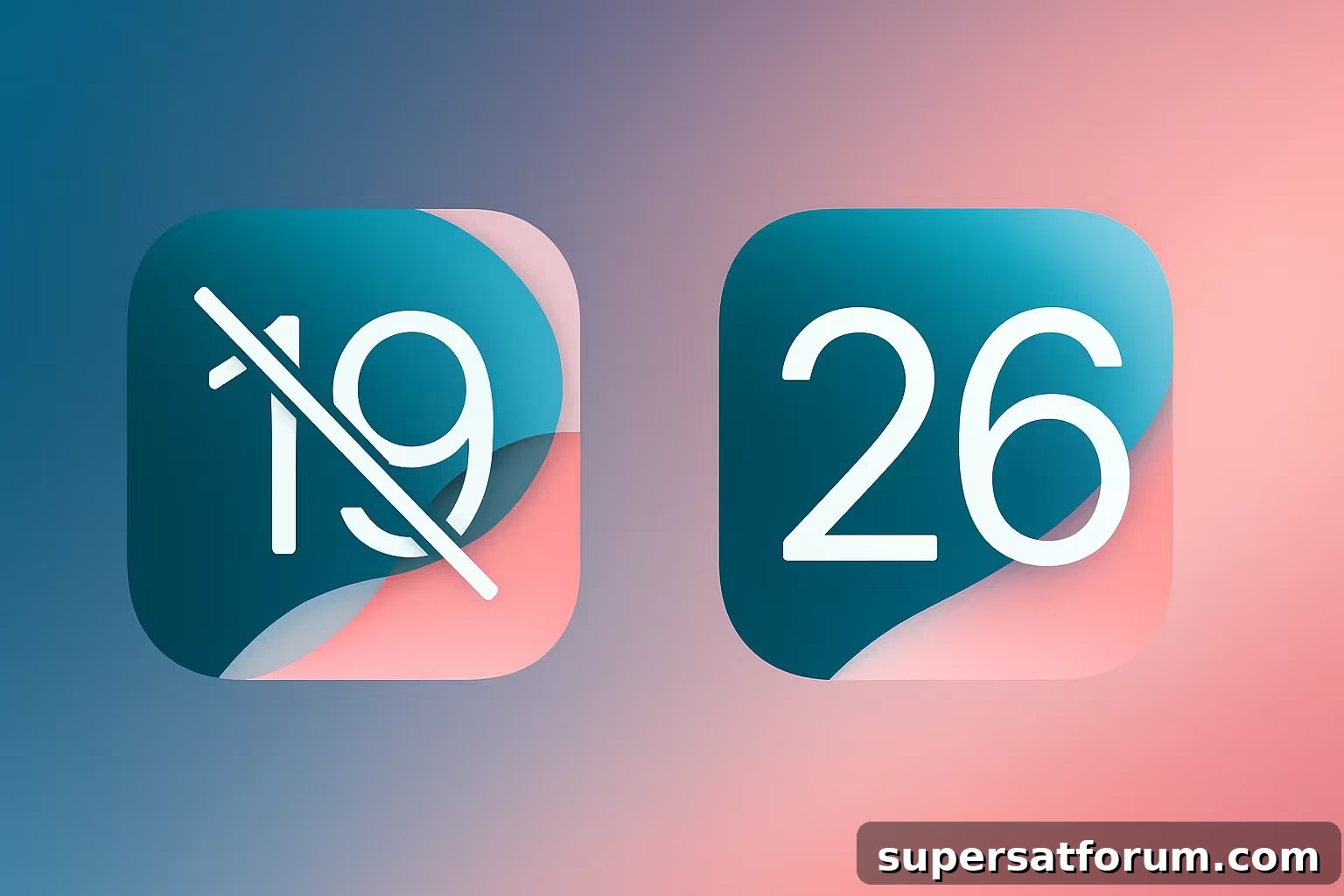
Apple will introduce a major change at WWDC 2025: instead of continuing with sequential numbering, it will name its operating systems by year. That means in fall 2025 we will see iOS 26 instead of iOS 19, and the same change will apply to iPadOS, macOS, watchOS, tvOS and visionOS. The move is intended to unify and simplify Apple’s software lineup.
If you’ve ever wondered why your iPhone 16 runs iOS 18, while your MacBook uses macOS 15 and your Apple Watch runs watchOS 12, you’re not alone. Apple has acknowledged that its OS numbering became confusing. The upcoming update will introduce a new year-based naming scheme. So—expect iOS 26. You’ll likely also see point releases such as version 25.1 before the annual release.
Main change: Year-based naming
According to Bloomberg, Apple will announce at WWDC 2025, beginning June 9, that it will adopt year-based names for its operating systems instead of continuing with sequential numbers. So in fall 2025 we will get iOS 26, iPadOS 26, macOS 26, watchOS 26, tvOS 26 and visionOS 26.
The change is intended to align the various OS versions, which ended up with different numbers due to different release schedules. For example, iOS is currently at version 18, watchOS is at version 12 and visionOS is at version 2.
Visual redesign: Inspired by visionOS
Beyond the renaming, Apple is also expected to introduce a visual refresh across its operating systems, drawing inspiration from visionOS, the software for Vision Pro. Users can anticipate rounder icons, more translucent elements and a more dynamic interface that will be consistent across devices.
This combined change—simpler year-based names and a unified visual language—aims to reduce confusion and create a clearer, more cohesive experience across iPhone, iPad, Mac, Apple Watch, Apple TV and Vision devices. Developers and users alike should see more consistent UI elements and design cues, making transitions between devices more intuitive. Apple’s move to year-based naming also sets clearer expectations about cadence and alignment with calendar years, which could help both consumers and enterprise customers plan updates and compatibility more easily.
WWDC 2025 will likely provide more specifics about the rollout schedule, feature highlights and compatibility details, but the core message is a shift toward clarity and consistency: one naming convention and one visual direction across Apple’s ecosystem.