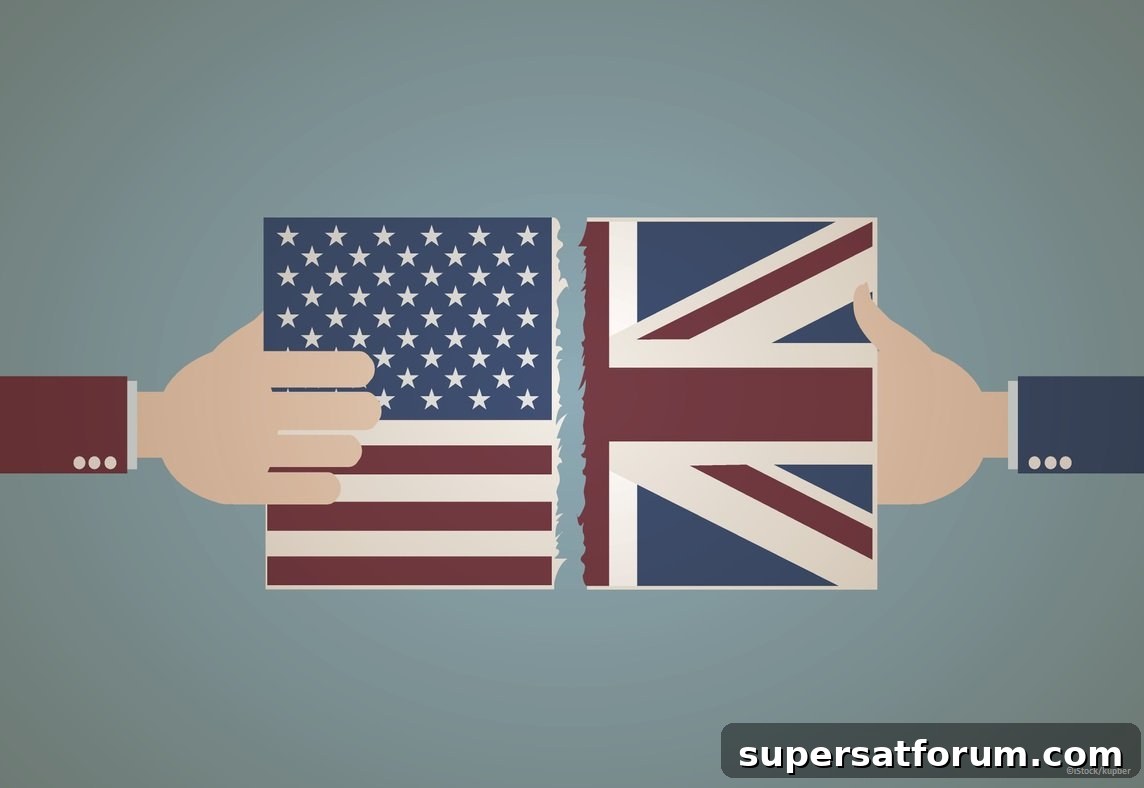
President Trump appears poised to secure the UK’s agreement to bar Huawei from participating in national 5G networks, following comments from prominent Conservative figures.
Arriving in Britain amid heightened tensions, Trump encountered a range of problems facing the country: continued Brexit uncertainty affecting businesses, a weakened outlook for sectors such as manufacturing across parts of Europe, a departing prime minister, and protests surrounding his state visit.
US Ambassador to the UK Woody Johnson warned that the future of intelligence-sharing between the United States and Britain would be “to be determined” if the UK allowed Huawei to bid for 5G contracts. Britain’s Foreign Secretary Jeremy Hunt responded by insisting that the UK would “never” jeopardize trans-Atlantic intelligence cooperation.
With Theresa May stepping down as prime minister, a leadership contest has begun within the Conservative Party. Several candidates, including Sajid Javid and Jeremy Hunt, have voiced concerns about permitting Huawei to participate in national 5G infrastructure.
Sajid Javid said he would be uncomfortable allowing “any company, whichever country it’s from, that has a high degree of control by a foreign government, to have access to our very sensitive tech communications.”
Jeremy Hunt told US television network CBS that Western nations must consider whether it is wise to allow a single country to obtain a dominant position in technologies that everyone will increasingly rely on.
President Trump is scheduled to meet with outgoing UK Prime Minister Theresa May on Wednesday, with Huawei expected to be a key topic of discussion.
Causing a stir
Ahead of his visit, Trump sparked controversy by criticizing London Mayor Sadiq Khan while offering apparent support to former mayor and prime minister hopeful Boris Johnson. Many in both Britain and the United States still recall Trump’s previous UK visit when he turned his back on, and walked in front of, Queen Elizabeth II—an act that breached royal protocol.
Trump’s intensifying tariff dispute has affected global markets and placed Huawei at the center of geopolitical friction. The company has faced restrictions impacting its telecommunications and consumer divisions. At various points, Huawei lost access to future Android updates, ARM’s chip architecture designs, Qualcomm’s chipsets, and was temporarily excluded from industry groups such as the Wi-Fi Alliance, the SD Association, and the Bluetooth SIG.
In response to rising tensions, Huawei reportedly asked employees to cancel meetings with American contacts. American staff at Huawei’s China headquarters were instructed to remove their laptops and leave the premises, and visitors to Huawei campuses have been subject to checks for US passports.
China’s ambassador to the UK, Liu Xiaoming, urged the UK government in April to make an independent decision on Huawei, warning against protectionist measures. From Beijing’s perspective, such measures are part of the wider US-China trade dispute; Liu said he expected a “truly open and fair” Britain to maintain a level playing field.
Coverage of these developments will likely occupy British and American newsrooms for days to come as governments and industry leaders weigh the security, economic, and diplomatic implications of 5G supply choices.
Interested in hearing industry leaders discuss topics like these? Attend co-located events such as IoT Tech Expo, Blockchain Expo, AI & Big Data Expo, and Cyber Security & Cloud Expo World Series, which hold conferences in locations including Silicon Valley, London, and Amsterdam.