
The public sector handles large volumes of sensitive information related to public services and administration. Protecting this data from breaches is crucial to prevent identity theft, financial loss, or misuse of personal information. Maintaining public trust in government institutions is also essential.
Rising cyber threats
Ransomware attacks against public organizations are occurring more frequently than ever. Such attacks can lock down systems and block digital communication, with attackers demanding significant ransoms to restore access. Avoiding digital communication is not a viable option today, so organizations must adopt a consistent, structured approach to cybersecurity. This is the only realistic way to keep digital communications and services protected.
How to protect yourself from cyberattacks
There is no single fix that guarantees protection from every cyberattack. However, many measures can reduce the likelihood of an incident and limit the damage if one occurs. Below are four practical recommendations to strengthen your organization’s security posture.
1. Build a strong security culture
A robust security culture is one of the most effective defenses an organization can develop. Cybersecurity is not only a technical challenge; it is also a human one. Attackers often exploit human behavior and organizational processes in addition to technical vulnerabilities. Creating and maintaining a strong security culture is therefore a critical part of any cybersecurity program.
Improving security culture requires changes in attitudes and behaviors across the organization. Treat cybersecurity as an organization-wide responsibility rather than solely an IT issue, and ensure management prioritizes it. The mindset that should permeate the work is that security enables business operations rather than impedes them.
Invest in ongoing training, clear policies, and leadership commitment to make secure practices part of everyday work.

2. Segment your networks
Network segmentation limits the impact of a cyberattack. Without segmentation, sensitive data can be exposed or altered, and malware and ransomware can spread quickly and uncontrollably, rendering systems unavailable. Attackers rarely go directly to a high-value target; they often infiltrate through weaker points at the network edge, or via email and customer support channels, and then move laterally. Many attackers operate patiently and incrementally, which means critical systems may already be compromised without obvious signs.
When segmenting systems into security zones, use a risk-based approach. This prevents ad hoc measures and helps justify and prioritize investments by clearly showing which risks are being mitigated or reduced.
3. Require security from your suppliers
To ensure your information security remains robust over time, confirm that your suppliers commit to responsible digital practices. Do they provide security updates throughout a product’s lifecycle? Do they conduct regular threat and security analyses? Will their products remain secure over time? These are essential questions to ask suppliers so you can be confident in the long-term security of the solutions you procure.
4. Update software securely
Most organizations today rely on external software supply chains, even when there is local IT infrastructure and maintenance. All software—operating systems, business applications, and more—requires updates to add features, fix bugs, and patch vulnerabilities. Updates are typically downloaded from vendors or other trusted third parties over the internet, and sometimes via removable media to limit exposure.
Best practice is to obtain updates only from trusted sources and verify their integrity—check checksums or digital signatures for every downloaded package against vendor-provided values. However, if an attacker manages to tamper with a package—injecting backdoors, ransomware, or other malicious code—integrity checks may be ineffective unless the entire distribution chain is secure. Organizations that produce or consume software packages should therefore ensure the integrity of the supply chain to prevent compromised updates from reaching users.
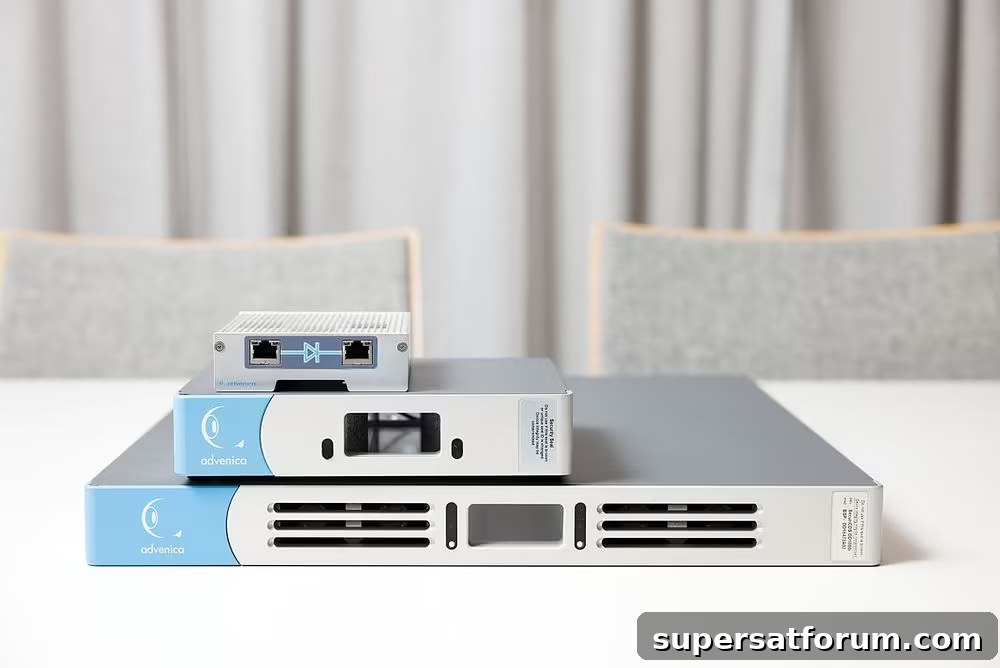
Advenica products that enhance your security
To protect sensitive systems and confidential data, Advenica’s datadiodes offer a highly secure option. A datadiode allows data to flow in one direction while preventing data from returning the other way. Because datadiodes are hardware-based rather than purely software solutions, they cannot be directly compromised by malware, which provides strong protection. Organizations handling sensitive information can benefit significantly from datadiodes to ensure secure data exchange.
To further reduce attack vectors while enabling controlled, selective access from remote networks, deploy a security gateway for controlled information exchange. Using Advenica ZoneGuard with secure remote access enforces access control and significantly reduces risks associated with remote connections between unsecured and protected environments. Incoming information is validated and transformed so that sensitive data remains within the protected network and malware cannot propagate.
Importing files into secure environments poses a substantial risk unless files are properly sanitized before transfer. Advenica’s File Security Screener offers an enterprise-grade solution that combines malware scanning and content disarm and reconstruction (CDR) with network separation. This delivers an effective, scalable, and reliable method for secure file importation.
What to consider when procuring IT security
If your organization plans to procure IT security solutions, there are several important steps to follow to ensure a successful procurement:
Step 1: Conduct a needs analysis
Step 2: Send an RFI (Request for Information) to potential suppliers
Step 3: Specify requirements
Step 4: Prepare the procurement documentation
Step 5: Evaluate proposals and select a supplier
A structured procurement process helps ensure that you choose solutions that match your risks, budget, and long-term needs. Prepare clear evaluation criteria and involve stakeholders from security, operations, and procurement early in the process.

Why choose Advenica as your security supplier
Advenica has long experience working with public sector clients. For more than 30 years the company has been a trusted supplier to national defense customers and other organizations with sensitive systems and digital information. This history has provided deep expertise in cybersecurity and high-assurance solutions.
Founded in 1993, Advenica designs, develops, and manufactures unique products in Sweden. The company is privately listed and has a proven track record delivering top-level security solutions.
Advenica’s products enable secure isolation of networks while allowing controlled, secure information exchange. Their solutions can also assist in meeting compliance requirements such as GDPR, NIS, and national protective security legislation.
Often Advenica products form part of a broader security architecture, but they remain a crucial component for protecting the most critical digital assets. Make sure such capabilities are included in your procurement to safeguard essential information.
Key questions to consider when procuring IT security:
• Are certifications such as Common Criteria important, or do you require a national certification?
• Is it important that the supplier is a Swedish company?
• Is long experience in security solutions important for your organization?
• Do you require deep expertise in high-assurance security?