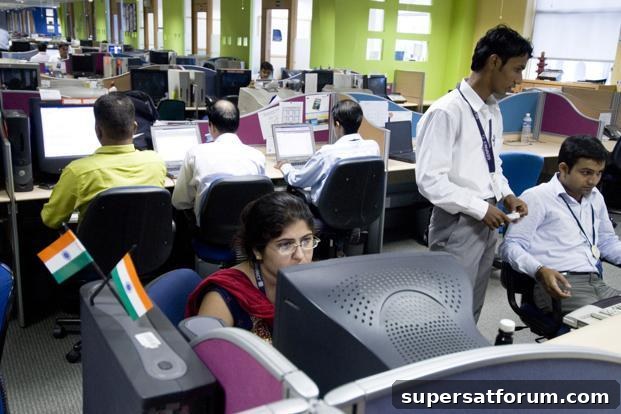
“Good morning, this is Steve, how may I help you?”
For many American callers to toll-free numbers, a familiar, friendly accent answering with that or a similar greeting became synonymous with quick problem resolution.
The story began in 1998 when a small group of entrepreneurs launched India’s first call centre with just 18 employees. Over the following decade and more, the industry exploded: thousands of call centres opened and countless young Indians found work. India emerged as the preferred destination for companies seeking to cut operating costs while increasing revenues. Beyond voice services, firms began outsourcing a wide range of back-office functions—payroll administration, insurance processing and other non-core services—taking advantage of India’s talent pool and cost structure.
Rise of the Philippines – The New Competitor
After a period of dominance as the lead provider of BPO services, India faced intensifying competition from the Philippines over the past several years. Observers suggested India was losing some of its allure for outsourcing, citing rising infrastructure and operational costs that squeezed clients’ margins. As a result, India ceded roughly 10 percent of global voice-related outsourcing work.
Other factors strengthened the Philippines’ position. A much higher share of Filipino university graduates demonstrate strong spoken and written English—estimates suggest around 30 percent—compared with a lower proportion in India. Companies also reported high attrition in India after investing heavily in training; at one point turnover rates surged as high as 55 percent in some centres.
Does that mean the end of India’s BPO story? Not at all. India still holds important advantages.
How India Fought Back
Despite losing some voice business to the Philippines, India has steadied and reclaimed momentum. Several enduring strengths keep it a top outsourcing destination.
Key reasons India remains a leader:
- Large, Working-Age Population: India’s demographic scale is a major asset. Statistics indicate India has roughly 484 million people aged 25 to 54, compared with about 38 million in the Philippines, offering a vast labor pool for diverse roles.
- Government Support and Skill Development: Indian authorities and private initiatives have actively promoted training in communication and technical skills. An estimated 350 million people in India have at least some proficiency in English, supporting large-scale hiring for customer-facing and knowledge-based roles.
- Strong IT and Technology Infrastructure: India’s long-established IT expertise translates into reliable, high-quality infrastructure for BPO operations, enabling efficient delivery of services across voice and non-voice processes.
- Business and Service Diversity: India expanded beyond voice-centric services into higher-value back-office and knowledge-based work. This shift helped build a robust Knowledge Process Outsourcing (KPO) sector and fostered new delivery models—Platform BPO and cloud-based Business Process as a Service (BPaaS)—that meet complex client needs.
Because of these strengths, roughly 80 percent of U.S. and European companies continue to rank India among their top outsourcing destinations.
Far from fading, India’s BPO industry has adapted and evolved, consolidating its position and continuing to grow in capability and scope.