At a high-profile panel at MWC in Barcelona, industry leaders shared their perspectives on the evolving state of 5G and its potential impact on the broader economy. The consensus: 5G matters a great deal, but its exact definition and final form are still being determined.
That uncertainty doesn’t mean there isn’t a clear vision for what 5G should deliver. The panel focused on core principles—particularly quality, reliability, intelligence, and collaboration—that will shape the next generation of networks.
The panel included representatives from the European Commission, Nokia Solutions and Networks, Orange, Alcatel-Lucent, and Ericsson, giving the audience a wide-ranging view of where 5G development stands today, even if many specifics remain vague.
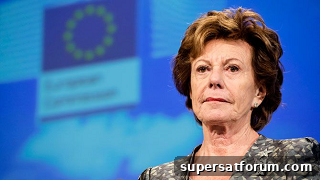
From left – Ulf (Ericsson), Mari-Noëlle (Orange), Neelie Kroes (EU Commission), Hussein (5G-PPP), and Marcus (Alcatel)
Hossein Mooin, Executive Vice President at Nokia Solutions and Networks, opened with a candid statement: “I have no idea what 5G is. The reason being is that 5G is a network which will be defined in the future.”
Mooin emphasized that whatever form 5G takes, it must be more intelligent than current networks. He used the example of autonomous vehicles to illustrate the need for networks that deliver extremely fast, reliable reactions. This requirement for high reliability and quality of service led him to suggest that 5G will likely complement existing networks rather than replace them entirely.
Mari-Noëlle Jego-Laveissière, Chief Technology Officer at Orange, echoed the focus on quality and reliability. “We need to put the quality of the experience at the core of 5G,” she said. “Of course our customers want to be connected at high speed, but they want to be connected at all times.”
She explicitly dismissed the idea of 5G as merely “4G+1,” arguing instead for a focus on new services. While specifics were not fully detailed on the kinds of services 5G will enable, trends such as the Internet of Things (IoT) and machine-to-machine (M2M) communication are likely to play major roles in defining the new possibilities.
Across the panel, there was strong agreement that innovation will come from collaboration across multiple fields. Ulf Ewaldsson, Chief Technology Officer at Ericsson, summarized this point: “We have a tradition in this industry of collaboration.”
He stressed that the industry must welcome companies and innovators who haven’t traditionally been part of telecom development. Start-ups and technology firms focused on M2M, cloud services, and other emerging technologies bring valuable experience and novel requirements that can inform how networks are built. By incorporating those perspectives, traditional vendors can better design the infrastructure necessary for a reliable, high-performing future network.
Ewaldsson also highlighted that collaboration needs to extend beyond companies to policymakers who can help remove obstacles that impede progress. Neelie Kroes, Vice President of the European Commission, closed the panel by emphasizing the economic and social importance of a robust telecom sector.
“For me, this is the most important event of the whole conference – I can explain why…”
Kroes framed 5G not only as a technological milestone but as a critical driver for jobs and economic opportunity, particularly for youth employment in Europe. She argued that a healthy telecommunications industry underpins innovation across sectors such as environmental monitoring, e-health, and automotive technologies, making it essential that the telecom sector performs well.
Kroes has been active in efforts to harmonize and simplify Europe’s telecom market to encourage investment and innovation. She pointed to ongoing work toward a single telecoms market across 28 countries, noting that while the effort is not yet final, considerable progress has been made.
The overall takeaway from the panel: 5G promises transformative capabilities, but realizing its potential will require clear priorities—quality, reliability, and intelligence—paired with broad collaboration among industry players, start-ups, and policymakers. The shape of 5G is still being written, and the next steps will depend on cross-sector cooperation and policy frameworks that enable innovation.
What are your thoughts on these industry leaders’ perspectives about “5G for the Connected Continent”?