Whenever you open the news these days, most headlines focus on cyber threats, online bullying, indecent images, fraud, and a long list of other negative issues tied to the web. It’s important, though, to step back and consider the positive ways the internet connects people and drives meaningful action.
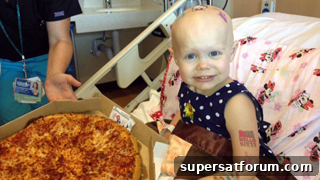
Lauren Hammersley’s two-year-old daughter, Hazel, was diagnosed in April with stage 3 neuroblastoma, a rare childhood cancer. While hospitalized, Hazel wanted pizza. Her mother taped a sign reading “SEND PIZZA RM 4112” to the hospital window.
An image of that sign was posted to Reddit by user ashortstorylong and quickly rose to the front page. Kind strangers from around the world arranged pizza deliveries to Children’s Hospital Los Angeles, bringing a big smile to Hazel’s face.
So many pies arrived that the hospital posted a message on its blog asking people to stop sending more: “If you’re on Reddit and have seen the adorable photo, please help Children’s Hospital Los Angeles and patient mom, Lauren Hammersley spread the word: You’ve made a little girl very happy but NO MORE PIZZA IS NEEDED.”
Rather than more pizza, Lauren asked well-wishers to redirect their generosity to cancer research charities or to contribute to Hazel’s Fund.
This story highlights how the internet can change people’s lives directly and immediately. It also shows the web’s power to raise awareness and support causes that can truly matter.
For example, a Tumblr campaign called “We Are Not Trayvon Martin” gathered images and stories from mixed-race individuals to underscore concerns about racial profiling and to show solidarity after the shooting of Trayvon Martin. Following the tragedy and the public response, the #WeAreTrayvonMartin hashtag helped fuel protests and sustained public attention.
Trayvon Martin’s death and the acquittal of George Zimmerman prompted widespread debate; public pressure and online activism contributed to continued scrutiny and an ongoing inquiry by U.S. authorities. This is another instance where online communities amplified voices and pushed for accountability.
Beyond individual campaigns, the internet can elevate whistleblowers and public-interest reporting. Edward Snowden, the former NSA contractor who disclosed widespread surveillance programs, relied on online platforms and global media to get his revelations public attention. Without those channels, Snowden’s disclosures about government surveillance would have had far less reach. His case also illustrates how digital networks can shape international responses, including asylum discussions and legal actions.
Of course, free expression online often provokes opposition. Political leaders who prefer state-controlled messaging sometimes blame social media for unrest. During protests in Istanbul, Turkish authorities criticized Twitter for enabling organization and dissent. The tension reflects a broader struggle: protestors use decentralized platforms to organize and share information, while some governments seek to limit those channels, sometimes even by restricting internet access entirely, as happened in other countries during periods of unrest.
This article has touched on several shades of internet impact: from heartwarming acts of generosity to large-scale political and social consequences. The web can foster compassion, raise funds for urgent needs, amplify marginalized voices, and expose abuses of power. It can also be a battleground between state control and citizens’ rights to communicate and organize.
Ultimately, the internet is a tool that reflects how people choose to use it. Embrace its potential to support causes, protect freedoms, and connect communities. When used thoughtfully, the web can help change the world for the better.
What do you think about the internet and its impact on society?