Earlier this week we spoke with Simon Watson from Spectralink about why BYOD (bring your own device) isn’t always suitable in certain workplaces. While personal devices offer convenience, industries such as healthcare require purpose-built hardware that can withstand heavy use and strict sanitation.
Watson noted that consumer phones are not designed to tolerate the knocks of industrial environments or the harsh disinfectants used to clean equipment in hospitals.
One of BYOD’s main benefits is familiarity: users already know how to operate their own devices. Android, which held roughly 79% market share at the start of 2014, is particularly familiar to many. Spectralink chose Android as the operating system for PIVOT to leverage that familiarity.
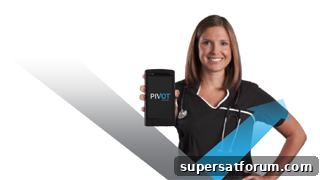
PIVOT is a “WorkSmart” device that blends smartphone-like usability with the durability and reliability required for employees who work inside buildings, such as hospital staff.
Key features include:
- An Android-based interface that is immediately familiar out of the box
- A 4.3-inch multi-touch capacitive display and a patent-pending ergonomic grip
- Integration with enterprise Android and XML-based applications to improve workflow
- Access to web-based resources and applications
- Customizable settings to suit individual roles and preferences
- Durable construction with long service life and ongoing support
- Damage-resistant Dragontrail™ glass
- Clear, high-quality voice from any in-building location
- Enterprise-grade security and privacy controls
- Compatibility with existing business applications, WLAN infrastructure, and telephone systems
- Over-the-air device management and software updates
- An integrated 1D and 2D barcode scanner
PIVOT represents a first in its category and a significant improvement over many existing bulky devices that rely on legacy interfaces and require extensive training.
As a Voice over Wi‑Fi (VoWLAN) device, PIVOT uses local area networks to deliver HD voice quality for employees working inside buildings.
In the interview, Watson pointed to research showing that in hospitals staff can spend about 45 minutes per person running back and forth to track down information needed to care for patients efficiently.
Contributing to this inefficiency, the study found that 61% of nurses and other staff still rely on handwritten notes to share critical information such as medical records and discharge instructions.
A purpose-built device like PIVOT, designed for usability and customization in clinical and industrial environments, can substantially increase efficiency while reducing reliance on paper notes.
Sten Dyrmose, CEO of Spectralink, said: “We have spent the past year developing PIVOT based on customer feedback and by observing how our handsets are used in everyday situations. Given the rigorous requirements our customers demand, PIVOT far surpasses the many limitations of consumer smartphones.”
Android’s flexibility is a major workplace advantage because it allows departments to configure devices with the applications and services that optimize their workflows.
Alaa Saayed, Senior Industry Analyst at Frost & Sullivan, observed that consumerization and BYOD pressures are driving enterprise endpoint vendors to innovate in device design, form factor, and capabilities.
“PIVOT has intelligently embraced the ‘WorkSmart’ concept,” Saayed said, “combining the best attributes of consumer smartphones with the ruggedness and quality required for VoWLAN devices. PIVOT can deliver industry-specific applications and features within a familiar smartphone form factor.”
PIVOT is available in North America, Europe, Australia, and New Zealand, with a list price starting at US$895 through a select group of reseller partners. For more information and product demonstrations, visit the manufacturer’s PIVOT page.
What do you think about Spectralink’s PIVOT? Has the company introduced a new class of devices?