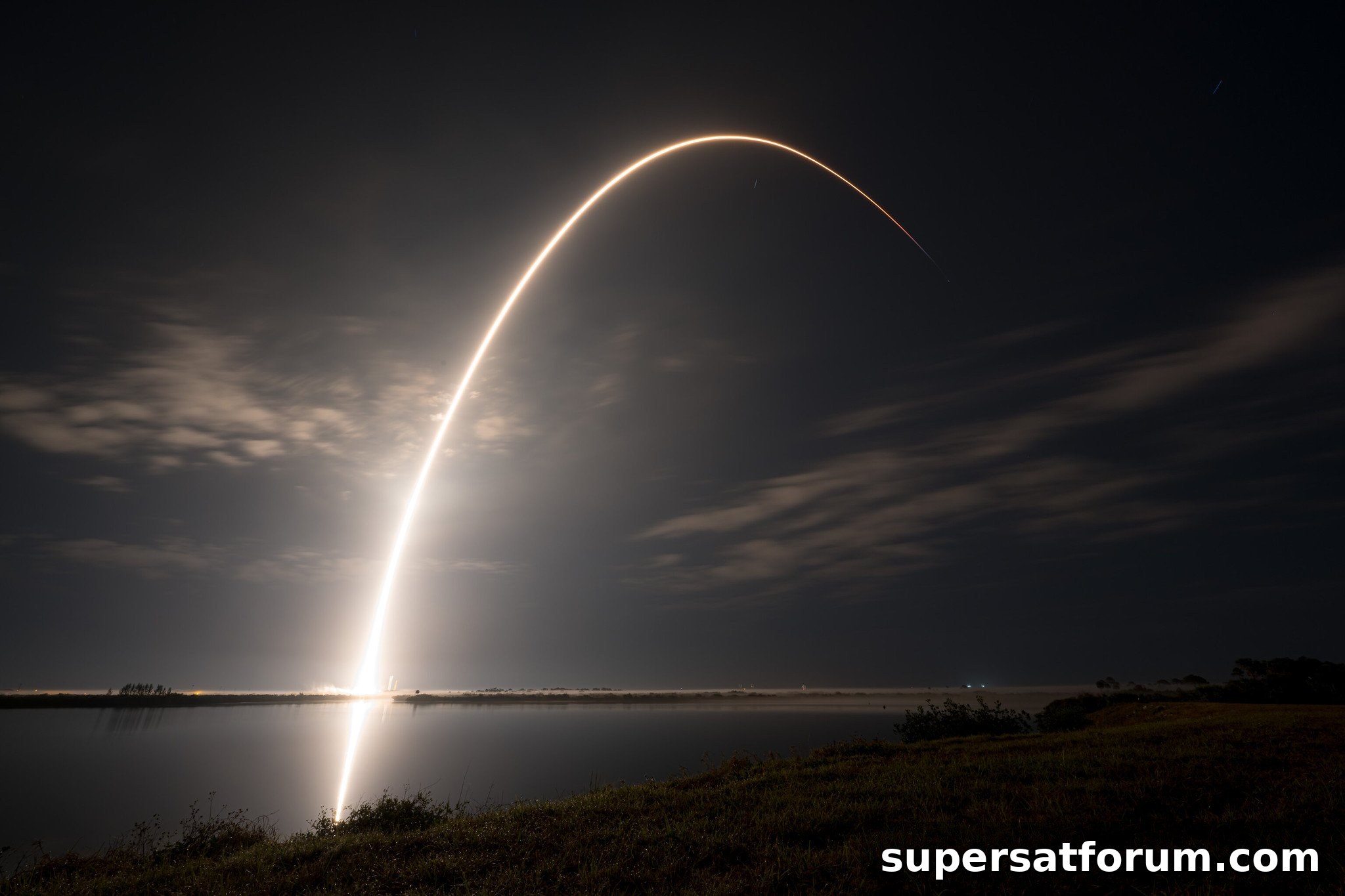
SpaceX has successfully demonstrated its new Direct to Cell capability by exchanging text messages between standard mobile phones on Earth using satellites in orbit.
On 2 January 2024, SpaceX launched six satellites specifically configured to connect directly with unmodified mobile devices. Within a week, the company put those satellites into service and transmitted text messages by using T-Mobile’s cellular spectrum.
Texts between two phones sent through our Direct to Cell satellites in space pic.twitter.com/jd8b7uiZSq
— SpaceX (@SpaceX) January 11, 2024
Receiving replies from the orbiting satellites confirms that SpaceX has closed the link budget needed for reliable two-way communication. Direct to Cell extends the Starlink broadband constellation by enabling connectivity for billions of existing 4G LTE phones and devices worldwide.
SpaceX plans to roll out text messaging first, followed by voice, data, and Internet of Things (IoT) services in 2025. The company says the system will work with current consumer devices without requiring hardware upgrades or apps.
Making conventional mobile phones compatible with satellite links required solving several engineering challenges. SpaceX designed custom radio components so satellites can transmit signals strong enough to reach phones on the ground while remaining weak enough to avoid causing interference with terrestrial networks.
Text messaging was a logical first milestone because it is resilient to latency and uses limited bandwidth compared with voice or high-definition video. Demonstrating short message service through orbiting satellites validates the core technology and paves the way for more advanced services.
By leveraging the existing Starlink infrastructure, SpaceX reduces deployment costs and enables global coverage. The Direct to Cell satellites can route traffic across Starlink’s optical inter-satellite links before handing it off to ground stations. From there, data travels through Starlink’s core network into the systems of partner mobile operators.
Regulatory approvals and local operator partnerships will influence the pace of commercial rollout as testing expands throughout the year. SpaceX points to rocket reusability and vertically integrated satellite manufacturing as factors that could allow rapid scaling when approvals and spectrum arrangements are in place.
(Image credit: SpaceX, licensed under CC BY-NC 2.0)
See also: T-Mobile achieves first six-carrier 5G aggregation
Want to learn about the IoT from industry leaders? Attend IoT Tech Expo events held in Amsterdam, California and London to hear from industry experts. These events are co-located with Digital Transformation Week and cover enterprise IoT and related technologies.
Explore other upcoming enterprise technology events and webinars powered by TechForge through their events listings.