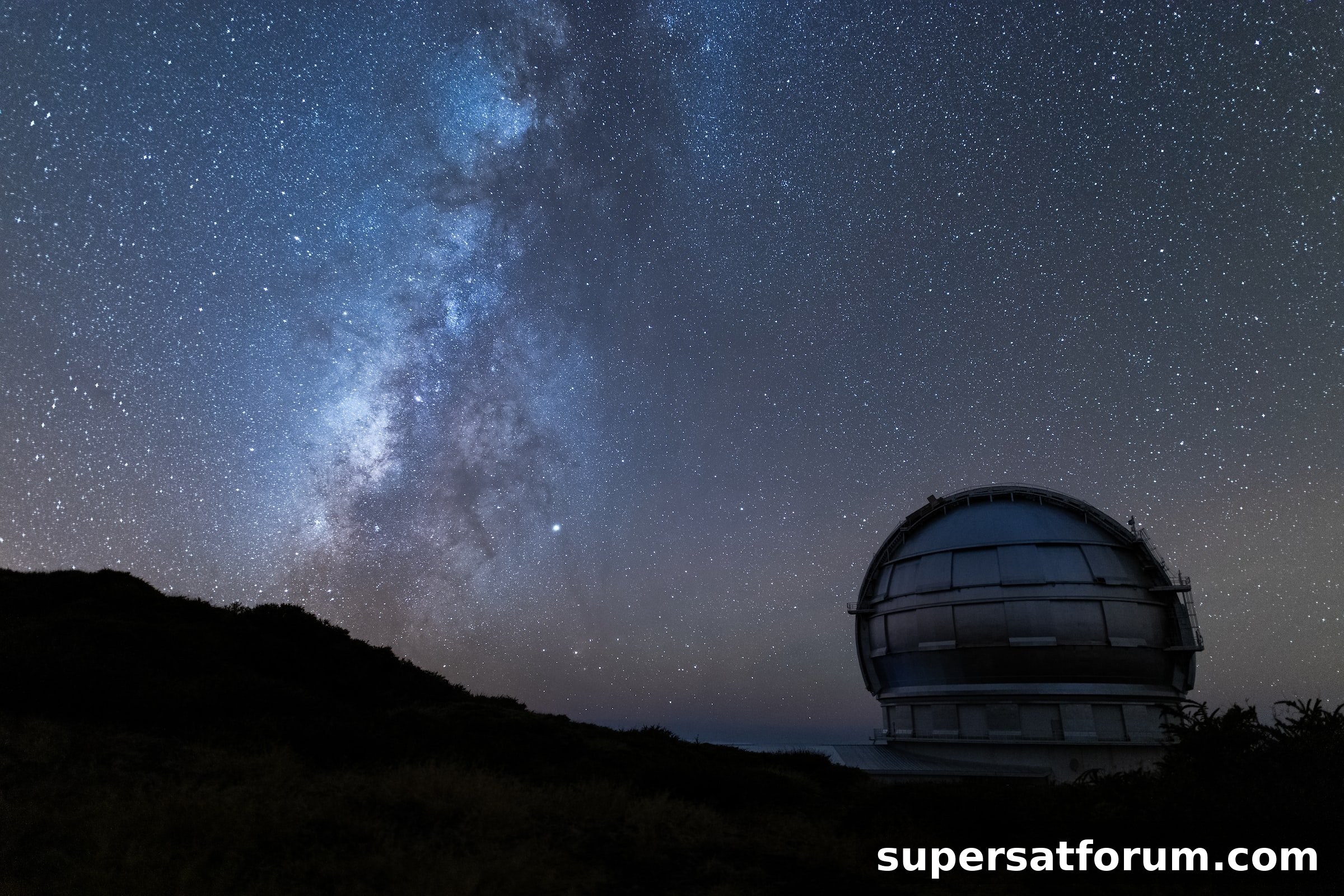
SpaceX has reached an agreement with the National Science Foundation (NSF) to reduce the impact of Starlink on astronomical observations.
Starlink’s broadband satellites have become a growing concern for astronomers. Professional and amateur observers worldwide have reported that large constellations of satellites are degrading the view of the night sky and contaminating long-exposure images used for research and astrophotography.
When telescopes take long-exposure images of the sky, satellite trails frequently appear, leaving bright streaks across images and complicating data analysis.
SpaceX has already implemented several steps to lessen this disruption. Measures include darkening satellite surfaces to reduce reflectivity, adjusting satellite orientation during critical observing windows, and adding sunshades to limit glint. While these steps help, they do not eliminate all interference.
Under the new agreement, the NSF and SpaceX will cooperate to further mitigate Starlink’s effects on optical and infrared ground-based astronomy. SpaceX has committed to pursue recommendations from major astronomy organizations, including lowering the optical brightness of satellites to about 7th magnitude or dimmer, which would make them substantially less visible to the naked eye and less intrusive in many imaging systems.
Radio astronomy faces a different challenge. Satellites can produce unwanted emissions outside their intended radio bands, known as frequency bleed, which increases background noise and makes it harder for radio astronomers to isolate faint cosmic signals.
The agreement specifies that Starlink satellites will avoid transmitting while they are above or near radio astronomy facilities, reducing interference during critical observations.
“We are setting the stage for a successful partnership between commercial and public endeavors that allow important scientific research to flourish alongside satellite communications,” said NSF Director Sethuraman Panchanathan.
SpaceX plans to deploy tens of thousands of satellites as part of its global broadband network; other companies such as OneWeb and Amazon are also increasing their satellite deployments. As these megaconstellations grow, coordination between industry and the scientific community is becoming essential to preserve the integrity of astronomical research and the appearance of the night sky.
(Photo by David Monje on Unsplash)
Related: FCC establishes space bureau to meet growing demands
Looking to revamp your digital transformation strategy? Learn more about Digital Transformation Week taking place in Amsterdam, California, and London.
Explore other upcoming enterprise technology events and webinars powered by TechForge.