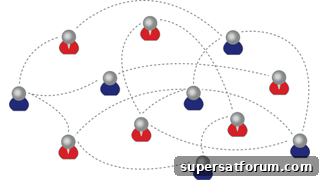
In a collaboration between SingTel and Ericsson, the two companies have introduced a SON—not a human child delivered by a stork, but a Self-Optimising Network. This technology is designed to manage network resources automatically and deliver better performance and reliability for users.
Traditional mobile networks are relatively rigid: a grid of cells intended to blanket cities and towns with coverage, while devices switch from one cell to another as they move. These handovers and static configurations can lead to congestion, dropped calls, and inconsistent data speeds in busy areas.
Singapore-based mobile operator SingTel has partnered with network equipment maker Ericsson to upgrade its HSPA network with a SON system. Instead of relying on fixed rules for handing devices from tower to tower at the edge of a cell, the new system enables base stations to adapt continuously. Through ongoing capacity calculations, the network dynamically determines how best to distribute load among cells.
If neighboring cells are congested, the SON can keep a user connected to a particular tower for longer to preserve performance. Conversely, if a cell tower fails or becomes unavailable, adjacent cells can expand their coverage to fill the gap, maintaining service continuity. This adaptability reduces dropped sessions and helps maintain consistent throughput across the network.
SON technology is still maturing, but as it advances it approaches a near “self-aware” state, requiring minimal manual intervention. Networks will be able to grow or shrink cell sizes, shift capacity, and respond to changing usage patterns with little operator oversight. That automation helps operators optimize network planning, build-out, and ongoing tuning more efficiently.
Industry activity around SON underscores its importance. Intucell, an early pioneer in self-optimization, was acquired by Cisco for $475 million, and AT&T has adopted Cisco‑Intucell technology for parts of its 3G and LTE infrastructure. Ericsson itself accelerated its SON capabilities with the acquisition of Optimi in 2010, strengthening its product portfolio in this space.
SingTel and Ericsson report meaningful benefits from SON deployment: improvements in network speeds—especially in crowded areas—alongside more resilient networks that experience fewer dropped calls and data sessions. Ericsson Singapore’s president and country manager, Nicholas Seow, noted that network complexity has reached a point where self-configuring, self-optimizing, and self-healing functions are indispensable for modern mobile networks. With multiple standards and a growing ecosystem of equipment vendors, automation is critical to streamline network planning, design, deployment, and optimization.
The advantages of SON are clear, and other vendors are actively developing or acquiring capabilities to compete. As operators face mounting demand and the prospect of rising capacity constraints, SON offers a way to optimize existing resources and defer costly capacity expansion. By intelligently reallocating radio resources, managing interference, and adapting to failures in real time, self-optimizing networks can improve both user experience and operational efficiency.
While SON is not a silver bullet and requires careful integration and testing, its potential to reduce operational complexity and improve service quality makes it an appealing option for operators looking to maximize the efficiency of their radio access networks. As the technology continues to evolve, wider adoption across 3G, LTE, and future radio technologies is likely.
SingTel’s partnership with Ericsson demonstrates a practical step toward more autonomous, resilient mobile networks. Many operators will likely follow suit, evaluating SON solutions to meet growing demand, improve customer experience, and lower operational costs. The move toward automation and intelligence in network management is a significant trend in the telecommunications industry—one that promises to make mobile connectivity more reliable and efficient for users everywhere.