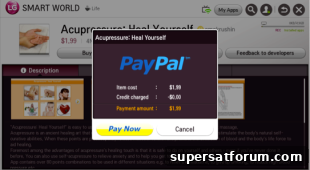
Integrating payment capability directly into smart TVs is an intriguing development, and this week South Korean manufacturer LG and payment facilitator PayPal made that idea a reality. But is the partnership a natural fit?
The new feature is available now on 2013 LG Smart TVs in Canada, the United Kingdom and the United States, with rollouts to Australia, France, Germany, Spain and Italy expected to begin this month.
By combining their services, LG and PayPal aim to make purchasing premium TV content faster and less cumbersome. The system includes an opt-in option that allows Smart TVs to remember users’ PayPal account details to streamline future transactions.
“Moving forward, it will also make it possible for LG to better integrate digital commerce with first-class home entertainment,” said Richard Choi, senior vice president of the Smart Business Center at LG.
Randall Davies, PayPal senior director of global business development, added: “We see Smart TV as a high-potential platform for commerce in the coming years, and we’re thrilled to be at the forefront with LG in integrating the ease, security and functionality of PayPal directly into LG Smart TVs.”
The partnership highlights the potential of combining PayPal’s established payment infrastructure with connected television platforms. Beyond simple purchases of premium content, the collaboration points to broader possibilities in TV-based commerce and advertising.
With both companies investing in the integration, they likely anticipate more sophisticated interactive advertising and transactional experiences than occasional pay-per-view purchases. As PayPal noted, charities and advertisers could also benefit by engaging viewers who are already receptive to donating or buying while watching.
This development comes at a time when the smart TV market is entering a period of rapid adoption. Recent research from Parks Associates indicates that smart TVs will reach roughly a quarter of U.S. households this year, and that 80% of smart TV owners regularly use apps—challenging older assumptions about how people interact with television.
Embedding payment options in the TV experience could change how viewers consume content, support causes, and respond to interactive advertisements. Whether users will adopt such functionality depends on their trust in the convenience and security of in-TV payments, as well as how naturally these options are integrated into the viewing experience.
Would you use a payment solution built into your smart TV?