
The rise of artificial intelligence offers promising opportunities for the telecommunications sector, but it also introduces important regulatory and ethical challenges that operators must address.
“AI delivers many advantages, including enhanced customer service, optimized network operations, identification of new business opportunities, cost efficiencies, and automation of routine processes,” said Sarah McBride, Principal Analyst of Regulation at Omdia. “However, these benefits come with a range of risks and considerations that companies cannot ignore.”
Key concerns include ensuring that training and operational data are unbiased and reliable, clarifying liability when AI-driven decisions go wrong, overcoming public skepticism toward automated decision-making, and managing increasingly complex privacy and security obligations.
Although still in its early stages within telecoms, AI is expected to become a major industry force in the coming years. Omdia’s latest report recommends that operators address regulatory and governance challenges now to prevent costly problems later.
“Regulatory activity around AI is accelerating and will likely continue,” McBride added. “Telcos should proactively implement risk management frameworks before deploying AI—ensuring data quality, accuracy, robustness, and non-discrimination are embedded into systems from the outset.”
The report emphasizes an ethical, human-centered approach to AI. As primary enablers of many AI-driven services, telecom companies have a responsibility to promote trustworthy, responsible AI practices that prioritize user rights and safety.
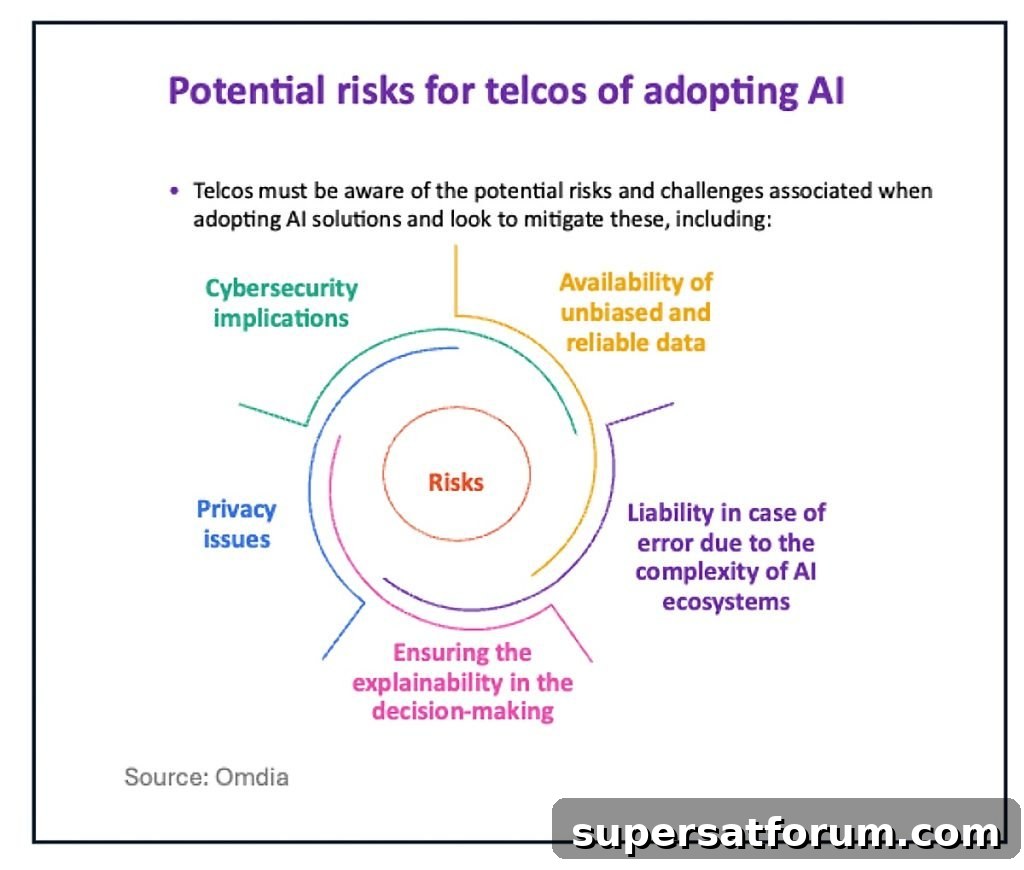
Regulatory requirements will differ depending on how AI is used. The report highlights a landscape already shaped by EU measures such as the Data Act, the Digital Markets Act, and the AI Act, alongside sector-specific frameworks including the European Electronic Communications Code, net neutrality rules, and data protection laws. Together, these rules will influence how AI solutions are developed and deployed in telecoms.
Data protection and security are central issues because AI systems typically require large volumes of data. Technologies that could affect public health, safety, or fundamental rights—especially those handling biometric data, critical infrastructure, or network security—will attract stricter oversight and compliance expectations.
“For high-risk applications, telcos must meet regulatory obligations such as transparency, human oversight, and robust data governance,” McBride said. “This includes conducting thorough risk assessments and establishing governance structures that can demonstrate compliance.”
Transparency plays a vital role in building public trust, particularly for customer-facing AI services. Companies should be prepared to explain how AI is used, disclose limitations, and provide channels for human review—requirements that are becoming legally mandated in many jurisdictions.
(Photo by Bernd Dittrich)
See also: Huawei eyes Asia-Pacific growth with AI cloud services

Interested in learning more about AI and big data from industry experts? The AI & Big Data Expo runs events in Amsterdam, California, and London and brings together leaders across AI, automation, blockchain, digital transformation, cybersecurity, and cloud technologies. These gatherings offer practical insights into AI deployment, governance, and the regulatory landscape—useful for telecom executives planning their AI strategies.
Explore additional enterprise technology events and webinars powered by TechForge to stay informed about developments in AI governance, data protection, and emerging best practices for the telecom sector.