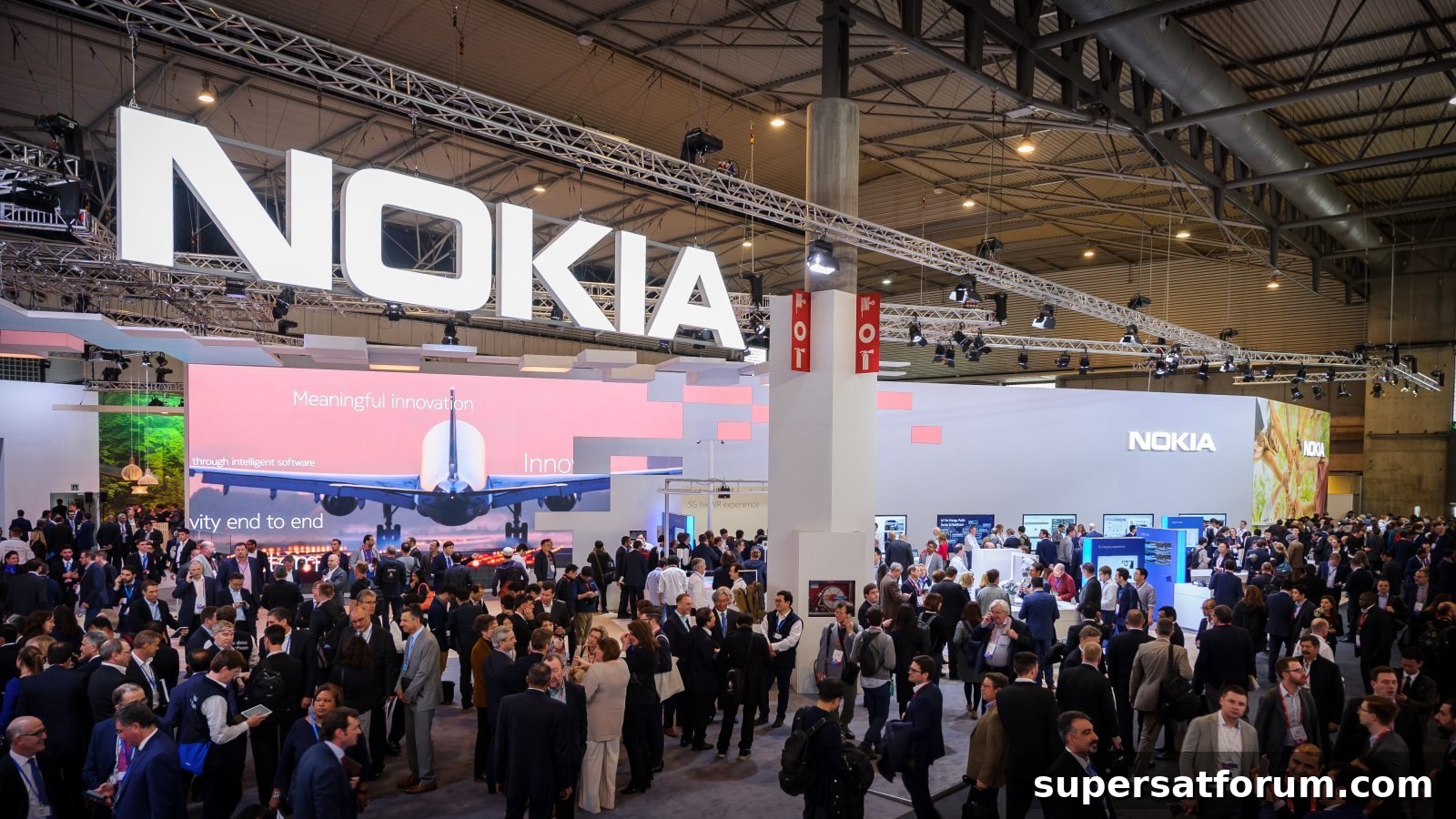
A five-year strategic partnership between Nokia and Tele2 IoT will streamline the delivery of Internet of Things (IoT) services to Tele2’s enterprise customers by leveraging Nokia’s worldwide IoT network grid (WING).
Through Nokia WING, Tele2 IoT will offer end-to-end IoT services that help enterprises manage global connectivity needs and assets such as connected vehicles and freight containers. Tele2 IoT’s customers span industries including transportation, healthcare, smart cities and utilities. With global IoT network access, these customers will benefit from low latency, continuous troubleshooting offered as a managed service, and advanced enterprise onboarding processes that simplify large-scale deployments.
To accelerate the global IoT ecosystem, Nokia and Tele2 IoT will collaborate on advanced technologies including 5G, Narrowband IoT (NB-IoT), LTE for machine-type communications (LTE-M), SIM management, and analytics. This collaboration aims to deliver scalable, reliable connectivity and to enable a broader set of IoT use cases across industries.
Ankur Bhan, head of WING at Nokia, said: “Nokia WING will enable Tele2 IoT to offer its enterprise customers a global service with flexible control, low latency and high levels of efficiency and enterprise automation. Together we will work on enabling new IoT solutions that can be adopted in various industries to deliver seamless, reliable and efficient processes to help businesses run more intelligently.”
Nokia WING has received industry recognition, including a nomination for the Global Mobile Award in the Best Mobile Network Infrastructure category at Mobile World Congress. In 2017, Nokia WING won IoT Leadership at the TechXLR8 Awards and received a “highly commended” recognition from Global Telecoms for the IoT Initiative of the Year.
Nokia also announced the forthcoming launch of the world’s first MulteFire small cell, designed to help enterprises, smart cities and mobile service providers utilize global unlicensed spectrum to build reliable, secure, high-capacity and wide-coverage private LTE networks.
Picture credit: Nokia