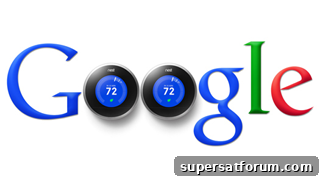
Nest Labs, the connected-home startup founded by former Apple engineers Tony Fadell and Matt Rogers, has grown rapidly since its launch—and today it was acquired by Google for $3 billion.
Instead of widespread congratulations, the announcement has provoked an outcry online. Social posts range from practical responses—“I just tore mine off the wall. Thanks for nothing, Google”—to broader expressions of anger and fear. Why are people so upset?
For most, the concern stems from privacy. Many users no longer trust Google after revelations about mass surveillance and data collection, and they are understandably reluctant to put devices that monitor home activity into the hands of a company that already collects so much personal information.
That said, there’s a trade-off between convenience and privacy. If you want truly smart, automated homes—devices that learn your habits, anticipate needs, and coordinate with one another—you must accept that some data is collected and processed. Google already gathers large amounts of information about many users; it also provides tools to review and delete some of that data.
On a small scale it’s possible to build a connected-home ecosystem using a single manufacturer’s products. But for a genuinely open, Android-like platform that allows devices from many makers to interact seamlessly, the reach and infrastructure of a web giant are often needed.
“Google will help us fully realise our vision of the conscious home and allow us to change the world faster than we ever could if we continued to go it alone,” Fadell wrote in a company blog post announcing the deal. “We’ve had great momentum, but this is a rocket ship.”
Google’s core business depends on getting more people online and using its services. That explains why the company develops cross-platform products and why it invests heavily in technologies that increase connectivity and usage.
@JetBoyParker @laurelfreyja I’ll be taking my Nest off the wall and selling it. Interested in having Google track you more, in your home?
— Kelly (@guyinmj) January 14, 2014
Many of the most useful personal technologies rely on some degree of tracking. Google Now, for example, is powerful because it anticipates what you need by using contextual information about your location, schedule, and preferences.
Imagine your phone telling your thermostat to switch off when you leave the house and switch on again when you’re headed home—convenient but reliant on location data. Or a security system that alerts you when an unknown face is detected in your living room. Or a refrigerator that recognizes when a friend arrives and suggests a drink. These conveniences require data flow between devices and cloud services.
Should Google be blamed for pursuing a foothold in the home-automation market? From a business perspective, it makes sense for a major technology company to build capabilities in this area before competitors establish dominant platforms.
Apple is reportedly working on wearable devices and improving Siri to extend its ecosystem into the home. Microsoft is developing research projects like Home OS and positioning the Xbox One as a potential center of the living room. The connected-home market is a high-stakes arena, and major players are preparing to compete.
Gilad Meiri, CEO of Neura and an expert in the Internet of Things, commented: “Google has made an art out of deeply understanding how people interact with their virtual world, the Web, and in so doing has been able to monetise that understanding in wildly successful ways.”
It’s also worth remembering that Google Ventures invested in Nest early on, so this acquisition isn’t completely unexpected.
The debate raises important questions about how much privacy we’re willing to trade for convenience and who we trust to manage the data our homes generate. Are you concerned about Google owning Nest Labs?