Prolific leaker Evleaks has published internal documents that were distributed to former Nokia employees outlining the transition to Microsoft and explaining what they should expect going forward. The materials include multiple pages and a 31-question FAQ designed to address concerns and smooth the handover process.
The documents state that Microsoft acquired Nokia’s devices and services business for $7.5 billion. According to the terms described, Microsoft has the right to use the Lumia brand for marketing purposes for up to 18 months and may continue to use the Nokia name for up to 10 years. Despite those allowances, subsequent product leaks show devices without Nokia branding, and the Lumia line could be presented as “Microsoft Lumia” during the permitted transition period.
On the marketing front, Microsoft plans to keep working with Nokia’s existing advertising partners. Whether that is advantageous or problematic will likely depend on the outcome of future product performance and campaigns, especially given that marketing partnerships contributed to how Nokia’s devices were perceived during a period of weak sales.
In addition to Lumia, Microsoft now controls the rights to other Nokia mobile portfolios, including Asha and Nokia X, along with various older and complementary product families that once belonged to Nokia’s devices business. Microsoft has committed to provide ongoing support for these current devices, which is notable in the case of Nokia X because the platform is Android-based rather than Windows Phone-based.
Although Nokia X runs Android, it has been heavily customized to mimic the look and feel of Windows Phone. Industry observers have suggested Nokia X may have been positioned as a low-cost “trojan horse” into emerging markets: by offering an Android device without licensing fees, Nokia could gain distribution for Microsoft services and expose more users to that ecosystem. Over time, some users might be encouraged to upgrade to full Windows Phone devices.
Retail stores operated by Nokia will continue to trade under the same brand for now. Several software assets, including HERE Maps, will remain branded as Nokia in the near term. Existing and recent advertising campaigns will keep using Nokia’s “Pure” typeface, while any new marketing materials produced after the acquisition are expected to adopt Microsoft’s Segoe font.
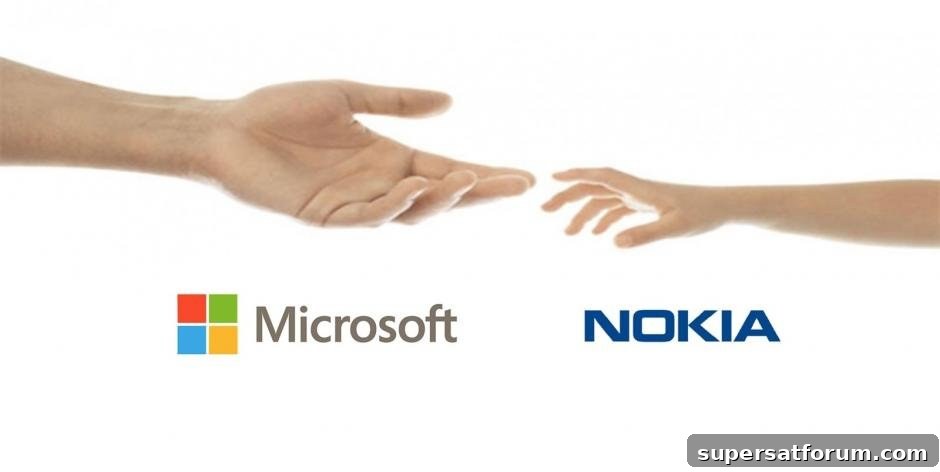
Certain elements of Nokia’s iconic identity, such as the “joining hands” animation and the classic default ringtone, remain under Nokia’s ownership at present. The documents note that ownership and usage rights for some of these elements could change over time depending on future agreements or strategy decisions.
As part of a respectful gesture, Microsoft prepared and distributed a commemorative book to Nokia employees that highlights the long shared history of the two companies. The 128-page book was edited and illustrated in London by TCOLondon and then printed and shipped to employees across more than 90 cities in 53 countries.
The FAQ and accompanying materials are intended to answer practical questions about benefits, employment transition logistics, branding and marketing plans, product support, and how customer-facing experiences will evolve. They aim to reassure staff and clarify what to expect during each phase of the integration, from immediate post-acquisition operations to longer-term branding and product decisions.
Key points emphasized in the documents include Microsoft’s commitment to maintain support for existing devices, a structured timeline for brand usage, and continued relationships with advertising and retail partners. At the same time, the paperwork signals a gradual shift toward Microsoft’s visual and marketing identity for any new materials and products created after the acquisition.
Industry watchers and former employees will likely monitor how these plans play out in practice: whether customer support and product updates remain consistent, how quickly Microsoft phases in its brand identity, and how the company balances legacy Nokia assets with new strategic goals. The long-term impact on product lines such as Lumia, Asha, and Nokia X will depend on market reception, Microsoft’s integration choices, and future product roadmaps.
How do you think Nokia’s transition to Microsoft is being handled? Let us know in the comments.