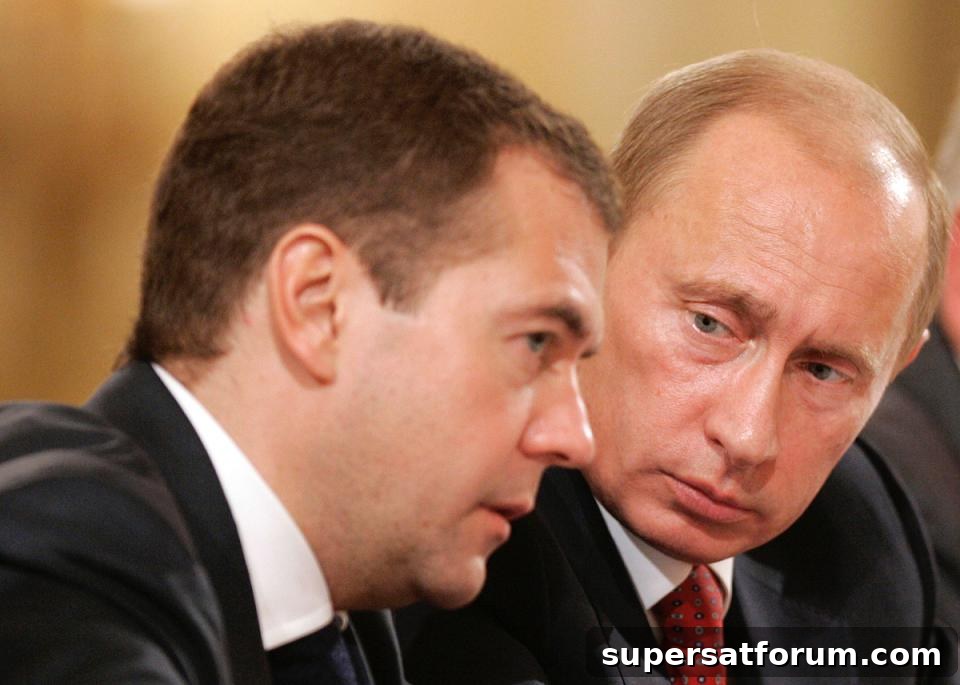
On the fifth anniversary of the Skolkovo Foundation, Russia’s former president reflected on the foundation’s role in advancing technological innovation and on how scientific collaboration can sustain international ties even during politically turbulent times.
Dmitry Medvedev, who served as president from 2008 to 2012, signed the legislation that established the non-profit Skolkovo Foundation, which now manages the Skolkovo Innovation Center. The foundation’s mission is to build a sustainable ecosystem for entrepreneurship and innovation, foster a startup culture and stimulate venture investment.
Thirty leading global corporations have formal research and development partnerships with the foundation, including Boeing, Cisco Systems, EADS, GE, Johnson & Johnson, IBM, Intel, Microsoft, Siemens, Nokia and Samsung, among others.
Although these multinational firms have extensive R&D operations and substantial budgets, Skolkovo’s aim is to create a thriving environment of smaller, fast-moving companies. The campus is expected to host roughly 1,000 startups, each competing for the chance to grow into familiar international names.
Medvedev said: “Startups bring creativity. Some apply and aren’t accepted; some that join turn out to be viable and some do not. Even so, we still have hundreds of interesting technical startups and innovations. Every time I visit, I see the progress they have made.”
Skolkovo has expanded rapidly and targets tens of thousands of workspaces as part of a broader plan to become a smart city where innovative minds from around the world can collaborate and flourish—strengthening Russia’s presence in science and technology.
Rafael Reif, president of the Massachusetts Institute of Technology, noted: “Any innovation system like Skolkovo needs a research institution at its core. That is essential for an innovation ecosystem, and Skolkovo is developing in that direction. A key challenge now is attracting top talent; if it can find that talent in Russia and internationally, it will be highly successful.”
Relations between Russia and Western countries have been strained by conflicts in Ukraine and Syria and by concerns about human-rights issues. At the same time, President Vladimir Putin has promoted a vision of restored national strength, sometimes invoking traditional levers of state influence such as military and energy resources.
Medvedev acknowledged the difficult political climate but emphasized the importance of scientific cooperation: “The political situation in recent times has not been ideal, but we continue to cooperate in science and we consider that important.”
He added: “The world is one global community now. Even when countries are not on the best terms, we try to maintain the same level of joint innovation. That is why I am confident this project has a bright future.”
Historically, waves of emigration from the Soviet Union—in the 1970s and beyond—saw many highly educated individuals, including the parents of Sergey Brin (a Google co-founder), leave for the West. By the turn of the century, Russia had lost hundreds of thousands of its most talented professionals. Skolkovo’s model draws inspiration from the relationship between universities and regional innovation hubs such as Stanford and Silicon Valley or MIT and the surrounding technology ecosystem, with the goal of encouraging Russian companies and skilled professionals to return and contribute at home.
New regulations could affect the willingness of foreign firms to do business in Russia—for example, rules requiring data about Russian citizens to be stored on servers within the country. Large companies can adapt by relocating or duplicating infrastructure, but such requirements may place an undue burden on smaller businesses.
On the topic of data localization, Medvedev observed: “Every country sets its own national requirements—whether they are too stringent will be seen in practice. Under the law, Russians’ data must be stored in Russia. Large companies migrate their servers here or contract with local providers. We do not want to push anyone out of Russia; we want to welcome anyone who wishes to operate here legally.”
Do you believe innovation partnerships help improve international relations? Share your thoughts in the comments.