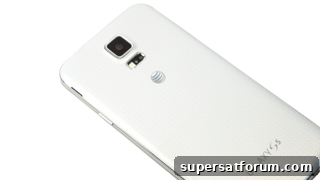
Samsung’s smartphones have often been criticized for their perceived build quality. Reviews have described the outer shells as “cheap plastic,” and even with the Galaxy S5’s shift toward a faux-leather texture, many observers still rank its perceived build-cost and premium feel below rivals like the HTC One M8.
Despite that perception, a teardown by IHS reveals the Galaxy S5 actually carries the highest bill of materials (BOM) of any smartphone analyzed to date.
The 32GB version of the Galaxy S5 has an estimated BOM of $251.52, which rises to $256.52 when a $5.00 manufacturing cost is included.
That total places the S5 well above other high-end smartphones in component cost. The closest competitor is the 32GB iPhone 5s, with a BOM of approximately $207. On a per-device basis, the S5 therefore costs Samsung about $44.52 more in component and manufacturing expenses than Apple’s then-current iPhone.
The contrast between flagship and entry-level devices is also stark. By comparison, low-cost phones such as the ZTE U793 and the K-Touch T619+ have BOMs of under $35.
“The high cost of the S5 is becoming more typical of Samsung’s flagship Galaxy line,” said Andrew Rassweiler, senior director of cost benchmarking services at IHS. “In the last year, IHS has torn down four Galaxy devices with BOMs ranging from $237.00 to $280.00.”
Rassweiler described the S5 as embodying a conservative, evolutionary design strategy: “There are no revolutions or giant steps forward in this design. There’s a lot of similarity and commonality between the S5 and other recent Samsung smartphones IHS has torn down, such as the Galaxy Round and the Note III. However, there are many small changes throughout the design.”
Although the S5 doesn’t represent a major stylistic overhaul, its internal components include several notable updates and upgrades.
Earlier Galaxy models used Qualcomm’s WTR1605L radio-frequency receiver; Samsung upgraded to the WTR1625 in the S5. Near-field communication (NFC) components were also improved, moving to a new NXP controller instead of the PN5441, PN547 and PN65N controllers seen in prior Samsung teardowns. Noise-suppression technology from Audience Semiconductor received an update as well.
IHS also identified a power-management chip from Qualcomm, the PMC8974, which it noted had not been seen previously in other consumer electronics devices examined by the firm. On the wireless side, the S5 includes an 802.11ac Wi‑Fi implementation with MIMO (multiple-input, multiple-output) support, believed to be supplied by Broadcom—also a first for IHS’s device studies.
One of the largest single component costs is Qualcomm’s Snapdragon 801 processor, estimated to contribute about $41.00 to the S5’s BOM.
Overall, the Galaxy S5’s high parts and manufacturing costs reflect a continuing trend among Samsung’s flagship Galaxy phones: many incremental hardware improvements and higher-end components add up to a substantial per-unit expense, even when the external materials and perceived build quality remain subject to criticism.
Your thoughts? Share them in the comments.