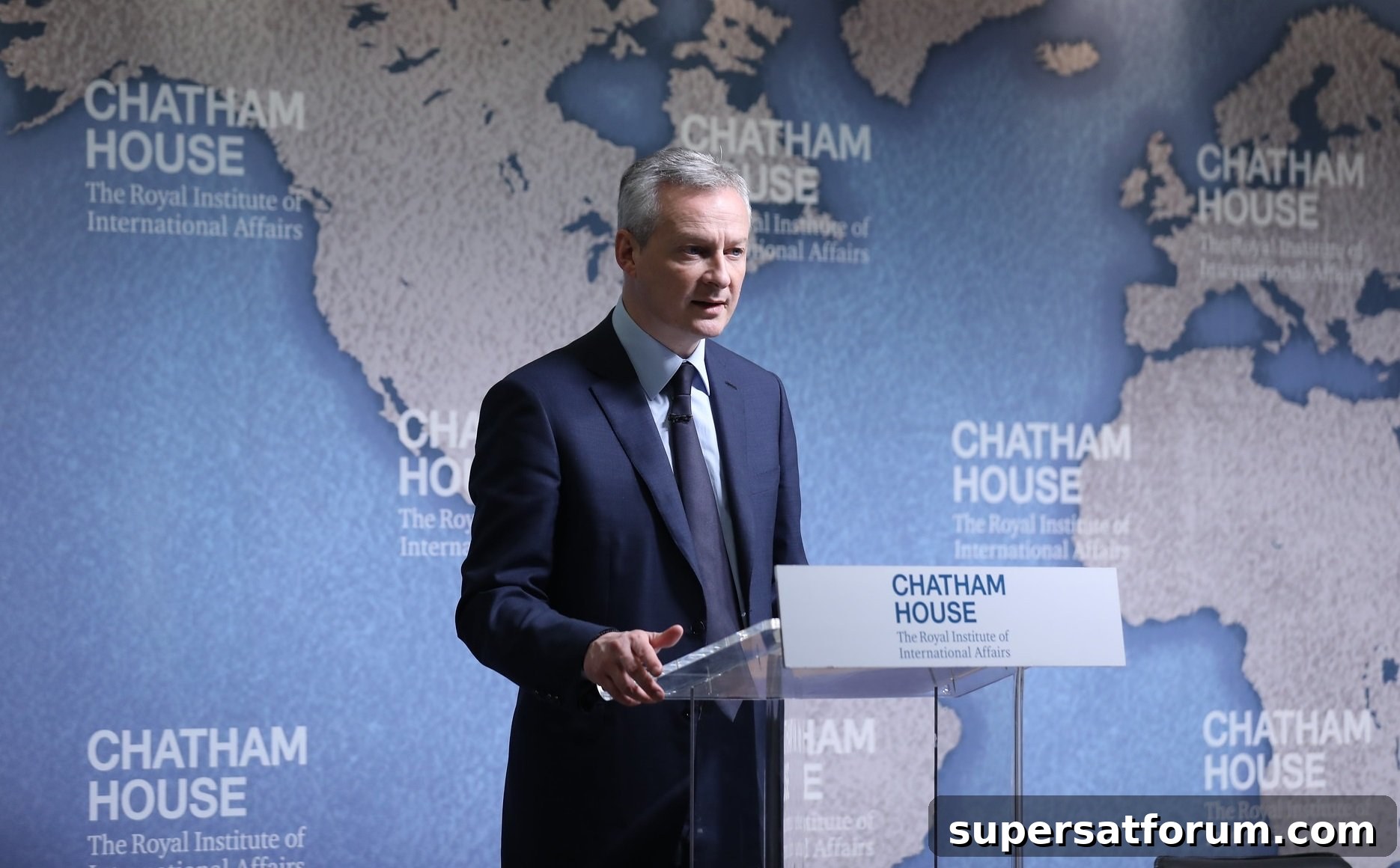
French Finance Minister Bruno Le Maire has stated that France will not impose an outright ban on Huawei’s participation in 5G networks, a position that contrasts with recent UK policy changes.
In an interview with France Info radio, Le Maire explained that while national security would be strictly protected, the government will avoid a “blanket ban” on Huawei. Sensitive sites and critical infrastructure will receive specific protections rather than a total exclusion of the company from the market.
This stance echoes the UK’s earlier approach, when it initially allowed Huawei to supply certain components for national 5G networks under strict conditions, including prohibitions on deploying Huawei equipment near military, nuclear, and other sensitive locations.
“We won’t ban Huawei from investing in 5G; we will protect our national security interests,” Le Maire said, emphasizing the balance France seeks between economic engagement and safeguarding critical infrastructure.
The UK’s original decision to permit limited Huawei involvement provoked strong reactions from allies, some members of Parliament, and human-rights organizations. Critics have alleged that Huawei contributed to surveillance technology used in Xinjiang, where the Chinese government’s repressive measures against Uighur Muslims—detention, forced “reeducation,” reports of torture, forced abortions and sterilizations, and allegations of organ harvesting—have drawn international condemnation.
Although France appears open to Chinese investment in telecommunications, Le Maire openly condemned the reported abuses against Uighur Muslims, calling them “revolting and unacceptable.” France’s position seeks to balance economic ties with clear moral and security-based objections to human-rights violations.
The United States has taken a firmer stance: Secretary of State Mike Pompeo announced visa restrictions and other measures targeting executives from Chinese firms, including Huawei, accusing them of facilitating human-rights abuses.
Shifting geopolitical tensions have influenced Western policy choices. The UK revisited its Huawei decision amid worsening relations with Beijing over issues such as Hong Kong’s changing political environment, China’s handling of the coronavirus pandemic, and allegations that China launched a sophisticated cyber operation targeting Australia.
Former MI6 director Sir Richard Dearlove warned that Huawei is not a conventional private telecom company but closely intertwined with the Chinese state. “If you know anything about Chinese military strategy, they talk about the fusion of civil and military capabilities,” he said, underlining concerns that technology firms can be leveraged in broader state strategies.
In response to these concerns, Prime Minister Boris Johnson ordered the removal of Huawei equipment from the UK’s 5G networks by 2027 and banned the procurement of Huawei gear after December 31, 2020. The UK has also begun coordinating with allies—especially members of the Five Eyes intelligence partnership and other like-minded democracies—on funding and sourcing alternatives to Huawei’s infrastructure products.
(Image Credit: Bruno Le Maire by Chatham House, CC BY 2.0)
Interested in industry discussion on topics like this? Consider attending events such as the 5G Expo, IoT Tech Expo, Blockchain Expo, AI & Big Data Expo, and Cyber Security & Cloud Expo, which host panels and briefings featuring industry leaders and experts.