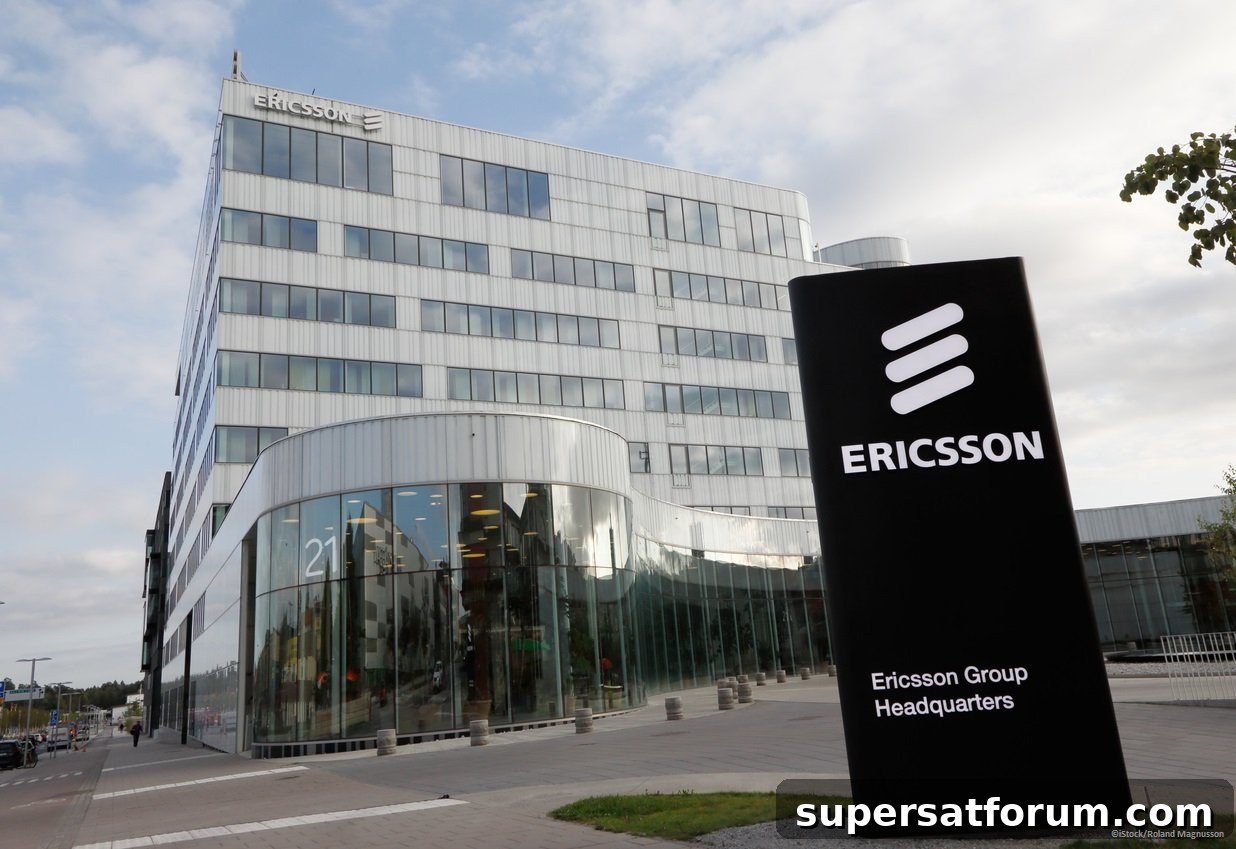
Ericsson CEO Börje Ekholm spoke at the Viva Technology conference about the urgent need for Europe to stop playing “catch up” and to take the lead in 5G.
Ekholm began by addressing the misconception that Ericsson is trailing in 5G technology and deployment. He pointed out that Ericsson’s 5G solutions are already active with multiple operators in the United States and South Korea, and are also live with Swisscom in Europe.
“It’s impossible to be behind in 5G when there is no one in front of us,” Ekholm said, underscoring that 5G is still an emerging domain where leadership is actively being defined.
According to Ekholm, the primary reason Europe has lagged behind is regulatory policy rather than a lack of technical capability. He noted that Europe fell behind during the 4G era when, he argues, prolonged regulatory debates over use cases slowed deployment while the US and China moved quickly to build extensive 4G infrastructure.
“When 4G was introduced in Europe, there was a prolonged discussion about use cases. Meanwhile, China and the US raced ahead to build out 4G infrastructure, providing young and new companies with unprecedented infrastructure for innovation on a global scale,” he said.
Ekholm emphasized that early infrastructure leadership enabled companies in China and the US to grow into global technology giants. Firms such as Netflix, Facebook, Tencent, and Alibaba benefited from broad, early 4G adoption and were able to scale rapidly as a result.
“Having lacked that same digital infrastructure, it is equally no surprise that Europe has a much more limited role on the world tech stage,” he added.
Speaking from his position as CEO of one of the world’s largest telecommunications vendors, Ekholm argued for stronger demand and policy support across Europe—an argument supported by observable trends in global tech growth.
He noted that while it is impossible to predict every future 5G use case, the potential is significant. Applications such as remote surgery, real-time virtual reality, massive IoT deployments, and other advanced services could rely on low latency, high capacity, and ubiquitous connectivity. Without timely infrastructure investment, Europe risks falling behind again for another generation.
“5G and digitalisation must be viewed as a critical part of European national infrastructures—every bit as vital as trains and roads. The US and China already do so,” Ekholm said, urging policymakers to treat digital networks with the same urgency as physical infrastructure.
He concluded with a call to action: “Europe, the original leader in mobility, needs to get back in the competitive technology race—and fast. Innovators, businesses, industries, and citizens deserve nothing less. Europe has played ‘catch-up’ for long enough.”
Interested in hearing industry leaders discuss these topics in depth? Attend co-located events such as the IoT Tech Expo, Blockchain Expo, AI & Big Data Expo, and Cyber Security & Cloud Expo World Series, which hold upcoming conferences in major tech hubs including Silicon Valley, London, and Amsterdam.