Deutsche Telekom AG has reportedly been in talks with Google about potentially expanding its mobile payments offering internationally and exploring a collaboration with Google Wallet.
Thomas Kiessling, Deutsche Telekom’s head of innovation, told the press that the company is engaging with several credit card firms and banks in addition to discussions with Google.
“We’re talking to other players in the market, and even a co-operation with Google is theoretically possible,” Kiessling said, without providing further specifics.
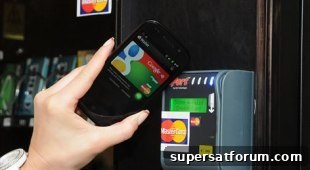
As Europe’s second-largest telecom provider, Deutsche Telekom may be considering the use of Google Wallet’s NFC-based technology, which enables customers to pay by tapping their phones on compatible in-store readers.
Google Wallet, one of the products that has endured through the company’s product realignments, supports near-field communication (NFC). Bloomberg has reported that Google is reviewing aspects of Wallet after adoption has been slower than expected.
At this point there is no formal agreement between the two companies, and Google has not commented publicly. Still, with MasterCard already participating in Google Wallet, collaboration with Deutsche Telekom could strengthen the ecosystem for NFC payment applications.
Could Google be phase two of Deutsche Telekom’s mobile payment strategy?
This potential cooperation follows Deutsche Telekom’s recent announcement of a partnership with MasterCard to advance the synchronization of mobile payments.
Kiessling’s reference to talks with credit card companies likely relates to that MasterCard arrangement. Deutsche Telekom said the partnership is intended “to make mobile payments a reality for Deutsche Telekom’s 93 million mobile customers across Europe.”
The MasterCard deal emphasized NFC’s growing role: new payment cards will include an NFC chip, with plans to integrate the technology into SIM cards at a later stage.
Poland is slated to be the first market to receive the new NFC-enabled service, with consumer rollout expected later in the year.
Deutsche Telekom noted that embedding the mobile wallet within the SIM card environment offers significant advantages: not only does it increase transaction security, but it also gives customers full and continuous transparency and control over payment activity.
Growth of payment apps — is a common standard needed?
The mobile payment app sector shows strong potential to become a major growth area, and competition is intense as companies vie for market leadership.
A range of approaches is emerging: for example, Elavon partnered with payment service provider CreditCall to launch what they market as the first payment app using Chip and PIN on Android and BlackBerry devices, while Barclays’ Pingit app has found success using quick response (QR) codes for peer-to-peer transfers.
Barclays’ marketing for Pingit emphasized everyday convenience for small sums, suggesting many payment apps are optimized for quick person-to-person transfers rather than large banking transactions. Similarly, Elavon’s solution appears aimed at small and medium-sized enterprises (SMEs) and mobile merchants who need a simple way to accept payments on the go.
These examples illustrate the variety of technical routes companies are pursuing: SIM-based wallets, NFC, QR codes, and even SD card solutions each offer different unique selling points.
Kiessling himself has warned against waiting for standardization: “In many areas you shouldn’t wait for standardisation, because that’s how the TELCOs missed a series of innovations over the past 10 years.”
With no single standard yet dominant, the question remains whether NFC can emerge as the game-changing technology for mobile payments. The answer will depend on how quickly stakeholders—telecoms, banks, card networks, device makers, and retailers—agree on interoperable solutions that deliver secure, convenient, and widely accepted payment experiences for consumers and merchants alike.