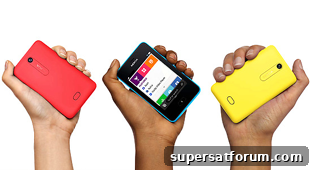
The Nokia Asha 501 was unveiled at a global launch event in New Delhi earlier this week to widespread praise, largely for its Lumia-inspired styling, swipe-based user interface, and very aggressive price point.
For those unfamiliar with the Asha series, it represents Nokia’s strategy for emerging markets: delivering attractive, well-designed phones at very affordable prices to reach a broad audience.
The Asha 501, offered in a range of bright colors and playful finishes reminiscent of consumer gadgets like the Jawbone Jambox, introduces a simple, swipe-driven interface similar to the N9. Early reviewers described the UI as “super fluid,” noting it impressively delivers a smooth experience on modest hardware.
With a focus on design, a capable camera for its class, and a distinctive user experience, the Asha 501 is being positioned at under $99. That raises the obvious question: does Nokia face strong competition in these markets, or is it poised to dominate?
At present, Nokia is not the clear leader. Samsung remains the most desired brand in many emerging markets such as India, Brazil, and Saudi Arabia, according to research by Upstream. However, Nokia’s new Asha device could shift consumer preferences if it successfully bridges the gap between feature phones and entry-level smartphones.
Upstream’s CEO Marco Veremis commented on the Asha 501’s potential impact: “By offering this low-cost handset, thousands of emerging market consumers will be able to jump the gap between feature phones and smartphones — which are highly desirable because of the data, mobile applications and social connectivity they offer.”
Veremis added that recent research found nearly a third of consumers in emerging markets want phones priced between $1 and $150. Given Nokia’s standing as a highly desired brand in many of those regions, the company has a solid opportunity to monetize this large pool of consumers.
In Upstream’s survey, 32% of respondents said Samsung would be their next handset choice, followed by Nokia at 22%, Apple at 21%, and BlackBerry at 10%. These figures underline a competitive landscape where Nokia is strong but not dominant.
Local Indian manufacturers could also present challenges. Companies such as Karbonn, Micromax, and Lava increased their share of India’s smartphone market from around 4% to 12% between July and December 2012, demonstrating how regional players can quickly scale in price-sensitive markets.
Apple is another potential disruptor. Ongoing rumors about a lower-cost iPhone have led to speculation that Apple may try to capture more of the budget-conscious segment in emerging markets. Reports that component suppliers like Pegatron plan to expand their Chinese workforce have only fueled expectations of a more affordable iPhone variant.
So does Nokia have a real chance at revival through mid-range and low-end devices? It’s possible. Nokia’s Lumia line, built around Windows Phone, offers a distinct alternative to Android and iOS with a design language many observers consider compelling. Success in mid-range models could help rebuild momentum.
It remains early to judge the long-term success of Lumia devices such as the mid-range Lumia 720. Anecdotally, the author noticed multiple Lumia 720 users on a single commute, which contrasts with reported market share figures and suggests localized pockets of popularity.
Attention will also be on industry events and upcoming product announcements. Apple’s Worldwide Developers Conference (WWDC) could produce moves that affect the market, while Nokia’s quarterly results will be watched closely for signs of how well its strategy is performing in key segments.
Do you think Nokia can stage a comeback through strong performance in the low and mid-range markets? Will Apple pursue lower-cost devices to capture emerging market demand?