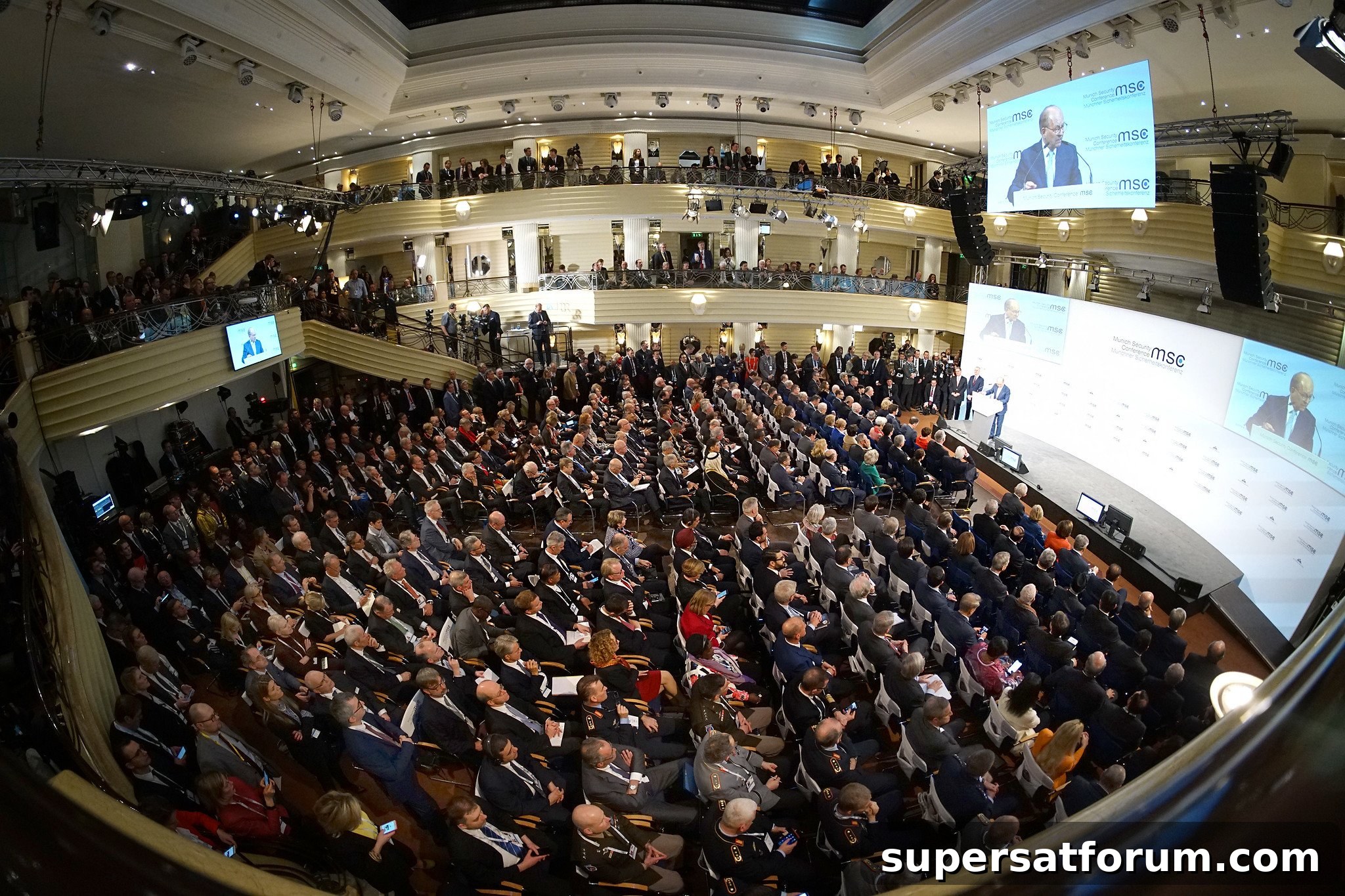
A bipartisan US delegation raised concerns about Chinese telecom vendor Huawei at this year’s Munich Security Conference, warning about the company’s potential risks to national security and global communications infrastructure.
Secretary of State Mike Pompeo described Huawei and other Beijing-backed firms as “trojan horses for Chinese intelligence.” Defense Secretary Mark Esper warned that companies like Huawei are part of a “nefarious strategy” by China to extend its influence through commercial technology. These warnings came from leaders across the political spectrum: Democratic Speaker of the House Nancy Pelosi said widespread use of Chinese telecom equipment would be “choosing autocracy over democracy,” and argued it could effectively put state surveillance tools into the hands of foreign governments.
Pelosi urged US allies to work together to create genuine alternatives to Huawei’s market dominance, cautioning against a “sinofication of the information highway” that could bring non-Chinese societies under undue cultural or political influence.
China’s Foreign Minister Wang Yi responded at the conference, arguing that US opposition to Huawei stems from a reluctance to accept China’s rapid development and success. “The root cause of all these problems and issues is that the US does not want to see rapid development and rejuvenation of China,” he said, emphasizing China’s right to develop.
Recent legal action has intensified scrutiny of Huawei. The US Department of Justice announced charges alleging racketeering and conspiracy to steal trade secrets against Huawei and some of its subsidiaries. US officials have long maintained that Huawei presents a national security threat and have pressed allies to exclude the vendor from critical infrastructure, a stance that has gained urgency as global 5G rollouts accelerate.
Last month the UK government announced a limited role for Huawei in national 5G networks following a comprehensive security review. Under that decision, Huawei’s equipment was restricted so that it could not exceed 35 percent of network perimeter equipment and was banned from use in sensitive locations such as military bases and nuclear facilities.
Prior to the UK’s announcement, US security officials provided British counterparts with a dossier outlining potential risks associated with Huawei equipment. Reports said the UK decision prompted a tense call between President Donald Trump and Prime Minister Boris Johnson, during which Trump expressed strong displeasure. In UK government comments about the call, Johnson emphasized the need for like-minded countries to diversify the market and reduce reliance on a small number of dominant vendors.
Prime Minister Johnson has since limited overseas travel early in his premiership to focus on domestic priorities, delegating some international visits to Foreign Secretary Dominic Raab as the UK pursues early post-Brexit trade opportunities in countries such as Australia and Japan.
That travel decision and the UK’s Huawei policy have the potential to complicate UK-US trade talks. The Trump administration has been eager to secure a trade deal with the UK ahead of the US presidential election, viewing such an agreement as a political and economic win that could deepen already substantial investment and trading ties between the two countries.
(Image Credit: Munich Security Conference by Υπουργείο Εξωτερικών, licensed under CC BY-SA 2.0)
Interested in hearing industry leaders discuss topics like this and learn about real-world use cases? Consider attending co-located industry events that explore the future of enterprise technology, including IoT, blockchain, AI and big data, cybersecurity and cloud, and 5G, with upcoming conferences across Silicon Valley, London, and Amsterdam.