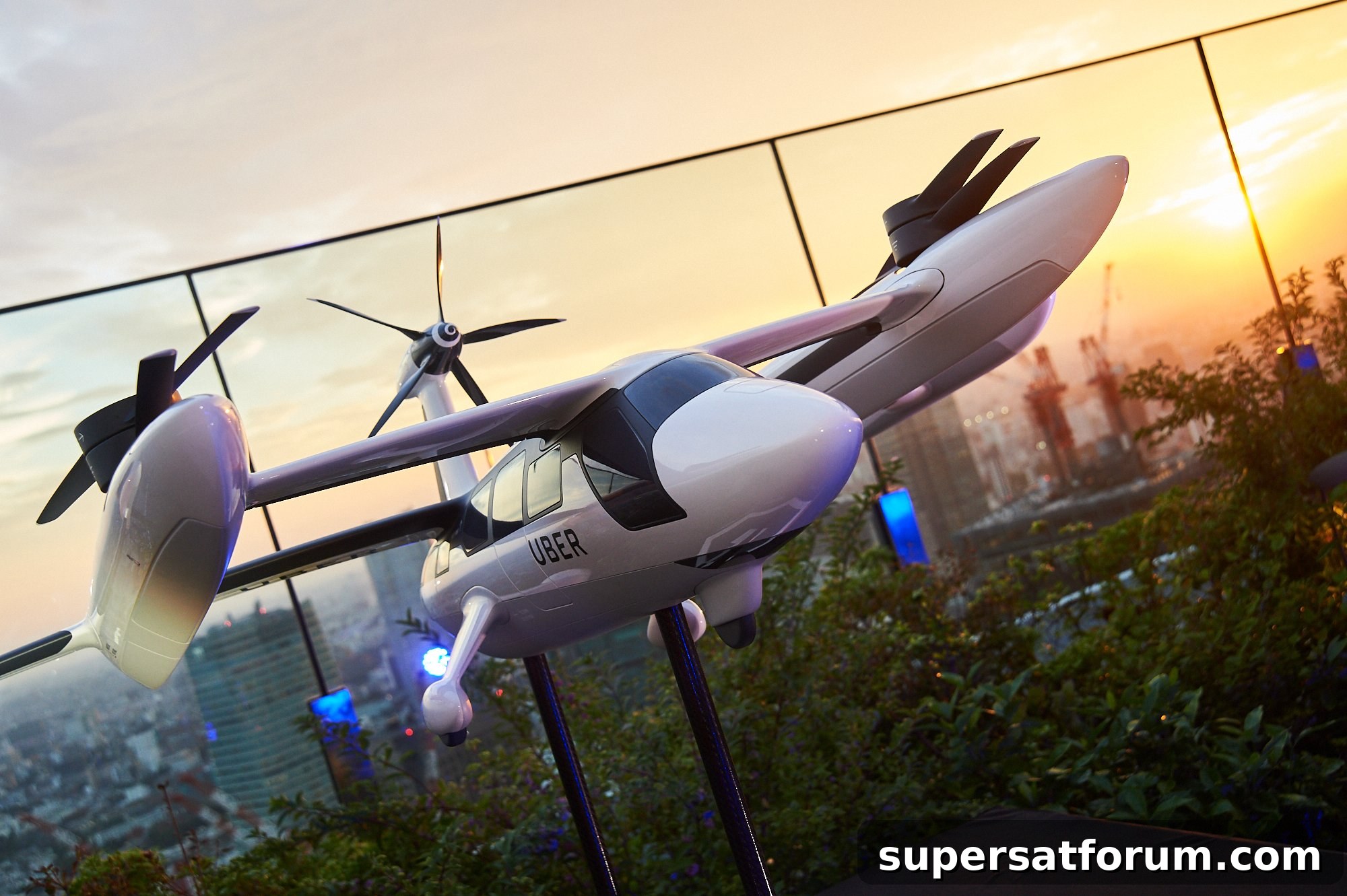
AT&T and Uber have formed a strategic partnership to address urban congestion by integrating 5G connectivity with Uber’s planned fleet of electric vertical take-off and landing vehicles (eVTOLs). This collaboration focuses on ensuring reliable, low-latency communications for future air taxi operations in major cities.
As part of its long-running Uber Air initiative, Uber has been developing eVTOL aircraft designed for short, point-to-point city trips. AT&T’s role is to supply robust 5G network coverage and related services that will support real-time navigation, flight coordination, passenger communications, safety monitoring, and operational logistics.
Uber is targeting a commercial launch for Uber Air in 2023, with initial US deployment planned in Los Angeles and the Dallas–Fort Worth area. Melbourne, Australia, is expected to be the first international city to participate in the rollout. Early testing flights are scheduled to begin next year, with operations staged from a network of rooftop landing pads known as Skyports.
Uber’s model envisions rapid shuttle flights that substantially reduce commute times. The company estimates journeys that would normally take up to an hour on the ground could be completed in roughly 10 minutes by air, easing congestion on roads and providing a time-saving alternative for commuters and travelers.
Beyond supporting eVTOL operations, AT&T will also provide connectivity for Uber Copter, the helicopter shuttle service linking Manhattan with JFK Airport, which is set to launch in New York soon. Through the Uber app, users schedule a trip by entering their destination and desired arrival time; Uber then coordinates ground transfers on both ends and readies the helicopter to meet the schedule, leveraging AT&T connectivity for coordination and passenger updates.
Looking ahead, advanced 5G features such as network slicing could be employed to create dedicated virtual network segments for Uber’s services. Network slicing would help guarantee bandwidth and performance for air taxi operations by isolating their traffic from other users and reducing the risk of network congestion affecting critical communications.
Uber’s air taxi ambitions are part of a broader industry trend. Several companies are actively developing eVTOL platforms and urban air mobility solutions. Notable names include Lilium and Volocopter, both working on electric air taxis and associated infrastructure.
Recently, Lilium announced plans to establish a development base in the UK focused on air taxi software, expanding its engineering team with senior hires from aerospace and technology companies. Airbus has also confirmed plans to test its CityAirbus demonstrator in Bavaria, moving forward with prototype trials and validation efforts.
The AT&T–Uber partnership underscores the importance of resilient, high-performance connectivity in enabling the next generation of urban transport. Reliable 5G links will be crucial for safe, efficient flight operations, passenger experience, and integrating air mobility with existing ground transportation networks.
As testing and regulatory work progress, cities selected for initial launches will evaluate operational safety, noise impacts, vertiport placement, and airspace integration. If successful, these early deployments could demonstrate how connected eVTOL services can complement public transit, reduce road congestion, and offer faster point-to-point travel in dense urban areas.