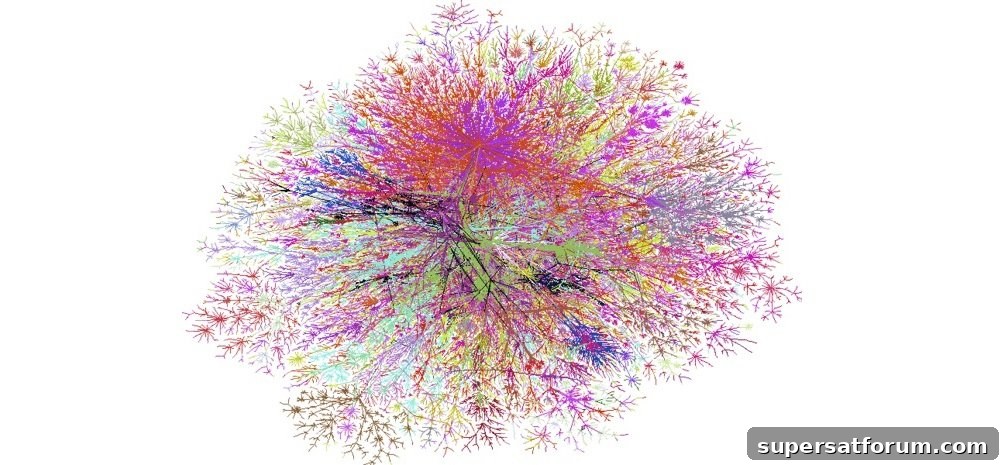
Big Data often carries negative associations, especially around privacy. The term is frequently linked to the mass collection and monetisation of personal information — a perception amplified by controversies like the NSA’s surveillance revelations. Companies sometimes hesitate to share data more out of concern for their public image than for the potential service improvements data sharing could enable, while consumers remain anxious about how their information is used.
Many experts now prefer the term Smart Data, reflecting the idea that thoughtfully managed data holds tremendous potential. However, prevailing public distrust is slowing progress toward innovations that are already feasible. That perspective will shift if companies and consumers understand the clear benefits they can gain in exchange for responsibly handled data — and that understanding requires transparency to foster a cultural change.
At a Big Data debate hosted by Amdocs, industry leaders from academia, the press, and marketing discussed obstacles to broader adoption and how to address them. The event also showcased Amdocs’ expanded analytics offering for Smart Data, highlighting how practical, benefit-driven applications can reshape perceptions by demonstrating tangible value.
With sufficient data, we can make reliable predictions about future behavior and outcomes, a point emphasised by Professor David Crawford from Essex University, a specialist in data science. Amdocs’ newly announced portfolio builds on its TeraScale platform, Proactive Care, and industry-focused BI and data warehousing services to better understand and leverage collected data — improving customer service and operational efficiency.
Proactive Care automates predictive analysis to identify issues before they occur, enabling preemptive actions that reduce customer frustration and lower support costs. These insights also improve sales targeting: if a customer appears likely to be dissatisfied, aggressive selling isn’t the right approach. Conversely, when an offer such as a streaming service subscription suits only a subset of customers, Smart Data lets providers target receptive viewers rather than broadcasting offers to everyone and wasting resources.
Predictions are not flawless, and inaccuracies can cause frustration. For instance, if data is incomplete and a system fails to recognise your interest in a particular offer while your friend receives it, that discrepancy can feel unfair.
Matt Roberts, who leads Big Data Analytics and Strategic Innovations at Amdocs, explains that machine learning rapidly reduces such errors. Amdocs employs micro-segmentation within its SmartNet solution to refine models. “There’s the base which is going to take the offer. It then looks at the variables and applies it back into the model, so it goes ‘This guy who didn’t originally take the offer wanted it, and now has a high-usage, so let’s apply this to the rest of the base.’ It’s a self-learning machine,” he says.
Professor Crawford noted that academic input accelerates the learning process, which is crucial: “This is really where the academia element comes in to make the learning fast — because you want to minimise that. In some industries we have addressed it, but in others we’re only just starting to realise the Big Data opportunities.”
The potential across industries is immense. In automotive, connected data can alert dealerships to faults before drivers notice them — an important capability as vehicles move toward full autonomy. In healthcare, data analytics can identify risk factors and enable early interventions to prevent disease outbreaks. In public safety, predictive analytics may one day assist law enforcement in anticipating and preventing crime.
“A successful big data analytics implementation helps service providers meet the challenges of today’s competitive markets. Applying deeper and timelier insights not only drives out inefficiencies and costs, but also improves customer experiences to reduce churn,” said Justin van der Lande, head of Analytics Software Strategies at Analysys Mason.
Big Data will bring significant change, and overcoming the natural apprehension surrounding that change is essential. Transparency, clear consumer benefits, and responsible data practices can help transform fear into excitement about the opportunities Smart Data offers.
How can we convert the fear of Big Data into enthusiasm for the possibilities it enables? Share your thoughts in the comments.