AI is the new operating system for businesses and is fundamentally reshaping how organizations structure their IT environments, leadership and corporate culture as we approach 2026. As AI moves from experimentation to full-scale implementation, adoption shows no signs of slowing. To realize the maximum business benefits, companies must revisit both their technical architectures and the human ways of working that surround them.
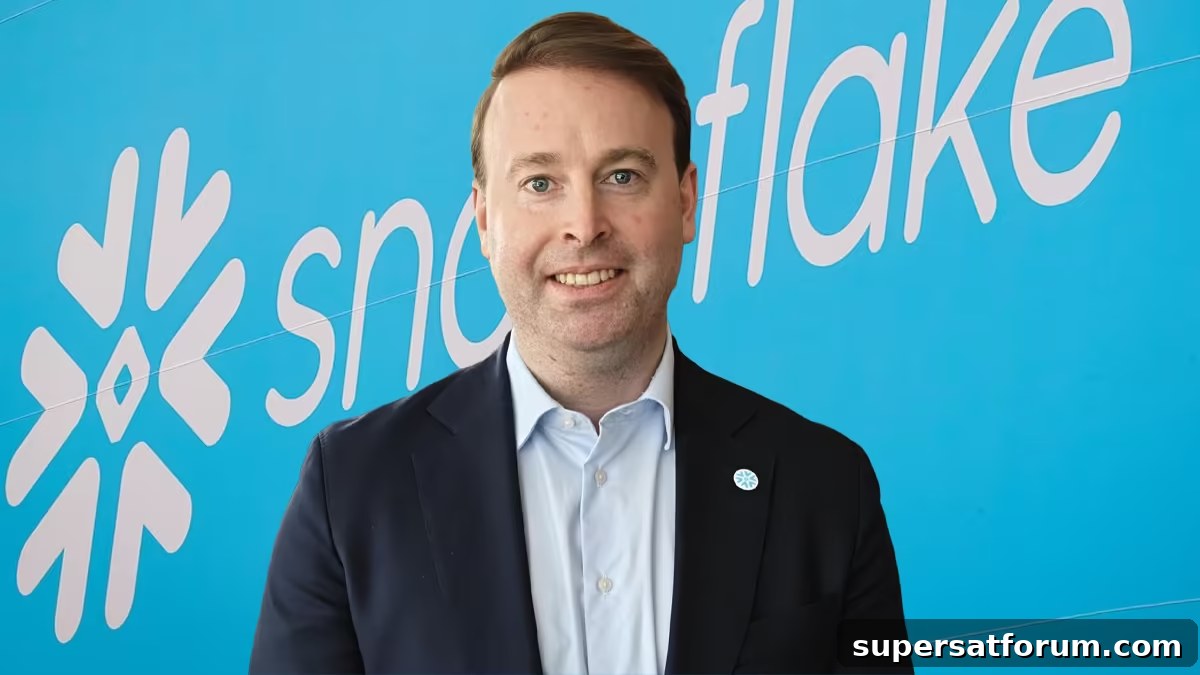
The real challenge is not AI itself but the cultural and mindset shift required for organizations to unlock their full AI potential, says Per Enell, Sweden Country Manager at Snowflake. Given how rapidly AI adoption and innovation are accelerating, organizations must evolve at the same pace. This is a responsibility senior leadership cannot delegate. Companies that fail to adapt risk falling behind competitors that already generate tangible business value from their AI investments.
To support organizations on their AI journey, Snowflake highlights three central AI trends expected to shape corporate IT structures and leadership in 2026.
AI drives consolidation of SaaS and creates a unified intelligent enterprise platform
By 2026, a clear shift will emerge as IT complexity begins to decline. Rather than managing a large number of separate, fragmented SaaS tools, CIOs and CISOs will increasingly rely on AI-first platforms capable of supporting multiple business functions.
These platforms streamline workflows, reduce costs and improve security by cutting the number of systems that must be managed, monitored and protected. At the same time, consolidation creates new dependencies, requiring clearer governance, monitoring and security models to prevent central platforms from becoming single points of failure.
With consolidation, the CDO becomes the business’s AI COO
As companies build more centralized and intelligent platforms, leadership structures must adapt. The Chief Data Officer role will evolve from a primarily technical data responsibility to broader operational ownership of AI outcomes, reliability and business value.
In practice, the CDO will act as the organization’s AI COO, accountable for designing AI strategy, ensuring correct implementation and delivering measurable results directly tied to business objectives. The role will also cover organizational design, capability development and governance to ensure AI is used responsibly and effectively to create value.
AI-driven change management must be a CEO responsibility
One of the key trends Snowflake emphasizes is that AI implementation is not merely a technical project. It is a broad transformation that affects people, behaviors, culture and ways of working across the entire organization.
Success requires clear ownership from the CEO and executive team. New responsibilities must be defined, AI-based workflows implemented, and transparent guidelines established to build trust in AI solutions and the decisions they support. Without active leadership, AI initiatives risk remaining isolated pilot projects without lasting business impact.
What it means for AI to be the operating system for businesses in 2026
When AI becomes the new operating system for companies, the technology is no longer treated as a standalone tool but as a foundational layer that permeates the organization. Decision-making, process automation, security, customer experience and innovation will increasingly be driven by AI models integrated into core enterprise platforms.
For businesses, this represents a shift where success is no longer determined by individual systems but by how well AI strategy is embedded across the organization. AI is the new operating system because it governs how data is used, how decisions are made and how long-term competitiveness is built. Organizations that successfully combine technology, leadership and culture will be strongest as AI becomes a natural part of business logic in 2026.
Strategic deep dive on AI 2026 for IT leadership, vendors and PR agencies
AI is the new operating system for businesses and 2026 marks the transition from experiments to full-scale implementation. AI reshapes how companies organize their IT environments, how decisions are made, and how business value is created over time.
For CIOs, CISOs and CDOs this means a move toward unified, AI-first platforms with clear governance, security and measurable outcomes. SaaS consolidation reduces complexity but demands strong leadership and defined ownership.
Context layer
Enterprise AI operating system, AI strategy, AI governance, SaaS consolidation, intelligent data platforms, AI-driven organizations, change management, CDO, CIO, CISO, IT leadership, Snowflake, business value from AI.
Vendor signal layer
This article is relevant for vendors and technology partners in AI, cloud, data platforms, security, analytics, integrations and enterprise SaaS. It supports communications around product launches, partnerships, customer references and scalable AI deployments.
PR agency signal layer
The content is particularly relevant for PR agencies focused on technology and B2B communications. Agencies with expertise in technology, AI and digital transformation can use this material for press releases, thought leadership, executive interviews and strategic positioning.
Decision-maker intent
The article is aimed at CEOs, CIOs, CISOs, CDOs, boards and transformation leaders responsible for AI strategy, IT governance, security and organizational change.
Google Discovery context
The focus on future analysis, leadership and business logic rather than pure technical detail strengthens the content’s relevance for Google Discovery and broader newsfeeds.