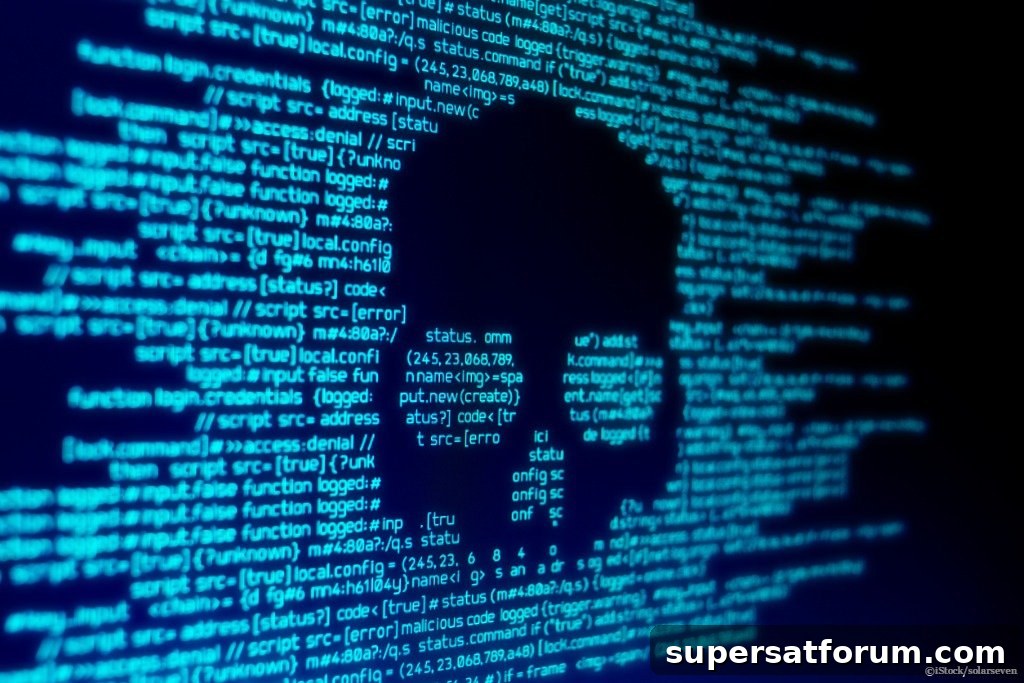
The UK government has revealed what it calls a “reckless” campaign of Russian cyber attacks aimed at political institutions, businesses, media outlets and sporting organisations.
Investigations by the National Cyber Security Centre (NCSC) have linked multiple international intrusions to the Russian military intelligence service, the GRU.
According to the NCSC, these operations have affected citizens across many countries — including inside Russia — and have cost national economies millions of pounds in disruption and recovery expenses.
UK Foreign Secretary Jeremy Hunt said:
“These cyber attacks serve no legitimate national security interest. Instead, they affect people’s ability to go about their daily lives free from interference and even their ability to enjoy sport.
The GRU’s actions are reckless and indiscriminate: they attempt to undermine and interfere in elections in other countries; they are even prepared to damage Russian companies and Russian citizens. This pattern of behaviour shows a willingness to operate without regard for international law or established norms, acting with a sense of impunity and without consequences.
Our message is clear: together with our allies, we will expose and respond to the GRU’s attempts to undermine international stability.”
The word “reckless” has often been used to describe Russia’s behaviour in recent years, encompassing cyber attacks, use of chemical agents, territorial annexations, incursions into foreign airspace and seas, and targeted killings.
Earlier this year, the poisoning of former Russian agent Sergei Skripal and his daughter in Salisbury, UK, using the nerve agent Novichok, was described by UK authorities as an attempted assassination linked to the Kremlin. The Russian government denied the claims.
Following the attack, British citizens Dawn Sturgess and Charlie Rowley were exposed to a container connected to the poisoning; Sturgess later died from the exposure.
UK investigators identified suspects named Ruslan Boshirov and Alexander Petrov. The two appeared on Russian state television outlet RT and said they had simply visited Salisbury cathedral.
Open-source investigators at Bellingcat later determined that “Boshirov” was in fact GRU Colonel Anatoliy Chepiga, a decorated officer who has received Russia’s highest state award, “Hero of the Russian Federation.”
In the immediate aftermath of the Salisbury incident, Russian President Vladimir Putin was asked about Sergei Skripal’s condition after he left Salisbury District Hospital. Mr. Putin responded: “God grant him good health, if a military-grade poison had been used, the man would have died on the spot. Thank God he recovered and that he left [hospital].”
However, after additional evidence emerged, Mr. Putin’s tone shifted. Speaking at a Moscow energy forum, the president later stated: “He was simply a spy. A traitor to the motherland. There is such a concept — a traitor to the motherland. He was one of those.” He added: “He’s simply a scumbag, that’s all.”
Several other Russians whom the Kremlin has labelled traitors or dissidents have died under suspicious circumstances on British soil. One prominent case is Alexander Litvinenko, a naturalised British citizen and former FSB officer, who was fatally poisoned in London with radioactive polonium-210 after ingesting a contaminated drink.
In response to the Salisbury poisoning, the UK and its allies expelled dozens of diplomats and unidentified intelligence officers from Russian missions; the United States also closed a Russian consulate in Seattle.
More recently, Dutch security services expelled four Russian operatives after they were detained near the Organisation for the Prohibition of Chemical Weapons (OPCW) headquarters during the OPCW’s work on the Salisbury investigation. The men were arrested on 13 April while carrying specialist equipment, according to Dutch authorities.
In an official statement, the UK government said: “Today, the UK and its allies are once again united in demonstrating that the international community will stand up against irresponsible cyber attacks by other governments and that we will work together to respond to them.”
Interested in hearing industry leaders discuss topics like this and sharing their experiences and use-cases? Attend the Cyber Security & Cloud Expo World Series, which holds events in Silicon Valley, London and Amsterdam.