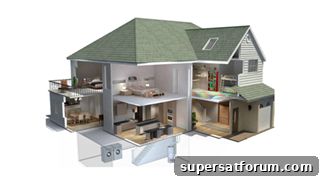
Marianna Tamborini, Head of Smart Living Marketing at Swisscom, led a session at Telecoms Tech World about the obstacles to bringing smart living solutions to the mass market and practical ways to overcome them.
She noted that while smart living products are becoming more common in the United States—largely driven by automated home security systems—the market in Europe is still at an early stage.
Security and safety-related features are among the primary reasons consumers choose smart living solutions. Other motivating factors include improved wellbeing, greater energy efficiency, cost savings, and time savings.
Marianna outlined several key requirements for wide adoption: consumers must know the product exists (through advertising channels such as billboards and commercials), understand clearly how it solves real problems, find it affordable, and experience it as accessible.
One of the biggest current barriers is the complexity of setup for the average consumer. While companies can offer professional installation by qualified technicians, that approach adds cost for both providers and customers.
Testing products with non-technical users helps ensure successful adoption and reduces pressure on customer support. As noted in the session: “Serial numbers, reset buttons, or master codes are not part of most people’s common language.” Products should avoid relying on such technical interactions where possible.
For mass-market releases, the most effective approach is a plug-and-play system that is easy to install, scalable, and expandable so new devices and services can be integrated over time.
Swisscom’s Quing is an example of this approach. Introduced late last year, Quing is an interactive building automation system designed for simple setup and future expansion: the system can be extended with additional devices and sensors to meet changing needs.
Expandable solutions allow for tailored configurations: not every household needs—or has space for—many sensors, while larger businesses or other use cases may require more comprehensive setups. Beyond environmental and spatial constraints, designers must consider diverse target groups; for example, older adults and people with disabilities may need specific configurations and interfaces to make the system most useful.
Market interest is rising thanks to a few key trends: growing acceptance of always-on devices, improved device interconnectivity, and the emergence of common standards. Over the next few years, these factors should encourage broader availability and adoption of smart living solutions.
Do you agree with Marianna’s views on how to bring smart living to the masses?