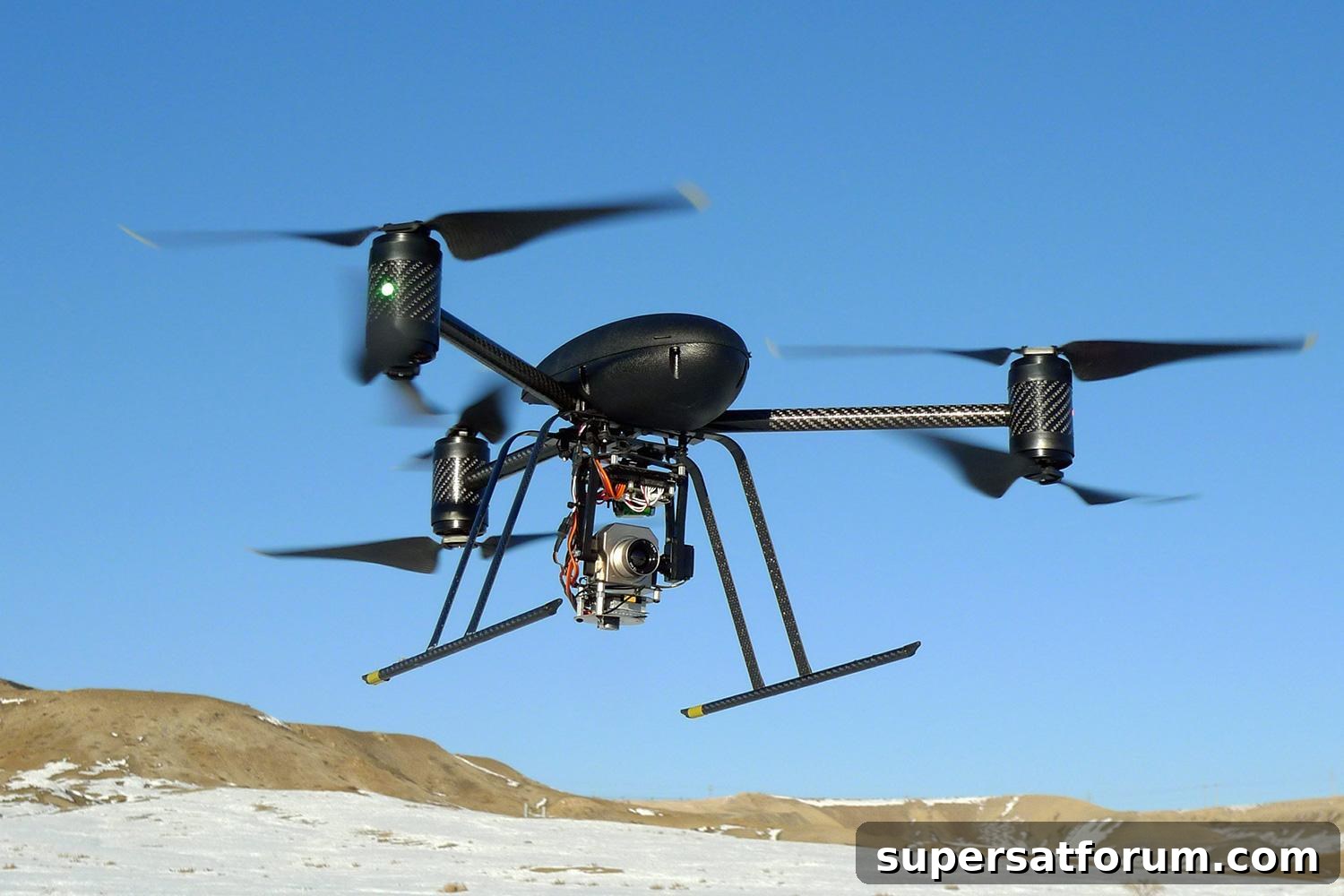
At some point you have likely tried a consumer drone—perhaps a model like the Parrot AR with its playful video-recording features. If you follow current events, you’ve also heard about the contrasting and often controversial military uses of drones.
Drones are a major topic and an inevitable part of the future. But are you aware of how they are transforming industries you might not immediately consider?
One prominent example is Amazon. The world’s largest online retailer is already testing automated drones that can deliver packages from a nearby warehouse directly to customers’ doorsteps, much faster than traditional postal routes.
Consider the implications. For employment, widespread drone delivery presents serious challenges. Amazon employs tens of thousands of people—many in its fulfillment centers—and some roles may become redundant as automation replaces manual tasks.
Drones are poised to reshape the retail sector dramatically, bringing both advantages and drawbacks.
Many applications, however, are producing clear benefits. Agriculture is a good example. Farms are complex systems that require large amounts of data to maximize yields, manage livestock, protect public health, and prevent field damage. NPR reported on the Reimer family and how investing approximately $20,000 in a couple of small drones provided significant returns.
These drones weigh less than 10 pounds each and can be flown remotely or programmed to operate autonomously to map and image entire fields. This capability gives farmers a rapid, detailed overview of conditions across large areas so they can respond quickly when problems arise. Modern agricultural machinery can already operate autonomously and adjust inputs like fertilizer or pesticide precisely. With accurate field data from drones, farmers can target applications more effectively, reducing overall chemical use and lowering risks to public health.
Beyond agriculture, drones are being explored for expanding connectivity. For example, Google’s Project Loon uses high-altitude balloons to deliver broadband in remote locations. In Australia, initiatives like the Kogan Drone Broadband Network are pursuing a similar goal by using drones to provide faster internet access over wide areas.
The rollout of Australia’s National Broadband Network (NBN) has been expensive and slower than expected, with substantial projected costs. Drone-based broadband promises much higher transfer rates—figures cited by proponents reach around 1.3 Gbps, significantly exceeding the NBN’s commonly referenced 100 Mbps download speeds—and can avoid some of the costs and delays associated with laying physical infrastructure and extensive manual labor. By reducing reliance on fixed installations, drone networks could cut expenses and speed deployment while reducing clutter from permanent ground-based equipment.
However, integrating drones into everyday airspace introduces safety concerns. There have been reported near-misses between manned aircraft and unmanned systems—one federal aviation official noted an incident in which an American Airlines regional jet nearly collided with a small drone flying at about 2,300 feet. The operator of the drone was not identified, but the episode highlights the risks to manned aircraft when unmanned vehicles operate unsafely. In response, regulators such as the U.S. Federal Aviation Administration were tasked with developing rules to safely integrate drones into national airspace.
Drones bring a mix of opportunities and challenges. They can boost efficiency, improve public services like agriculture and connectivity, and enable innovative delivery models. At the same time, they raise important questions about job displacement, safety, regulation, and privacy that policymakers, businesses, and communities must address as adoption grows.
Do you think drones are more beneficial or harmful to the economy? Share your thoughts in the comments.