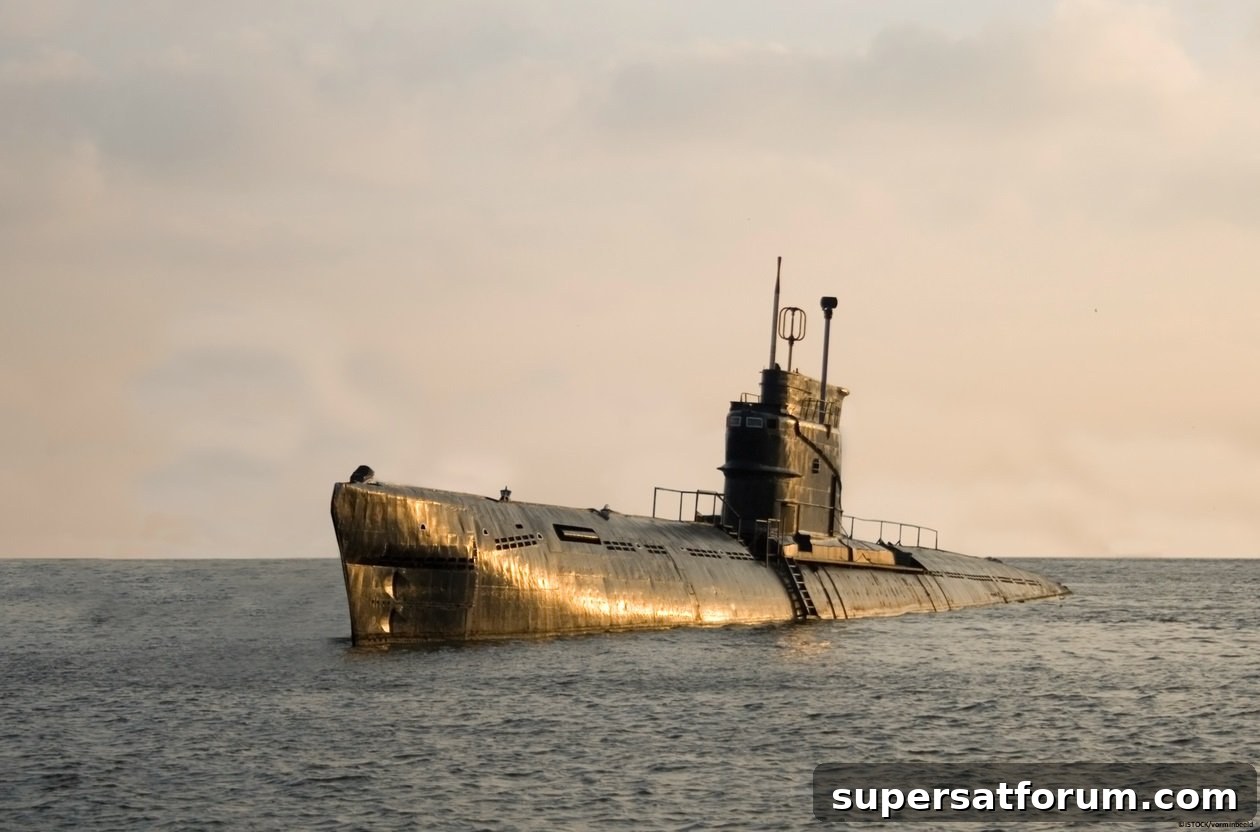
Air Chief Marshal Sir Stuart Peach has warned that the UK must strengthen its naval capabilities to counter threats to undersea communications cables posed by Russia.
Russia’s modernised navy has been repeatedly observed operating close to submarine communications cables in the Atlantic, and because the UK economy depends heavily on those links, they represent an attractive target for disruption.
Britain’s economy is roughly 80 percent service-based and relies on undersea cables for financial transactions, communications and everyday business operations. Speaking at the Royal United Services Institute, Peach said: “Imagine a scenario where those cables are cut or disrupted, which would immediately and potentially catastrophically affect both our economy and other ways of living.”
He added: “Therefore, we must continue to develop our maritime forces — with our allies — to match Russian fleet modernisation.”
Protecting undersea cables is inherently difficult. A Policy Exchange report concluded that some 97 percent of international communications travel over submarine cables and that their vulnerability stems in part from minimal protective measures. The cables were targeted during Soviet times, and recent naval activity suggests they could again be vulnerable in any future offensive. For context, the systems routed through these networks account for roughly £7 trillion of financial transactions every day.
Peach also warned that the UK’s anti-submarine warfare (ASW) capability has been neglected. “We can do some things about it, but not enough, because our anti-submarine warfare capability has been seriously neglected. The anti-submarine warfare package has been underfunded and has not been looked after well enough,” he said.
Defence spending cuts
The UK government has faced criticism over austerity-driven cuts to defence spending. The opposition has accused the Conservatives of dithering on defence investment after former military chiefs raised alarms that Britain’s ability to fight wars is weakening.
Labour MP Dan Jarvis, a veteran of operations in Afghanistan, Iraq, Kosovo and Northern Ireland, said: “Tory MPs should not be trumpeting their record on defence. They should be embarrassed by the disgraceful damage their party has done to our armed forces.”
Jarvis and other critics note that Britain’s armed forces have changed significantly under Conservative leadership. The Army’s manpower has declined from roughly 102,000 to just below 80,000, and persistent internal political disputes have highlighted concerns that the Army sits nearly 4,000 full-time troops short of its intended strength.
A policy paper from the Henry Jackson Society warned that full-time Army numbers could be reduced from 78,000 to 70,000 and that proposals under discussion include cuts to Royal Marines units, aircraft and amphibious assault ships to secure savings of up to £20 billion.
The same paper recommends that the UK increase defence spending to three percent of GDP to confront intensifying global threats. Author James Rogers argues that in the face of a “revisionist Russia,” the UK must treat military power as a higher priority and ensure its armed forces are resourced appropriately for the current geopolitical environment.
What are your thoughts about the defence of underwater cables? Let us know in the comments.