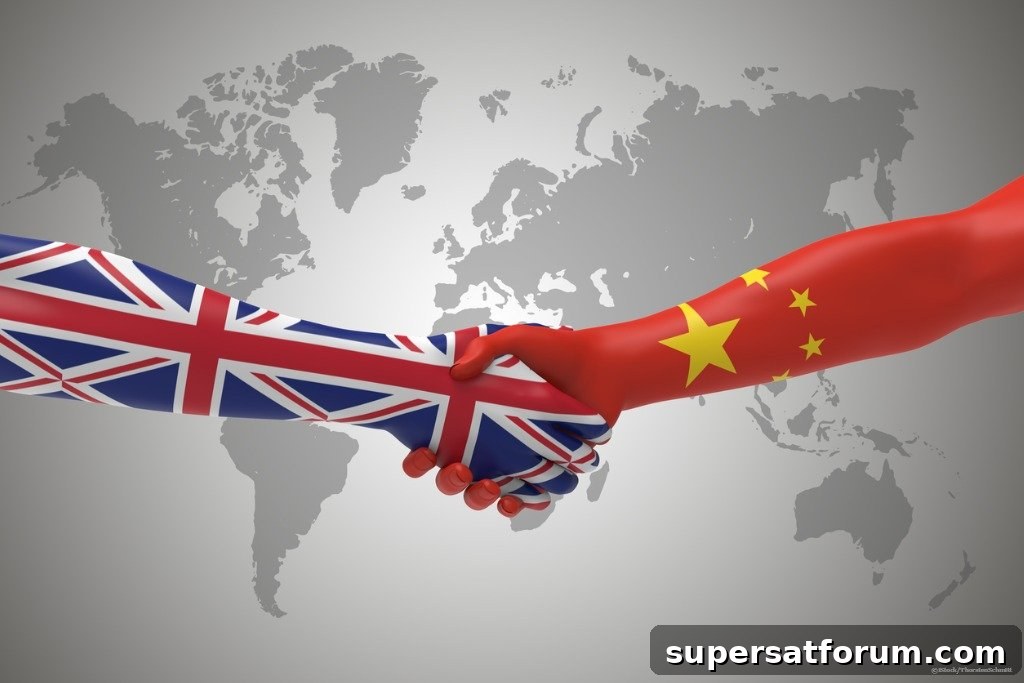
China’s ambassador to the United Kingdom has urged the British government to decide independently on whether to permit Huawei equipment in 5G networks, rather than being swayed by allied countries.
Beijing’s envoy in London, Liu Xiaoming, appealed for the UK to make its assessment based on national interests and long-term development needs, rather than simply following moves by countries such as the United States and Australia that have restricted Chinese telecoms suppliers from government networks.
In an opinion piece published in the Sunday Telegraph, Liu wrote:
“Countries of global influence, like the UK, make decisions independently and in accordance with their national interests. When it comes to the establishment of the new 5G network, the UK is in the position to do the same again by resisting pressure, working to avoid interruptions and making the right decision independently based on its national interests and in line with its need for long-term development.”
Liu warned against protectionism, which China sees as a driving factor behind the US-China trade dispute that led to tariffs on billions of dollars’ worth of goods.
Since Brexit, the UK has signalled a desire to pursue an independent trade strategy and to deepen ties with fast-growing economies, including China, under the “Global Britain” agenda. Liu said a genuinely open and fair approach should not leave foreign companies on an uneven playing field.
The ambassador’s article marks Beijing’s first official public comment on Huawei’s role in UK 5G networks.
His intervention follows a leaked account from a classified National Security Council meeting in which Prime Minister Theresa May and senior ministers reportedly discussed risks associated with Huawei with intelligence officials. Government sources said they were angry about the leak and stressed that no final decision had been taken.
According to the leak, May was inclined to permit Huawei to supply equipment in “non-core” parts of the 5G network, while excluding it from central, sensitive components. A government spokesperson reiterated that deliberations were ongoing.
Liu acknowledged that security concerns about 5G should be taken seriously but urged that decisions be grounded in evidence rather than fear.
“The risks should be taken seriously but risks must not be allowed to incite fear. They can be managed, provided countries and companies work together,” he wrote, adding that Huawei has invested in a Cyber Security Evaluation Centre operating with a British monitoring team and has worked to strengthen the security and reliability of its products.
The ambassador’s comments drew immediate domestic pushback. Conservative MP Bob Seely responded on Twitter by highlighting China’s problematic record on hacking, intellectual property theft and the use of big data and AI in ways that can harm citizens’ rights.
In a letter to Culture Secretary Jeremy Wright, six Conservative MPs including Seely warned that allowing Chinese technology near UK communications infrastructure could create structural risks and increase Chinese influence in British society. They reminded officials that Chinese law can oblige domestic firms to cooperate with Chinese intelligence services.
The UK faces mounting pressure from allies, particularly the United States, to take a hard line on Chinese vendors. US officials have suggested that permitting Huawei to play a role in UK networks could complicate intelligence-sharing arrangements among close partners in the Five Eyes alliance.
If the leaked account is accurate, US officials may urge the UK to rethink a decision that would permit Huawei in non-core network segments. Meanwhile, a criminal investigation is expected into the source of the leak, with attention on five ministers reported to have opposed allowing Huawei wider access: Sajid Javid, Jeremy Hunt, Gavin Williamson, Penny Mordaunt and Liam Fox.
The debate over Huawei in the UK encapsulates competing priorities: safeguarding national security and intelligence alliances, managing commercial and technological links with a major trading partner, and defining an independent post-Brexit trade and national security policy. The government must weigh evidence about technical risks, supply chain integrity and the ability to mitigate vulnerabilities, alongside broader geopolitical and economic considerations, before reaching a final decision.
Interested in hearing industry leaders discuss topics like this? Attend relevant technology and security events to hear expert perspectives and debate on 5G, cyber security and emerging digital infrastructure.