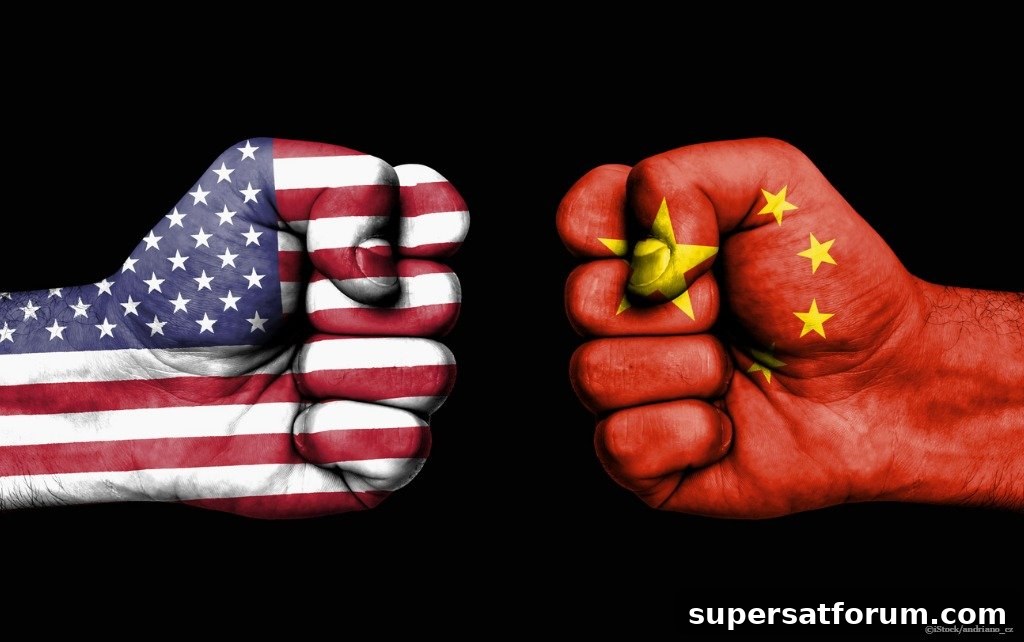
The feud between the United States and China is intensifying ahead of a high-stakes G20 summit, as US officials urge allies to exclude Chinese 5G equipment from their networks.
For years, intelligence and security officials have warned that gear from some Chinese manufacturers could be exploited for spying. While the United States has been the most outspoken, other countries have voiced similar concerns. Some, like Australia, have implemented outright bans; others, including the United Kingdom and Canada, have adopted mitigation measures to reduce risk.
Many of those critical of Chinese equipment are part of the close Five Eyes intelligence-sharing alliance—comprising the US, UK, Canada, Australia, and New Zealand. New Zealand is still weighing its response.
Now the US appears to be broadening its campaign beyond traditional security partners.
According to reports, US officials are pressing Germany, Italy, and Japan to reject equipment from Huawei and ZTE. The US is reportedly even offering support to help build alternative telecoms infrastructure for countries that refuse Chinese vendors.
Huawei responded by expressing alarm at the US government’s actions, saying it was “shocked by the behaviours of the US government detailed in the article” and arguing that a government should not extend its influence beyond its jurisdiction.
If the US push succeeds, Western suppliers like Nokia and Ericsson could capture a larger share of a lucrative global market, which would be framed as a win for the US amid its broader trade tensions with China. However, the outcome is not clear-cut.
Many industry experts argue that equipment from companies such as Huawei can outperform Western rivals in certain respects. Greater vendor competition also tends to lower costs, allowing operators to deploy 5G more quickly and pass fewer expenses on to consumers.
Canada has defended its decision not to ban Chinese equipment. The head of Canada’s Centre for Cyber Security warned that excluding specific vendors could paradoxically increase security risk by reducing the diversity of suppliers. Relying on fewer vendors could make an entire network more vulnerable if one supplier is compromised.
Huawei equipment is already widely deployed across the globe, including in numerous European networks. Officials are especially concerned about 5G because it will support critical applications—autonomous vehicles, smart-city systems, and remote medical procedures among them—that heighten the potential impact of any compromise.
The technology dispute intersects with a broader trade confrontation. President Donald Trump has pledged to confront what he calls China’s unfair trade practices, and the US has imposed roughly $250 billion in tariffs on Chinese imports since mid-2018. About half of all Chinese goods entering the US are now subject to duties.
China has retaliated with around $110 billion in tariffs on American products. The US has warned it may impose tariffs on the remainder of Chinese exports—more than $500 billion—if the two countries cannot reach an agreement.
President Trump and Chinese leader Xi Jinping are scheduled to meet at the G20 summit later this week, where trade and technology are expected to be high on the agenda.
Interested in hearing industry leaders discuss topics like these and sharing their experiences? Attend the Cyber Security & Cloud Expo World Series, which hosts events in Silicon Valley, London, and Amsterdam, to learn more.