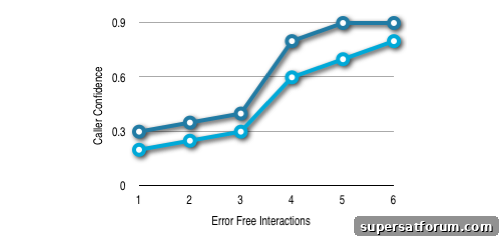
Figure 1 illustrates an “engagement threshold” that callers encounter during their first few uses of an IVR application. While the exact number may vary slightly between Speech and DTMF interfaces, there is a clear inflection point after roughly two to three successful interactions. During this critical period callers decide whether the automated system reliably saves time compared with waiting for a customer service representative, or whether the system is likely to be a waste of time that will ultimately end in a transfer to a human agent.
Crossing this “buy-in” threshold is essential to the long-term success of any voice application. A returning caller’s willingness to use an automated system depends heavily on prior experiences with that same IVR. When past interactions were smooth and efficient, callers perceive the IVR as a convenient shortcut that simplifies their lives. Conversely, if earlier encounters were frustrating or unproductive, callers view the system as unreliable and avoid it whenever possible. This pattern of loyalty or avoidance mirrors how we treat store staff: we gravitate toward employees who have been helpful and steer clear of those who have been rude or ineffective.
Previous white papers from our team explore the human, environmental, and cultural factors that can undermine the effectiveness of IVR systems. This article focuses specifically on the additional influence that mobile phone usage has on caller behavior and IVR performance. Mobile callers bring unique constraints—such as background noise, limited bandwidth, and smaller attention spans—that interact with the IVR experience and can either accelerate or hinder that initial engagement threshold.
Designing IVR systems with mobile callers in mind helps bridge the buy-in gap. Best practices include simplifying menu structures, minimizing required input steps, providing clear and concise prompts, and ensuring graceful handling of misrecognitions or input errors. When an IVR adapts to the mobile context—by shortening interactions and offering quick, reliable resolution—callers are more likely to reach the crucial second or third successful interaction that turns initial trial into habitual use.
Measurement and iteration are also vital. Tracking first-contact resolution rates, transfer rates to live agents, and repeat-caller behavior provides insight into where callers abandon the system or decide not to try it again. By analyzing these metrics, designers can identify friction points and prioritize improvements that increase the likelihood of early success for new users.
Finally, consider the emotional component: callers who feel their time is respected are more likely to return. IVR systems that demonstrate competence quickly—by anticipating common needs, offering sensible shortcuts, and showing clear options for escalation when necessary—build trust. Once that trust is established within the initial few interactions, callers are far more inclined to adopt the automated channel as their preferred path for routine tasks.